Washerwomen and Launderers in a Medieval Castle: The Forgotten Hands Behind Clean Linen

Behind the dazzling splendor of medieval castles—the gleaming armor, embroidered gowns, and richly dressed feasts—stood one of the most unglamorous yet essential groups of workers: the washerwomen and launderers. Their task was not just menial labor but an indispensable service. Clean linen was a visible marker of wealth, hygiene, and refinement, and without these laborers, the illusion of noble magnificence would have quickly unraveled.
These men and women, often of the lowest social status, toiled endlessly to keep sheets, shirts, and tablecloths clean. Their work was backbreaking, malodorous, and rarely acknowledged, but their contribution was vital to the daily functioning of castles and noble households.
Washing in Rivers or Basins
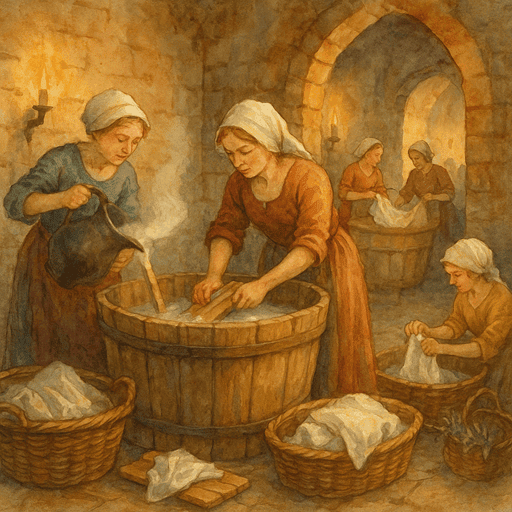
Before the luxury of indoor plumbing or mechanical devices, the washerwoman’s world was shaped by rivers, streams, and wooden tubs. Their workplace was often outdoors, no matter the weather. It meant bending over icy water in winter or hauling buckets up from wells in the heat of summer. The act of washing was both physically demanding and unrelenting—linens had to be cleaned regardless of season, sickness, or storms.
- Rivers and streams: Many laundresses worked beside cold rivers, kneeling on stones or wooden planks. They beat heavy fabrics with wooden paddles to loosen dirt and stains. Winter offered no reprieve—laundry had to be done regardless of freezing water.
- Basins and troughs: Inside castles, some laundresses had access to large wooden basins or troughs. Water had to be hauled by bucket from wells or cisterns, heated in cauldrons, and poured into tubs. Even with this slight comfort, the physical labor remained grueling.
Unlike modern laundry, which is a matter of convenience, medieval laundering was an ordeal requiring strength, endurance, and constant effort.
Harsh Soaps, Lye, and Even Urine
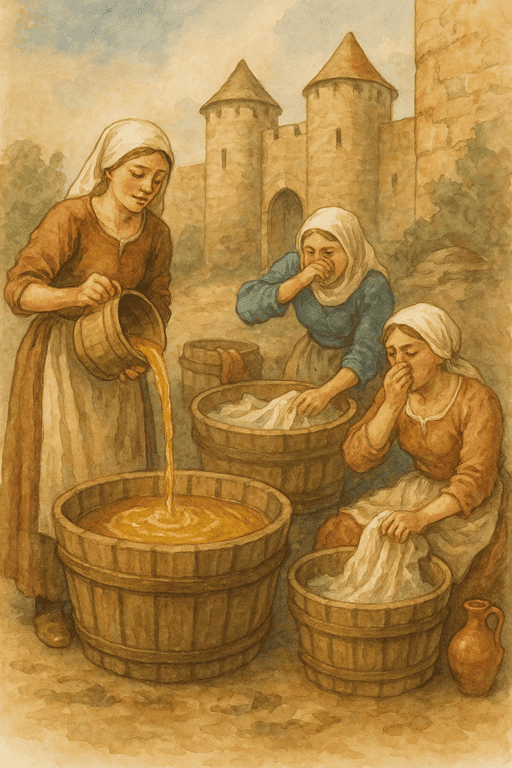
The next challenge was not just the water but the cleaning agents themselves. Medieval soaps were crude, caustic, and damaging to both fabric and skin. Laundresses did not have the luxury of scented powders or gentle cleansers. Instead, they worked with pungent and often dangerous substances—powerful enough to strip stains but harsh enough to burn hands. It was a task that literally left its mark on their bodies.
- Harsh soaps: Early soaps were made from animal fats mixed with lye, creating a caustic substance that stung skin and cracked hands.
- Lye and ash water: Ashes from the hearth were boiled to create alkaline water strong enough to strip grease and stains. This liquid often burned skin and weakened fabric fibers over time.
- Urine as detergent: In some cases, stale urine was collected and used for washing. Its ammonia content acted as a natural bleaching agent, whitening linen and removing stubborn stains. Though effective, the smell was overwhelming, and washerwomen bore the stigma of working with such foul substances.
The noble delight in fresh-smelling linens and spotless tablecloths came at the cost of the washerwomen’s health and dignity.
The Status of Washerwomen
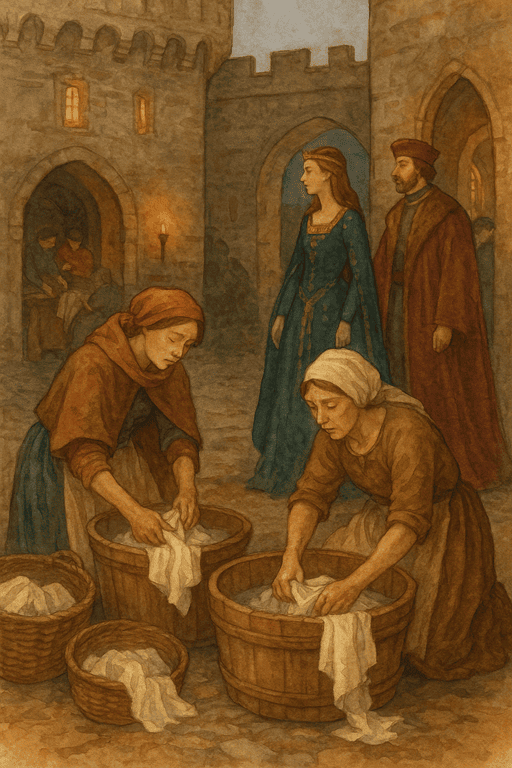
If their work was unpleasant, their social standing was worse. Washerwomen were necessary to the running of the castle, yet they were often looked down upon by both peers and superiors. They lived in the margins of castle society, close enough to serve nobles but never close enough to share in their world. Their labor was constant, their visibility low, and their recognition nearly nonexistent.
- Lowly position: They were often poor women hired from nearby villages or widows with few means of survival. Their labor placed them far from the glamour of the Great Hall, and they rarely interacted with the lords and ladies they served.
- Grueling conditions: Constant exposure to water, cold, and caustic substances left them with cracked skin, chronic pain, and exhaustion. It was not uncommon for them to be mocked by higher-ranking servants.
- Essential role: Yet their work was indispensable. Clean linen was more than comfort—it was a marker of nobility. Nobles distinguished themselves from commoners not only through silk and velvet but also by the frequent changing of fine linen undergarments and tablecloths.
Thus, washerwomen lived in the paradox of being both scorned and absolutely necessary.
Laundry as Symbol of Wealth
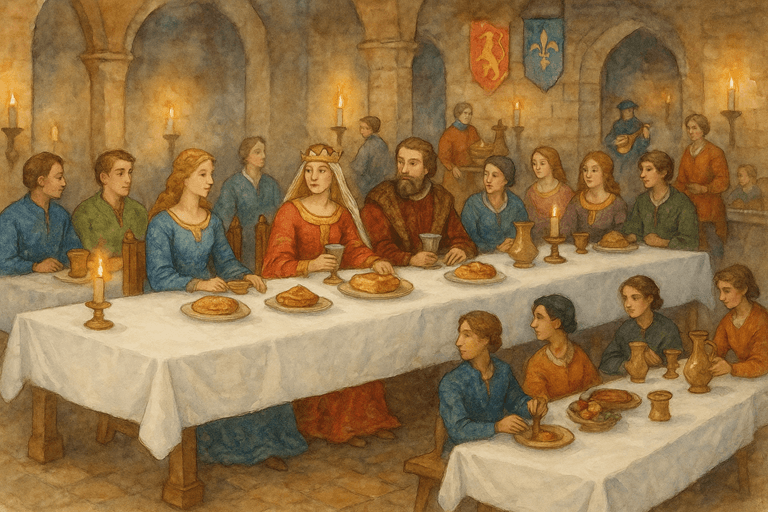
To truly understand the importance of the laundress, one must remember how much linen symbolized wealth in the Middle Ages. Linen was costly to produce, requiring acres of flax, skilled spinning, and weaving. The ability to wear fresh linen garments or lay spotless white cloths on a table was a luxury many peasants never experienced. Every freshly laundered shirt or bedsheet was, in itself, a quiet but powerful display of status.
- Linen as luxury: Linen was expensive, requiring vast amounts of flax and labor to weave. Owning abundant sets of linen sheets, napkins, and clothing was a mark of wealth.
- Display at feasts: Nobles demanded spotless white tablecloths for their banquets, often layering multiple cloths to emphasize abundance. The effort behind maintaining these dazzling displays fell on the washerwomen.
- Personal hygiene: Nobles changed their linen underclothes more often than outer garments, as linen absorbed sweat and oils. The practice of frequently changing into fresh linen gave an appearance of cleanliness—even when full bathing was infrequent.
Every crisp, clean linen sheet or tablecloth whispered of noble refinement, but washerwomen were the invisible hands that made such refinement possible.
Final Thoughts
The life of washerwomen and launderers in the medieval castle was one of toil, anonymity, and hardship. They bent over rivers, scalded their hands in harsh soaps, and endured the indignity of working with urine—all so nobles could sleep in clean beds, dine on spotless cloths, and wear fresh undergarments.
Though history rarely remembers them, washerwomen kept the wheels of noble comfort turning. Their work, hidden in the shadows of castle life, reveals how much the brilliance of the Middle Ages rested not only on knights and ladies but also on the silent labor of the most humble.