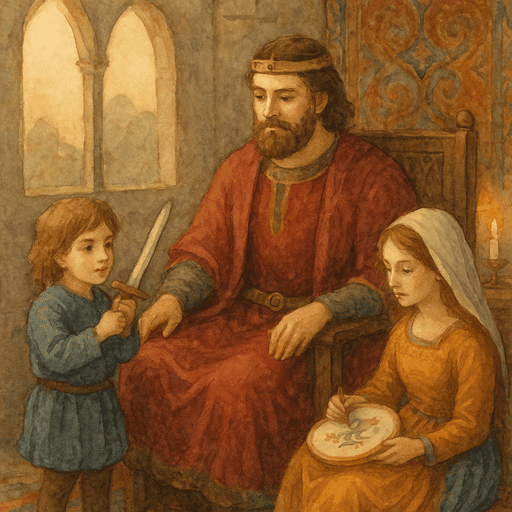
The Blacksmith and Armourer of a Medieval Castle: Forging the Strength of the Castle

When we picture the might of a medieval castle, we often think of stone walls, towering battlements, and glittering knights. Yet none of this power would have been possible without the steady labor of blacksmiths and armourers. These craftsmen stood at the heart of medieval society, producing the weapons, armor, tools, and fittings that sustained both daily life and military readiness. Whether hammering out a horseshoe, repairing a gate hinge, or forging a knight’s helmet, they were indispensable. Their role was not glamorous, but without their skill, the castle’s strength would have been hollow.
Essential for Weapons, Armor, and Tools
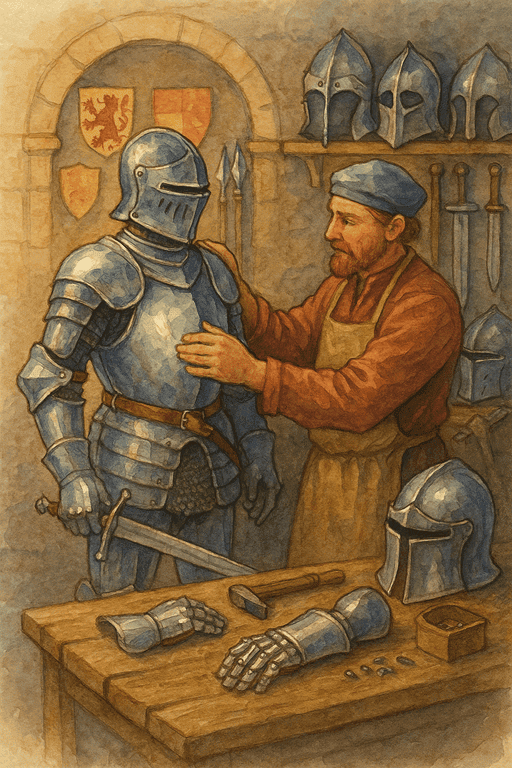
No castle could function without its smiths. The blacksmith and armourer were the backbone of both defense and daily life, their work stretching far beyond simply shaping iron. Every sword drawn in battle, every helmet lowered before combat, every horseshoe nailed before a journey had passed through their forge. The blacksmith’s role was not limited to weaponry; he provided hinges for doors, nails for scaffolding, locks for chests, and tools for carpenters and masons. The armourer, a more specialized craftsman, devoted himself to crafting and repairing the intricate suits of armor that protected knights and lords. Together, their skill ensured that a castle’s soldiers were not only armed but well-equipped to face sieges and campaigns. Without their tireless hammering, castles would have lacked both the means to defend themselves and the practical implements needed for daily survival.
- Weapons: From simple arrowheads and spear tips to finely tempered swords, the blacksmith’s work gave soldiers their most essential tools. The armourer, a specialist, took this further—crafting helmets, breastplates, and gauntlets that turned knights into near-invulnerable warriors.
- Armor: Armour was painstaking to make. A single suit could take weeks or months to complete, each plate hammered, shaped, and polished by hand. Maintenance was just as important—rust could ruin a piece of armor, and armourers often traveled with lords on campaign to keep gear in top condition.
- Tools and household goods: Beyond battle, smiths created hinges, locks, nails, farming tools, and cooking implements. The same hands that forged swords might also shape a plowshare or fix a broken cauldron handle.
Every clang of the hammer echoed the balance between war and work, showing that a castle was both fortress and home.
Guild Status and Professional Prestige
Unlike ordinary servants, blacksmiths and armourers occupied a unique position in medieval society, one that combined labor with prestige. Their crafts were often regulated by guilds, powerful associations that upheld standards of quality, set prices, and protected the secrets of the trade. Belonging to such a guild meant more than a steady income; it conferred status, legal rights, and sometimes even influence in city or court politics. A master armourer who could outfit a noble household—or better still, supply a king’s retinue—was held in high regard and could achieve wealth comparable to minor landowners. Their skill was rare, and their work highly valued, making them respected figures even in the rigid hierarchy of medieval life. The clang of the hammer was not just the sound of labor but of authority, reminding all that the smith’s art was as essential to noble prestige as banners and bloodlines.
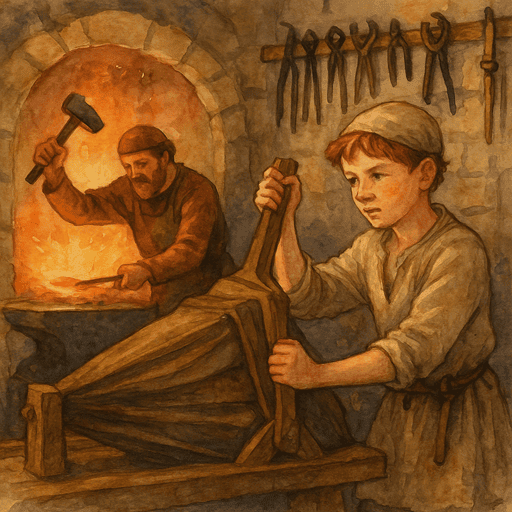
- Apprenticeship: A boy often began as an apprentice around the age of 12, learning to pump the bellows, prepare charcoal, and assist with basic hammering before progressing to more advanced techniques.
- Journeymen: After years of training, apprentices could travel as journeymen, offering their skills from forge to forge. This movement spread knowledge and ensured a wide reputation for talent.
- Guild membership: Master smiths and armourers who achieved guild membership enjoyed considerable respect. Their work was not only practical but also symbolic, representing the power and prestige of their lord or city.
Though they worked in soot and fire, smiths were recognized as craftsmen of high value. Their creations could mean the difference between life and death, honor and defeat.
Inside or Outside the Castle Walls
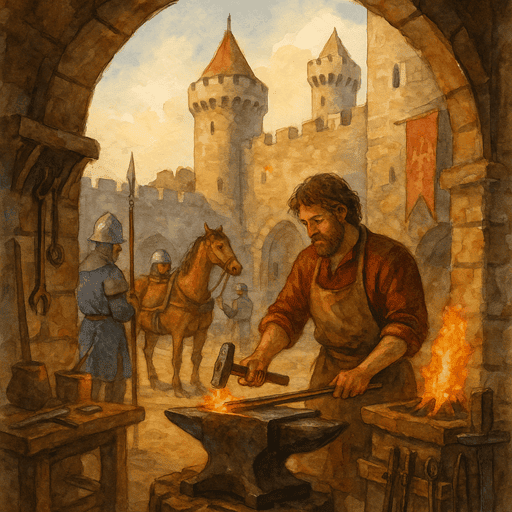
The forge itself could be found both inside and outside castle walls, its placement depending on the size of the stronghold and its resources. Within the castle bailey, a forge offered immediate access to repairs during sieges, ensuring that broken weapons or armor could be restored without delay. Yet fire and sparks also carried risks, so many smithies were placed in courtyards or outer baileys to minimize danger to wooden buildings. Smaller castles or rural estates often relied on village blacksmiths who worked outside the walls, servicing not only nobles but also peasants who needed tools for farming. The division between “castle smith” and “village smith” reflected the broader connection between fortress and countryside: one maintained the knightly elite, the other supported daily survival. Both, however, were indispensable, ensuring that whether in war or peace, ironwork remained at the heart of medieval life.
- Inside the castle: In larger fortresses, a forge might be housed within the bailey or near the stables, where smiths could shoe horses, repair weapons quickly, and respond during sieges. Armourers, in particular, often worked close to the armory to maintain the fighting gear of knights and guards.
- Outside the walls: In smaller castles, or when space was limited, smiths worked in nearby villages or towns. Forges required open space, fuel, and air circulation—making them risky to place too close to wooden buildings. Many lords relied on village smiths for daily needs while retaining armourers inside for emergencies.
- On campaign: Armourers often accompanied lords during military expeditions, setting up portable forges to keep armor battle-ready. Their presence was as vital as that of the knight they served.
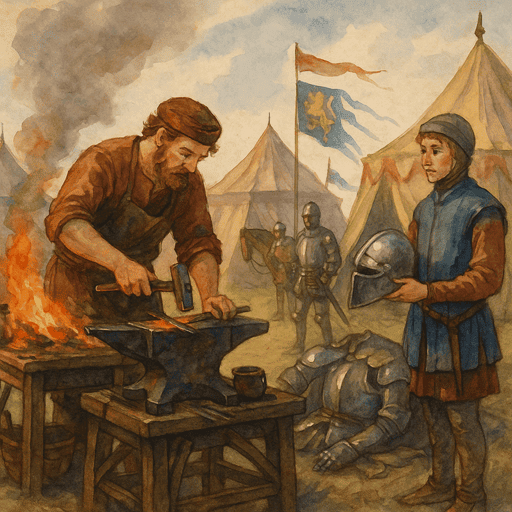
Wherever they worked, their fires never truly went out. The forge was as essential as the granary or the well, ensuring survival in both peace and war.
Final Thoughts
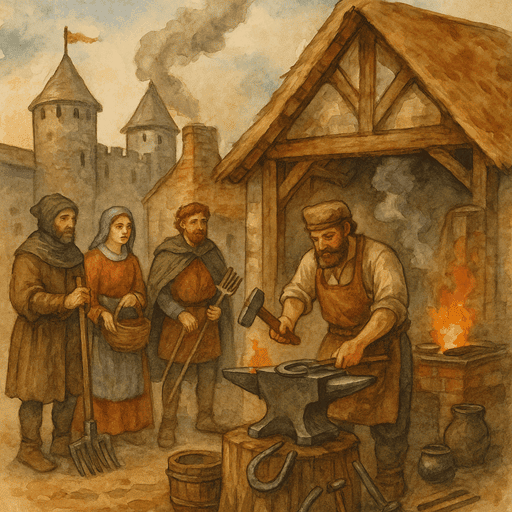
The blacksmith and armourer were unsung heroes of the medieval world. They did not sit at high tables or lead armies into battle, but their labor made all those things possible. From forging swords that glittered on the tournament field to shaping nails that held castle gates in place, their hands shaped both the splendor and the survival of noble life.
Their guilds gave them status, their fires gave them purpose, and their craft gave castles the edge they needed in a harsh and dangerous world. To understand medieval strength, we must look not only at the knights on horseback but also at the smith bent over his anvil, hammer in hand, forging the steel of history.