Cook and Kitchen Life in a Medieval Castle: Feeding Hundreds Every Day

When visitors imagine medieval castles, they often picture soaring towers, glittering banquets, and the clatter of knights in armor. Yet beneath the glamour, one of the busiest and most vital spaces in any castle was the kitchen. It was here, amid smoke, heat, and constant labor, that an army of cooks, bakers, brewers, and scullions worked tirelessly to feed the entire household.
A medieval castle might house not only the lord, lady, and their family, but also dozens—sometimes hundreds—of knights, squires, guests, servants, and retainers. Feeding them all required skill, organization, and stamina. Behind every polished feast in the Great Hall lay the hidden world of kitchen life, where food was both survival and spectacle.
Castle Kitchens: Fireplaces, Ovens, and Cauldrons
The kitchen was often the largest and busiest space in a castle, rivaling the Great Hall in importance. Unlike the modest hearths of peasants’ cottages, castle kitchens had vast open fireplaces capable of roasting entire animals on spits, with smoke venting through great chimneys. Massive cauldrons bubbled with pottage or stews, sometimes large enough to feed a hundred people at once. Ovens, often built into thick stone walls, turned out endless loaves of bread. The air was thick with the smell of roasting meat, boiling broth, and wood smoke, creating an environment that was both impressive and grueling.
- Huge fireplaces: These dominated the room, wide enough for several men to stand inside. Great spits turned whole oxen or stags over open flames, while chains suspended cauldrons filled with pottage, broth, or boiling water. Spit-turners, often young boys, labored for hours to keep meat from burning.
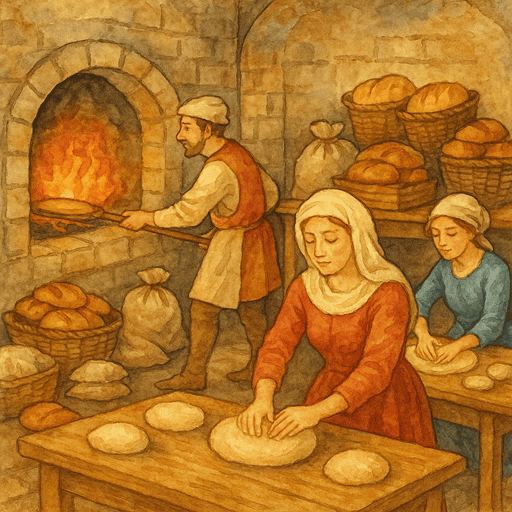
- Ovens: Large bread ovens, built of stone and clay, were essential for baking the daily loaves that sustained both nobles and servants. Once heated with wood, the embers were swept out and dough placed inside to bake.
- Cauldrons and kettles: Enormous pots stood over the fire, used for soups, stews, and brewing. Some could hold enough to feed an entire hall of retainers in one serving.
The kitchen was not a quiet place—it roared with fire, rang with clanging pots, and buzzed with commands shouted above the din. It was as much an engine room as a dining preparation space.
Feeding Nobles vs. Servants

Food distribution in castles mirrored the social hierarchy. Nobles dined in luxury, surrounded by glittering dishes, elaborate roasts, and imported spices that flaunted their wealth and power. At the same time, the servants and workers who supported the household ate far humbler meals, often little more than bread and pottage. Yet all of this food came from the same kitchens, carefully organized so that the best cuts and finest ingredients were reserved for the lord’s table, while leftovers and simpler fare sustained the rest of the household. Feeding a castle was not just about nourishment but about displaying order, wealth, and hierarchy.
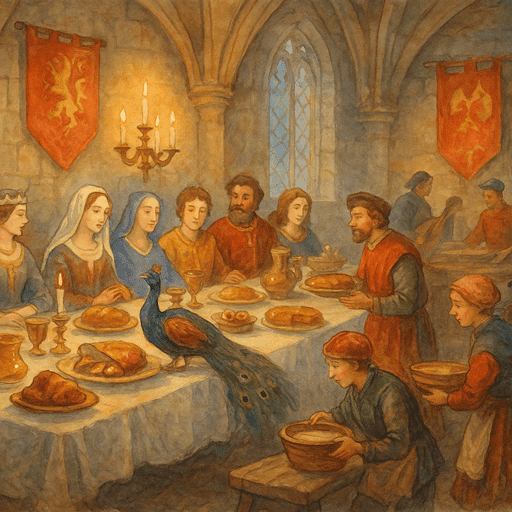
- For the nobles: Meals were a display of wealth and power. Feasts in the Great Hall might include roasted swan or peacock (decorated with their feathers), spiced sauces, imported fruits, and sweetmeats. Food was richly seasoned with expensive spices such as saffron, cinnamon, and pepper, imported from faraway lands. Presentation was as important as flavor—dishes might be gilded, molded, or arranged as elaborate displays.
- For the household and servants: Daily fare was more modest but filling. Thick pottage made of grains, beans, or vegetables was the staple, often served with coarse bread and ale. Meat, cheese, or fish might appear occasionally, depending on supply. Servants ate communally, sometimes with little ceremony, but their meals were vital to keep the castle workforce strong.
- For feast days: On major religious or political occasions, kitchens worked at a frenzy. Hundreds of guests could be entertained at once, with dishes flowing in an endless procession from the kitchen to the hall. Such occasions could stretch kitchen resources to the limit, but success meant prestige for both lord and cook.
Thus, food mirrored the strict hierarchy of the castle—lavish for the elite, practical for the rest.
Brewing and Baking
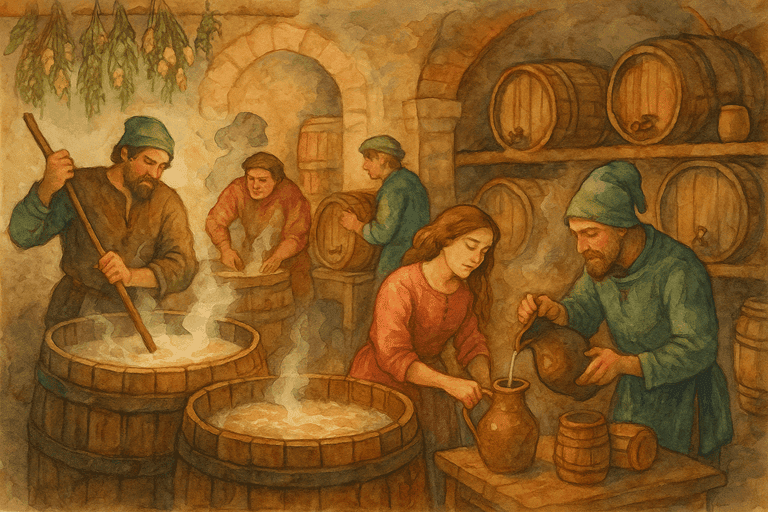
No castle could run without the constant rhythm of brewing and baking. These were specialized tasks with entire teams dedicated to ensuring the steady supply of bread and ale—the two staples of the medieval diet. Bakers rose before dawn to prepare dough, tending to ovens that glowed hot through much of the day. Brewers oversaw steaming vats of ale, flavored with herbs or hops, producing gallons upon gallons to quench the thirst of nobles and servants alike. Bread and ale were not luxuries but necessities, consumed at nearly every meal, and the sheer scale of their production reveals the industrial side of castle kitchens.
- Bread: The true staple of medieval diets. Nobles preferred white bread made from fine wheat flour, while servants ate darker loaves mixed with rye or barley. Bread was baked daily in huge ovens, and loaves were so numerous that they often doubled as trenchers—flat rounds of bread used as edible plates.
- Ale and beer: Water was often unsafe, so ale and beer were consumed by everyone. Brewing was a full-time job in many castles. Large vats of malted barley, flavored with herbs before hops became common, produced drinkable ale that was nourishing as well as hydrating. Servants drank weaker “small ale,” while nobles might enjoy stronger, richer brews.
- Specialty baking: Pies, pastries, and sweetmeats required skill and luxury ingredients like sugar, almonds, and dried fruits. These were reserved for noble tables, especially during celebrations.
Brewing and baking were so important that many castles had their own brewhouses and bakehouses, sometimes separate from the main kitchen to manage heat and fire risk.
Hygiene Challenges

While castle kitchens could impress with their size and output, they were also difficult places to keep clean. Smoke blackened the walls, grease coated the floors, and waste from constant cooking piled up quickly. Scullions—the lowest of the kitchen staff—labored endlessly to scrub pots, carry water, and dispose of refuse. Herbs were often hung from rafters to cover unpleasant smells, and dogs and cats prowled the kitchens for scraps and vermin. Despite these challenges, castle kitchens were expected to maintain enough order to keep food safe, as any lapse in hygiene could spread illness through the entire household. The struggle for cleanliness was part of the daily grind of kitchen life.
- Water supply: Buckets of water had to be carried by hand, drawn from wells, cisterns, or nearby rivers. Clean water was precious, and often reserved for cooking or drinking.
- Storage issues: Meat and fish spoiled quickly. Salting, smoking, or pickling helped preserve supplies, but mistakes could lead to illness. Noble households depended heavily on salted herring, dried peas, and preserved meats to get through winters.
- Waste management: Scraps, bones, and spoiled food piled high. Scullions carted refuse away, often throwing it into pits or moats. The smell of kitchens, despite the abundance of herbs and rushes, was ever-present.
- Personal hygiene: Cooks and kitchen workers labored in smoky, greasy environments. Clothes were easily soiled, and burns were common. Laundresses and assistants worked constantly to maintain some level of cleanliness, though by modern standards, conditions were far from sanitary.
Despite these challenges, castle kitchens produced vast quantities of food daily, and the survival of the household depended on their efficiency.
Final Thoughts
The medieval castle kitchen was the beating heart of domestic life. Far from the glamour of banquets, it was a place of sweat, fire, and endless labor. Here, cooks balanced luxury and necessity, feeding lords with exotic dishes while ensuring servants had hearty meals to fuel their work. Bakers and brewers toiled daily to produce bread and ale, while scullions fought grime and waste.
To understand castle life, one must look beyond the feasts in the Great Hall to the smoky kitchens that sustained them. Feeding hundreds every day was not only a logistical challenge—it was a testament to the organization, labor, and hierarchy that defined medieval society.