Medieval Builders: How Castles Were Constructed

The sight of a medieval castle rising above the landscape still inspires awe today. But behind those towering walls and massive keeps was the backbreaking labor of thousands of workers—stonecutters, masons, carpenters, and peasants—who transformed raw earth and stone into symbols of power. Building a castle was not a quick endeavor; it could take decades, even generations, to complete. The process was as much about organization and logistics as it was about brute strength.
Constructing a fortress required careful planning, immense resources, and the coordination of a diverse workforce. From quarrying stone to laying mortar, from hauling timbers to forging tools, every detail mattered. To understand castles as living monuments, we must also see them as colossal construction projects, born from both sweat and skill.
Quarrying and Transporting Stone
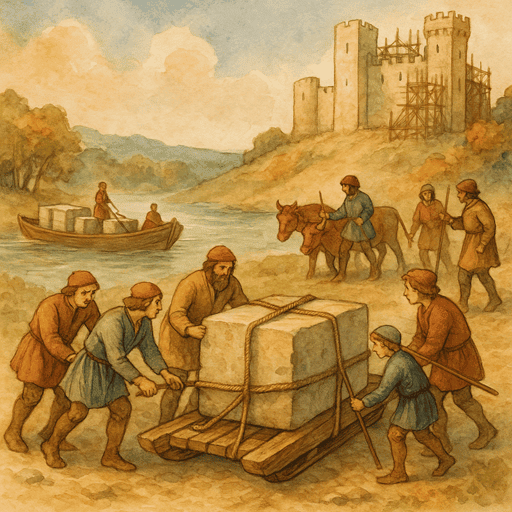
The foundation of every castle was stone, and obtaining it was one of the first and most vital steps. Stones were usually quarried locally, both to reduce costs and to ensure a consistent look in the walls. In some cases, however, particularly prized limestone or sandstone was transported long distances, adding to the expense and grandeur.
- Quarries nearby: Great pits were dug into the earth, and masons carefully selected the strongest, most workable blocks. Some stones were rough-hewn at the quarry before being dragged to the site.
- Transport methods: Moving such heavy loads required ingenuity. Oxen carts, sledges, and river barges were commonly used. Where rivers were available, boats provided the most efficient transport. In some cases, hundreds of animals and men were needed just to haul the blocks for a single tower.
- Organization: The lord financing the castle often pressed peasants into service for hauling stone and timber, while skilled masons waited at the site to shape and set the blocks.
Without reliable supply lines and constant deliveries, castle construction would grind to a halt. The movement of stone was, in many ways, the true heartbeat of the project.
Tools of the Trade

Building a medieval castle required not only brute strength but also remarkable ingenuity. Although the tools available were simple by today’s standards, they were the backbone of construction. Every hammer, chisel, or wooden square represented centuries of trial, error, and refinement. Tools were crafted for durability and precision, enabling masons and carpenters to create fortifications that could withstand centuries of weather, siege, and time itself. In the hands of a skilled craftsman, even the humblest mallet or plumb line became an instrument of art and power, shaping stones and beams into symbols of lordly dominance. Without these seemingly ordinary implements, the monumental castles we marvel at today would never have risen from the ground.
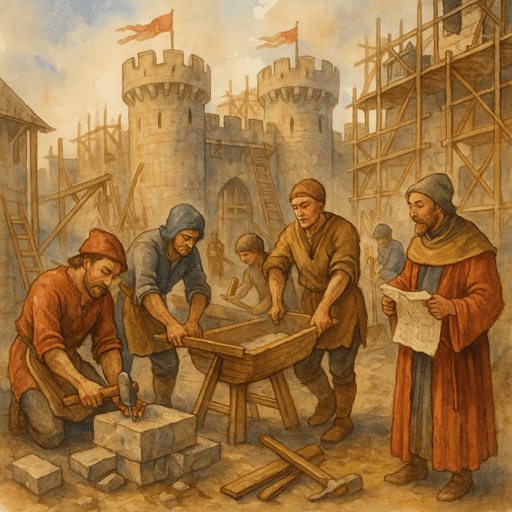
- Stonecutting tools: Chisels, mallets, hammers, and picks allowed masons to split stone and carve it into usable blocks. Iron wedges were driven into cracks to break larger stones apart.
- Measuring and leveling: Plumb lines, set squares, and wooden scaffolding ensured accuracy. Even without modern equipment, masons achieved remarkable precision in their work.
- Hoisting equipment: Wooden cranes powered by treadwheels (giant human-sized hamster wheels) lifted heavy stones into place. Winches and pulleys multiplied manpower, enabling workers to raise blocks weighing hundreds of pounds.
- Everyday tools: Shovels, spades, saws, and axes were constantly in use, whether for mixing mortar, cutting timber, or clearing earth.

These tools might have been basic, but in skilled hands, they created structures that have endured for centuries.
The Workforce: Masons, Carpenters, and Peasants

Behind every soaring tower and mighty wall stood the sweat and determination of countless workers. Castle construction was not the work of a single genius architect, but of a vast and diverse workforce, each group contributing a vital piece of the puzzle. Master masons brought the vision, carving stone into precise blocks that would fit seamlessly together. Carpenters provided the scaffolding, frames, and roofs that gave structure and support to the rising fortress. Alongside them, peasants hauled mortar, mixed lime, and carted stones—backbreaking labor that demanded endurance rather than skill. The workforce was a blend of artistry and raw manpower, united by the relentless rhythm of construction. Their combined efforts created not just walls of stone, but living testaments to human perseverance and ingenuity.
- Master masons: The masterminds of construction, they combined technical knowledge with artistry. They drew plans, directed workers, and ensured the walls stood strong.
- Skilled craftsmen: Carpenters built scaffolding, hoardings, and siege defenses; blacksmiths forged nails, hinges, and tools; mortar mixers prepared the glue that bound stone together.
- Laborers and peasants: The bulk of the workforce consisted of unskilled peasants, pressed into service through feudal duty. They dug ditches, hauled stone, mixed mortar, and did whatever was required. For them, castle construction was grueling labor, often performed in harsh weather.
- Apprentices and children: Many young boys worked as apprentices, learning trades like masonry or carpentry. Others carried water or fetched tools.
The workforce could number in the hundreds or even thousands, depending on the scale of the project. Work often stopped in winter, but during spring and summer, the site bustled like a small city.
Organization and Timeframe
Constructing a castle was not a matter of weeks or months but of decades, sometimes even lifetimes. To coordinate such an enormous undertaking required a level of organization comparable to that of a military campaign. Master masons acted as both engineers and managers, dividing tasks, supervising crews, and ensuring the steady supply of stone, timber, and lime. Lords invested enormous sums of money and resources, while local villages often bore the burden of supplying labor. Each phase of construction—from quarrying and transporting stone to laying foundations and raising towers—had to be meticulously planned, as a delay in one stage could halt progress for months. Weather, war, or famine could stretch timelines further, making castle-building a generational project. For the workers, the sound of hammers and chisels was not just a passing noise but the constant backdrop of their lives.
- Phases of building: Construction usually began with digging ditches or moats, followed by raising curtain walls. Towers, keeps, and chapels came later.
- Financing: The cost was immense. Lords poured fortunes into construction, often diverting taxes or rents from their lands. A single major building campaign could bankrupt a lesser noble.
- Interruptions: Wars, famines, or the lord’s death often delayed or halted construction. Successors might change plans, leaving half-built towers or mismatched styles within a single castle.
Despite the challenges, castles rose steadily, their walls climbing year by year, shaped by determination as much as by stone.
Symbolism of Castle Building

A castle was never just a defensive structure. Its very construction was a statement of authority. Each block of stone shouted wealth, stability, and permanence. The lord who built a great fortress proclaimed his power not only to enemies but to subjects and rivals alike.
For the masons and laborers, the work was grueling and often thankless. But their legacy remains. Every tower that still pierces the skyline, every chapel arch that still shelters worshippers, is testimony to their effort.
Final Thoughts
Medieval castles were not miracles of architecture—they were triumphs of human labor, organization, and endurance. From the quarry to the forge, from the mason’s chisel to the peasant’s spade, each role was essential. The tools were simple, the conditions harsh, but the results extraordinary.
The next time you stand before a castle wall, imagine the clatter of chisels, the creak of wooden cranes, and the sweat of hundreds of hands. Castles were built stone by stone, not only as fortresses of defense but as monuments to ambition, power, and human resilience.