

Medieval Castle Leisure: Hunting, Falconry, Music, and Games
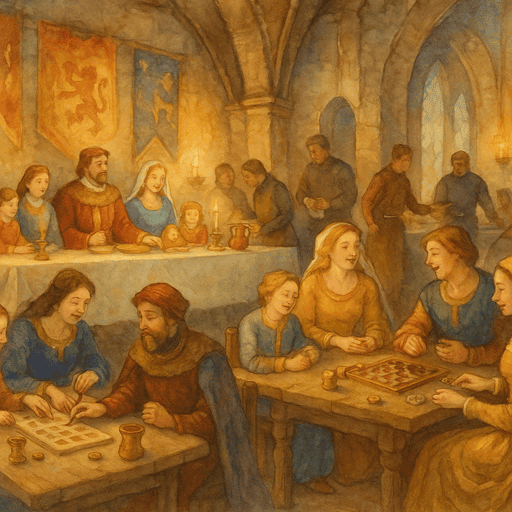
Castles were more than centers of defense and administration; they were also homes where noble families sought amusement and relaxation. Life inside stone walls could be long and monotonous, particularly during winters, so leisure was a vital part of sustaining both morale and prestige. Pastimes in the medieval castle were not only for enjoyment but also carried symbolic weight: they reinforced social order, displayed wealth, and prepared nobles for the duties of their class. Whether in the forest, the Great Hall, or the solar, leisure revealed what it truly meant to live as a member of the medieval aristocracy.
Hunting as Both Sport and Necessity
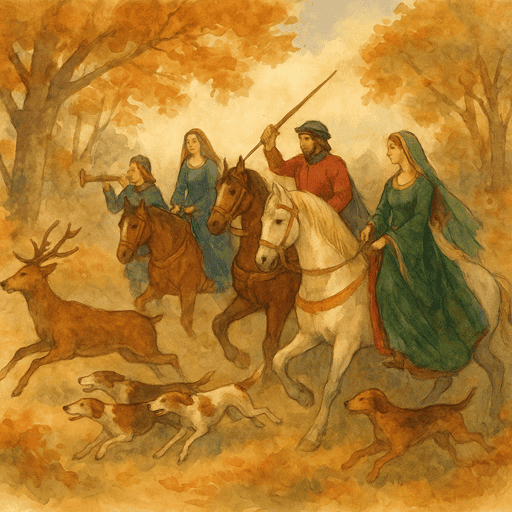
Hunting was one of the most important leisure activities in medieval castles. While it might be imagined as a glamorous sport, it was also deeply practical, supplying fresh meat for the castle kitchens. Nobles, especially men, spent days on horseback chasing deer, boar, and other game across forests and fields.
- Sport of kings: Hunting was considered a noble pursuit, demonstrating courage, skill with weapons, and horsemanship.
- Training for war: It prepared young men for the physical demands of battle—riding, tracking, and using spears or bows.
- Banquets supplied: Large hunts often concluded with grand feasts where the game was roasted and shared among guests.
The hunt also acted as a form of political theater. Hosting a hunting party was a way to display wealth, maintain alliances, and show mastery over both land and people. To hunt was not just to gather food—it was to assert nobility itself.
Falconry as Prestige
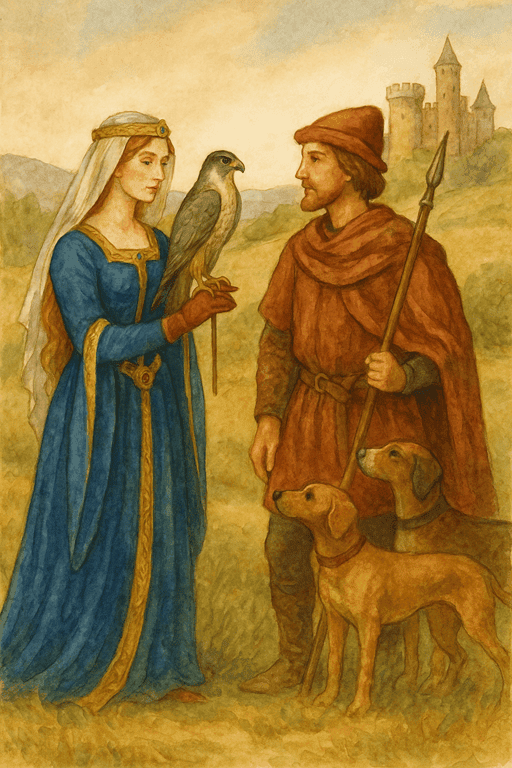
If hunting was about strength and daring, falconry was about refinement and status. Training and flying falcons or hawks was a pastime that required patience, knowledge, and wealth, as these birds were expensive to maintain and highly prized.
- Symbols of rank: The type of bird one flew reflected one’s social position. For example, emperors were said to fly eagles, while lower-ranking nobles might be restricted to hawks.
- Noble ladies: Unlike boar hunts, falconry was also suitable for women, and many ladies are depicted holding falcons in illuminations.
- Prestige and spectacle: A falcon resting on a gloved hand became one of the ultimate symbols of medieval aristocracy.
The image of a lord or lady with a falcon, surrounded by hounds and attendants, was not just leisure—it was a declaration of nobility and cultivated elegance.
Board Games: Chess, Backgammon, and Dice

When the weather kept people indoors, castles came alive with games. Board games were a favorite pastime and carried deeper meaning than mere entertainment.
- Chess: Seen as a metaphor for medieval society itself, with kings, queens, knights, and pawns. It was both a pastime and a way to reinforce the values of hierarchy and strategy.
- Backgammon: Known in the Middle Ages as “tables,” it was fast-paced and popular among nobles who enjoyed a bit of gambling.
- Dice games: Simple but thrilling, dice offered an escape from formality, though they were sometimes frowned upon by the Church for encouraging vice.
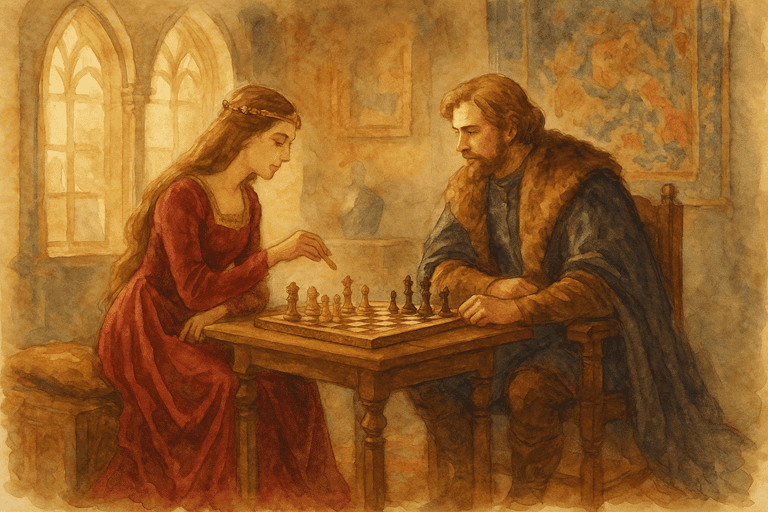
Evenings in the Great Hall could be filled with laughter, rivalry, and wagers, where both men and women participated in games that mixed skill and chance.
Music and Poetry
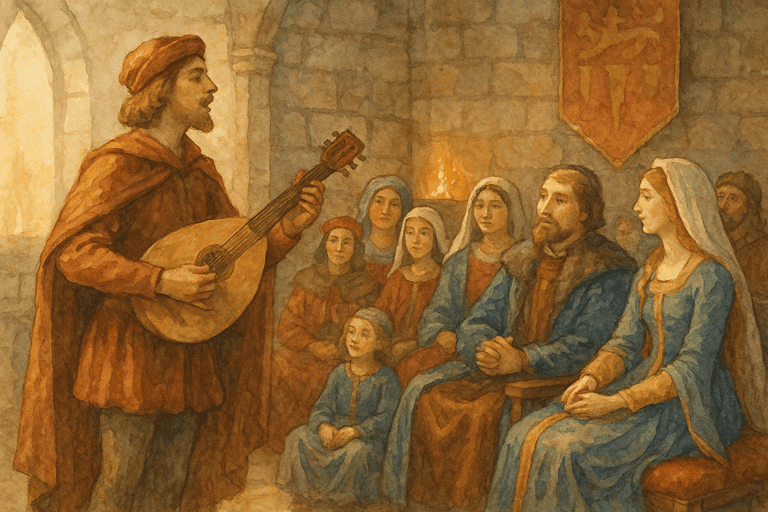
Music was another cornerstone of noble leisure. It filled the halls with beauty and lifted spirits after long days of governance or warfare.
- Troubadours and minstrels: Traveling performers entertained with songs of courtly love, heroic epics, or satirical verses.
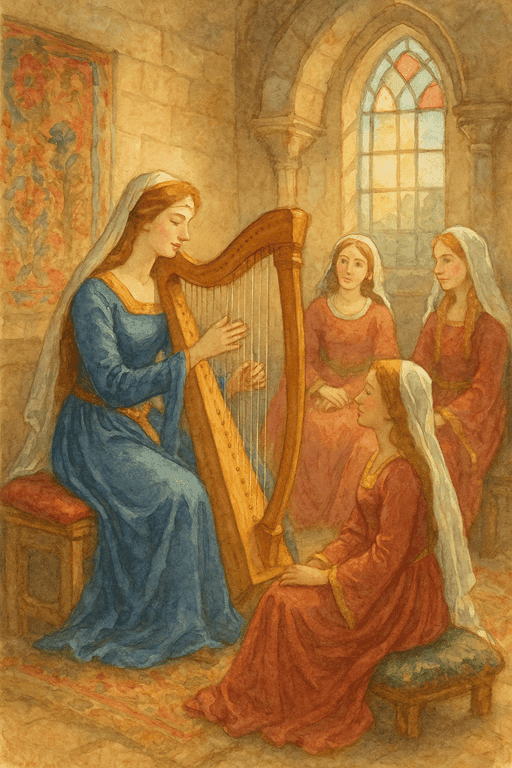
- Instruments: Lutes, harps, pipes, and drums accompanied feasts and dances. A single skilled musician could turn a solemn meal into a lively celebration.
- Courtly refinement: Ladies and lords were also expected to cultivate some musical ability—singing, dancing, or even composing verse—as a mark of education and culture.
Through music and poetry, castles became places of culture as well as power. These arts softened the martial world of knights and reminded nobles of ideals like love, honor, and piety.
Final Thoughts: Leisure Reinforced Noble Identity
Leisure in the medieval castle was never “idle” in the modern sense. Hunting honed martial skills and showcased dominance over nature. Falconry displayed elegance and exclusivity. Board games tested wit and reinforced social order. Music and poetry elevated the spirit and polished the reputation of the household.
Together, these pursuits shaped a lifestyle where every moment—even relaxation—was tied to noble identity. To live as a lord or lady was to ensure that even one’s leisure reflected wealth, prestige, and readiness to fulfill the duties of the ruling class.


