Life Below Stairs: The Servant Hierarchy in the Edwardian Era
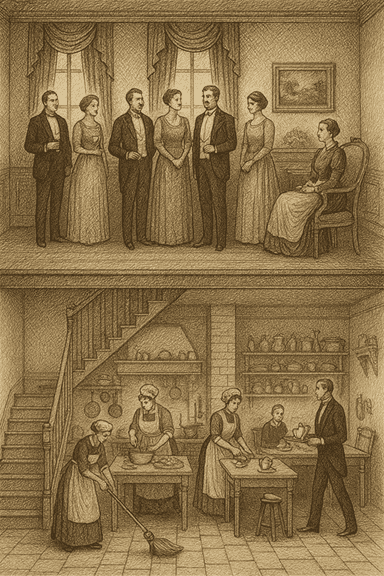
Watching Downton Abbey has always fascinated me. Among the many details that captured my attention was the world of the servants — the people who lived and worked “below stairs.” Their routines, duties, and hierarchies were as complex and dramatic as the lives of the family upstairs. The show inspired me to explore how households really worked in early 20th-century Britain, uncovering a world of strict order, endless hard work, and changing traditions that shaped the great houses of the era.
The Hierarchy of Servants

Edwardian country houses often employed dozens of servants. Their world was organized into a strict hierarchy, where rank determined authority, wages, and privileges. Senior staff managed the household, middle ranks handled daily operations, and junior staff performed the hardest labor with the least recognition.
To see how these roles interacted across the house, visit Life Below Stairs: Daily Routines, Rules, and the Servants’ Door.
Senior Staff (Upper Servants)

Butler
The butler was the highest-ranking male servant. He managed the dining room, wine cellar, silver, and the male staff. As the household’s figure of dignity, he symbolized tradition and order. You can learn more about his role — along with the housekeeper and cook — in The Senior Staff in Edwardian Households: Butlers, Housekeepers, and Cooks.
Housekeeper
The housekeeper was the female equivalent of the butler. She supervised the maids, oversaw household supplies, and kept the day-to-day life of the home running smoothly.
Valet & Lady’s Maid
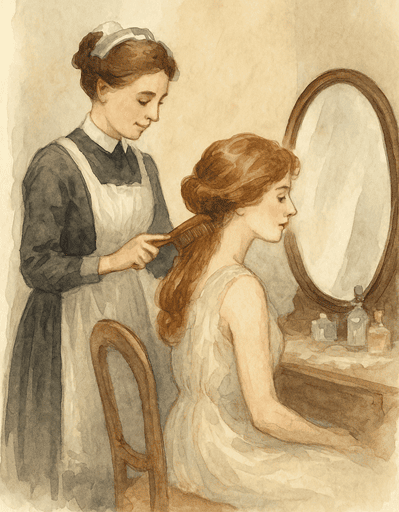
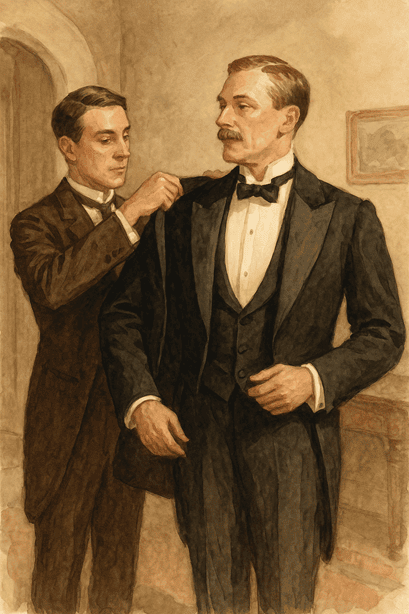
Personal attendants to the family, these roles required trust and discretion. A valet looked after the master’s wardrobe, shoes, and grooming, while a lady’s maid assisted with clothing, hair, and personal care for the women of the household. Their unique relationship with the family is explored in Valets, Lady’s Maids, and Personal Attendants in Edwardian Households
Cook

The cook oversaw the kitchen, planned menus, and managed food preparation. Assisted by kitchen and scullery maids, she was essential to the household’s reputation for hospitality.
Middle Ranks
Footmen

Uniformed male servants who served meals, carried trays, answered doors, and performed ceremonial tasks. Their presence was as much about appearance as labor. Read more about them and their counterparts in The Working Staff in Edwardian Households: Footmen, Maids, and Chauffeurs.
Housemaids
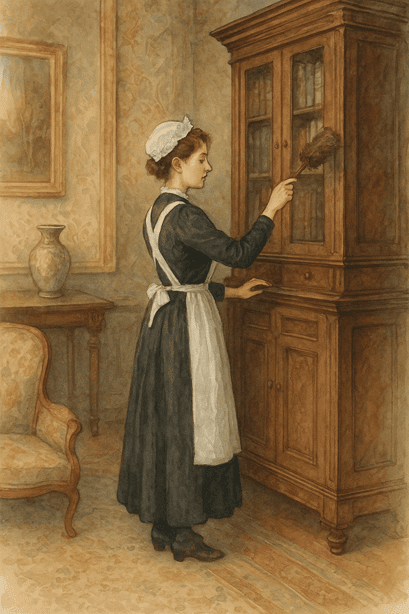
They cleaned and maintained the household: dusting, polishing, making beds, and lighting fires. Their work was constant and often unnoticed.
Kitchen Maid & Scullery Maid

The kitchen maid assisted the cook with preparation, while the scullery maid, often the lowest-ranked servant, washed endless piles of dishes and pans. The Junior Roles in Edwardian Households: Scullery Maids, Hall Boys, and Other Assistants.
Chauffeur

As motorcars became essential, the chauffeur maintained vehicles and drove the family, a sign of modernity creeping into traditional service.
Junior Servants & Specialists
Hall Boy / Boot Boy

Often teenagers, these boys performed the most menial tasks — cleaning boots, lighting fires, and running errands. It was a demanding start to a servant’s career.
Laundry Maids
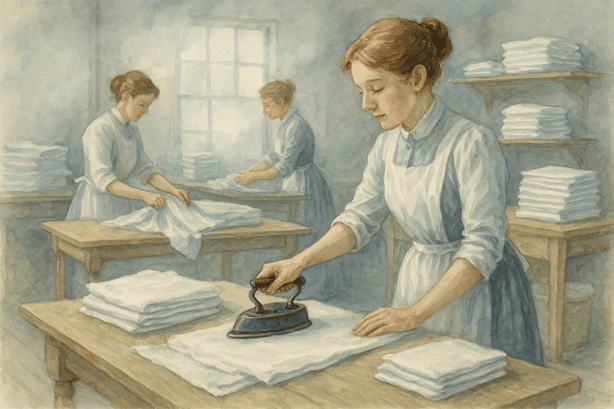
Responsible for washing, starching, and pressing the large amounts of clothing and linens that a household required.
Garden Staff & Gamekeepers
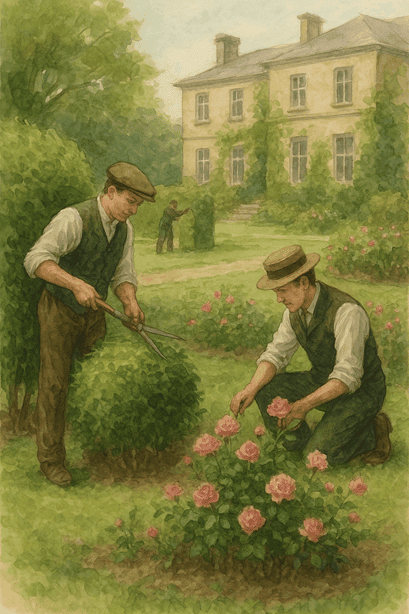
Although not always considered part of the household staff, estates employed gardeners, groundskeepers, and gamekeepers to manage land and preserve the estate’s lifestyle.
Daily Life & Routines

Servants typically worked from early morning until late at night, six or seven days a week. The day began before the family awoke, with fires to light, rooms to clean, and meals to prepare. Strict discipline governed the household, but camaraderie and ambition shaped life below stairs as much as duty did.
You can follow a full day in Life Below Stairs: Daily Routines, Rules, and the Servants’ Door.
Life Beyond Duty: The Real Lives of Servants
Behind the rigid hierarchy and endless routines were human beings whose lives were shaped by service. Their backgrounds, families, and futures reveal just how demanding — and often limiting — this life could be.
For a broader view of how this system eventually faded, see The Decline of the Servant Era in Edwardian Britain.
Where Did Servants Come From?
Most Edwardian servants came from working-class or rural families. Many were the children of agricultural laborers, factory workers, or other servants. For young women in particular, service was one of the few respectable ways to earn a living before office jobs and shop work became more common.
How Did They Get Their Jobs?
Positions were often obtained through recommendations, word of mouth, or servant registries in nearby towns. Families with a history of service might send several children into domestic work, each hoping to rise a little higher. Young girls might begin as scullery maids at 13 or 14, while boys could start as hall boys or boot boys around the same age.
Family Life and Free Time
Servants typically worked six and a half days a week, with only a half-day off on Sunday afternoons. This limited time was often used to attend church, run errands, or occasionally visit family if they lived nearby. For live-in servants, seeing their own families was rare and often limited to holidays.
Sickness and Old Age
If a servant became ill, they could be sent home to recover — but often without pay, which meant hardship for their families. A permanent illness or disability usually meant dismissal, unless the employer was unusually generous. Some long-serving staff were pensioned off or given a small cottage on the estate, but many ended their days in poverty if they could no longer work.
Relationships, Marriage, and Children
Romance below stairs was common, but it had limits. Servants often formed relationships with one another, since they lived and worked so closely together. However:
- Marriage usually meant leaving service, especially for women. A married woman with children was rarely able to continue in live-in domestic work.
- Some couples saved wages to start a small business (a shop or boarding house), though few succeeded.
- Relationships with people outside the household, such as villagers or tradesmen, were possible but harder to maintain due to long hours.
Could They Have Families?
Most female servants who wanted children had to leave service entirely. A pregnancy out of wedlock almost always led to immediate dismissal, often with devastating consequences for both mother and child. Male servants could sometimes remain in work while married, but generally not if their wives and children lived outside the household.
Changing Times
By the 1910s and 1920s, the servant system was already in decline. The First World War pulled many into military service or new opportunities, while modern conveniences reduced the need for large staffs. Social changes also meant fewer young people saw service as their only future.
The Edwardian servant hierarchy represented the last great age of domestic service — a world preserved in literature, history, and television dramas like Downton Abbey. For a deeper dive into the full world “below stairs,” explore Life Below Stairs: Exploring the Servant World of Edwardian Britain — a unifying overview linking all these roles and stories together.
Life Below Stairs Series
- Life Below Stairs: The Servant Hierarchy in the Edwardian Era
- Life Below Stairs: Daily Routines, Rules, and the Servants’ Door
- The Senior Staff: Butlers, Housekeepers, and Cooks
- Valets, Lady’s Maids, and Personal Attendants
- The Working Staff: Footmen, Maids, and Chauffeurs
- The Junior Roles: Scullery Maids, Hall Boys, and Other Assistants
- The Decline of the Servant Era
- Life Below Stairs: The Servant Hierarchy in Downton Abbey