The Junior Roles in Edwardian Households: Scullery Maids, Hall Boys, and Other Assistants
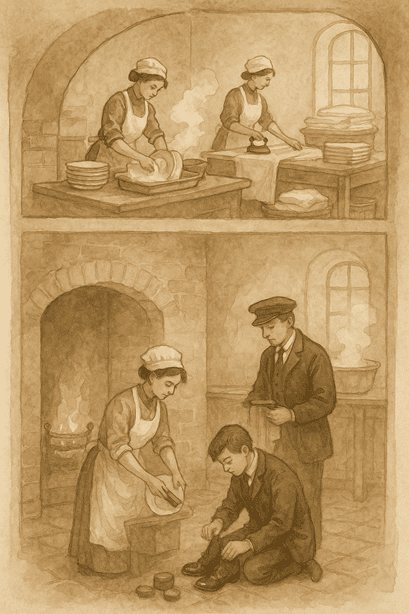
At the very bottom of the servant hierarchy in Edwardian households were the junior staff — often teenagers, sometimes even younger. They worked the longest hours, performed the hardest physical tasks, and received the lowest pay. Yet their roles were essential. Without them, the grand machine of country house service could not function.
The Scullery Maid: Endless Work in the Shadows
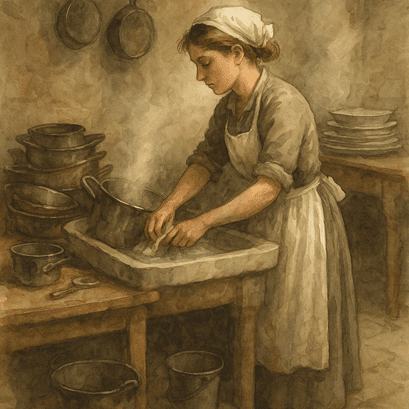
The scullery maid was almost always the youngest servant in the house. Her day began before dawn and ended long after others had gone to bed. Her duties included:
- Washing an endless stream of pots, pans, and dishes.
- Cleaning the kitchen floors, stoves, and fireplaces.
- Preparing water for boiling, washing, and cooking.
- Running errands for the cook and kitchen maids.
It was a grueling job, physically demanding and often lonely, as scullery maids worked in the hottest, noisiest parts of the house. For many, however, it was the first step toward becoming a kitchen maid or even rising to assistant cook.
The Hall Boy: Jack of All Tasks

The hall boy was the male equivalent at the bottom of the hierarchy. Usually in his early teens, he was expected to perform countless menial jobs:
- Polishing boots and cleaning shoes for the family and staff.
- Carrying coal and lighting fires in grates across the house.
- Running errands for senior servants.
- Cleaning and maintaining the servants’ hall and corridors.
The hall boy’s hours were punishing — often the first to wake in the morning and the last to go to bed. Despite the hard life, some boys used the role as a stepping stone toward becoming a footman.
Despite the hard life, some boys used the role as a stepping stone toward becoming a footman, like those featured in The Working Staff in Edwardian Households: Footmen, Maids, and Chauffeurs.
Laundry Maids: The Unseen Labor
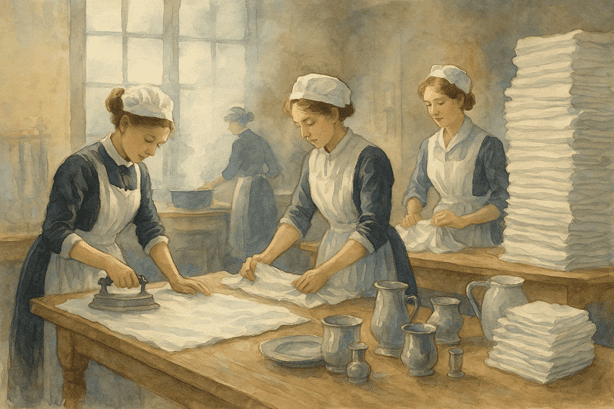
Large estates required constant washing of linens, uniforms, and fine clothing. Laundry maids toiled in hot, steamy rooms, boiling water, scrubbing fabrics, starching collars, and pressing sheets. Their work was rarely glamorous, but it kept the household presentable and respectable.
Other Assistants: Filling the Gaps
In addition to scullery maids and hall boys, other junior roles supported the household:
- Kitchen helpers, peeling vegetables or fetching ingredients.
- Between maids, working between the kitchen and dining rooms.
- Stable hands or under-gardeners, tending horses, carriages, or estate grounds.
Each of these positions required stamina, obedience, and patience. For many young people, service was their only opportunity for steady work and shelter.
The Invisible Backbone
Though they were the least visible, junior servants formed the true backbone of Edwardian service. Their tasks allowed senior staff to focus on their specialized roles. Their work was often thankless, but without it, the smooth rhythm of country house life would have collapsed.
Final Thoughts
The scullery maids, hall boys, and other junior staff of Edwardian households lived difficult, demanding lives. Yet they carried the promise of advancement: the chance to climb the ranks into better positions, with more comfort and respect. Their stories remind us that even the most glittering households relied on the unseen labor of the very young and the very hardworking.
Life Below Stairs Series
- Life Below Stairs: The Servant Hierarchy in the Edwardian Era
- Life Below Stairs: Daily Routines, Rules, and the Servants’ Door
- The Senior Staff: Butlers, Housekeepers, and Cooks
- Valets, Lady’s Maids, and Personal Attendants
- The Working Staff: Footmen, Maids, and Chauffeurs
- The Junior Roles: Scullery Maids, Hall Boys, and Other Assistants
- The Decline of the Servant Era
- Life Below Stairs: The Servant Hierarchy in Downton Abbey