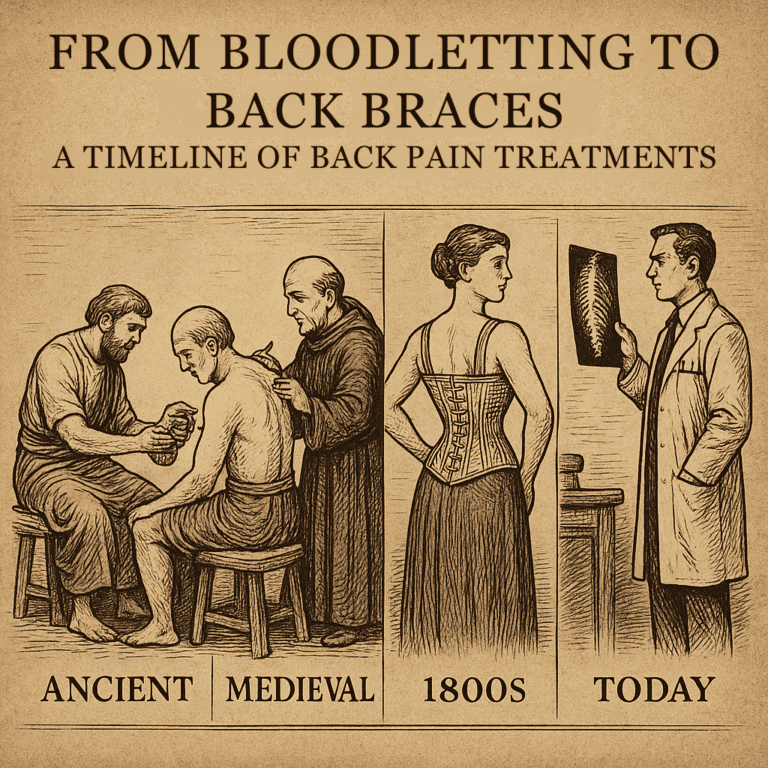
Back Pain Remedies in the 1800s: From Corsets to Camphor
If you’ve ever struggled with back pain and turned to a heating pad or ibuprofen, imagine living in the 1800s—before chiropractors, MRIs, or modern medicine. Remedies ranged from the mildly helpful to the truly bizarre, and most were deeply shaped by the era’s evolving understanding of anatomy, nerves, and pain.
As someone recently dealing with back pain myself, I became curious about how people in the 19th century coped. What I found was a world of liniments, laudanum, and lace-up corsets—and a medical landscape on the edge of transformation.
Let’s take a journey through the 1800s to discover how back pain was understood and treated during this fascinating century of progress and quackery.
A Century in Transition: The 1800s Medical Landscape
The 19th century was a time of enormous change in medicine. Scientific discoveries were accelerating, but the medical field was still a confusing mix of legitimate advances and snake oil salesmanship.
- Anatomical knowledge improved dramatically due to cadaver studies and medical schools.
- The nervous system began to be understood, linking back pain to nerve irritation and spinal conditions.
- But many treatments were still based on tradition or marketing rather than science.
Pain, including back pain, was typically treated symptomatically—do whatever it takes to dull the ache or support the spine.
Opium & Laudanum: The Go-To Painkillers

When it came to pain relief in the 1800s, few substances were as common—or as dangerous—as opium.
- Laudanum, a tincture of opium in alcohol, was widely available without a prescription.
- It was used for everything: toothaches, menstrual cramps, coughs, and yes—back pain.
- Often mixed into tonics and syrups with other ingredients like chloroform or alcohol.
Doctors recommended it liberally. So did newspaper ads. It offered quick relief, but addiction and overdose were common—though not well understood at the time.
🧪 Fun fact: Charles Dickens, Florence Nightingale, and even Queen Victoria are believed to have used laudanum at some point.
Corsets & Back Supports: Fashion Meets Medicine
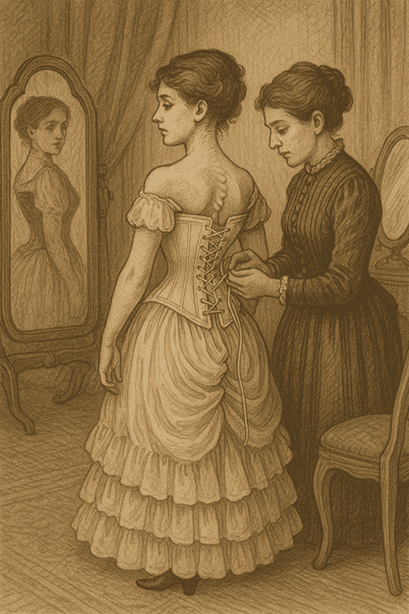
Corsets weren’t just fashion statements—they also served orthopedic functions, especially for women and upper-class men.
- Support corsets were prescribed for “weak backs,” poor posture, or spinal curvature.
- Tight lacing was believed to align the spine and offer relief.
- Unfortunately, excessive compression could lead to organ displacement or worsened muscle weakness.
Alongside corsets, leather and metal braces were introduced to help people with scoliosis, spinal injuries, or chronic lower back pain. These were sometimes custom-fitted, marking an early step toward orthopedic medicine.
Liniments & Rubs: The Rise of Patent Medicine

If you lived in the 1800s, odds are someone would recommend you rub a “miracle liniment” on your sore back. These topical treatments were popular, cheap, and heavily advertised.
Common ingredients included:
- Camphor – For its cooling, numbing effect.
- Menthol – Extracted from mint, used for circulation and pain.
- Turpentine or alcohol – Believed to draw out inflammation.
- Capsaicin from chili peppers – Used in stimulating plasters.
Some of the most famous brands of the day were:
- Sloan’s Liniment
- Mustang Liniment
- Clark Stanley’s Snake Oil Liniment (yes—real snake oil)
⚠️ Patent medicines were largely unregulated until the early 20th century. Many were ineffective, and some were downright harmful.
Hydrotherapy: Healing with Water
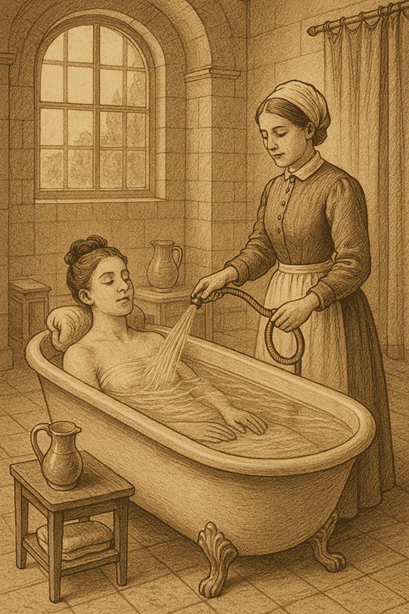
Spas and sanatoriums across Europe and America welcomed patients with chronic pain, including those suffering from back problems.
- Cold compresses, steam baths, and mineral springs were believed to “revive the nerves” and improve circulation.
- Water therapy could be gentle (soaks and showers) or extreme (plunges and jets).
- Germany and Switzerland led in therapeutic hydrotherapy, especially at resorts like Bad Nauheim or Baden-Baden.
This was one of the few remedies that often had real therapeutic benefits—warm water can indeed ease muscle tension and stiffness.
Electric Belts, Magnets, and the Rise of Medical Gimmicks
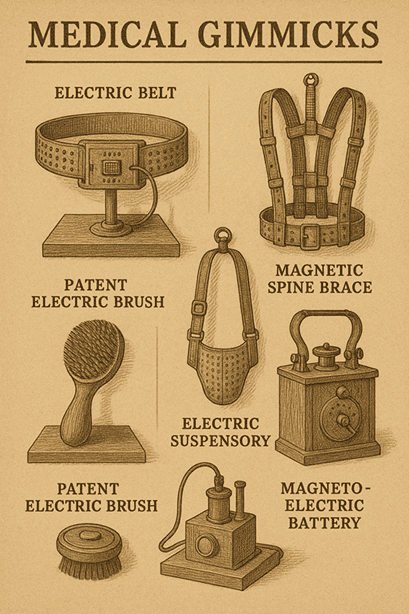
The 1800s also saw a boom in medical novelties—many of which targeted back pain sufferers desperate for relief.
Some of the strangest included:
- Electrotherapy belts that sent weak electric pulses through the spine.
- Magnetic back braces, said to realign your body’s energy.
- Vibrating chairs, endorsed by “experts” but mostly based on pseudoscience.
While these inventions rarely worked as promised, they reflect how people increasingly saw technology as a path to healing.
Medical Shifts: The Roots of Modern Pain Science
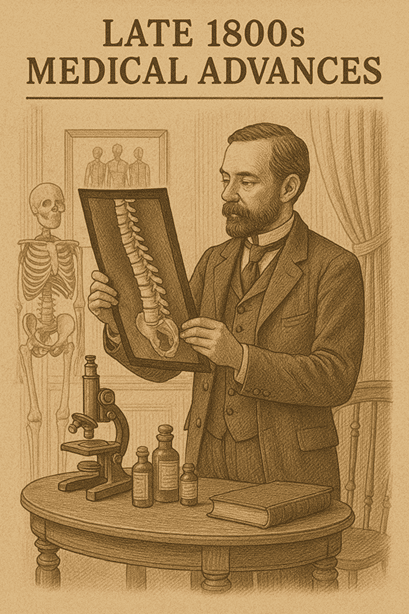
Toward the end of the 1800s, medicine began catching up with biology:
- Doctors started distinguishing between muscular pain, nerve pain, and spinal injury.
- The invention of X-rays in 1895 opened the door to understanding back structure.
- Early forms of physical therapy and manual manipulation emerged in medical schools and hospitals.
The age of guesswork was slowly giving way to evidence-based practice.
Final Thoughts: Desperation and Innovation
The 1800s were an era of trial and error, where back pain was managed through a blend of science, superstition, and sheer marketing. While some treatments—like warm water soaks and herbal rubs—offered genuine relief, others were ineffective or dangerous.
Still, the century laid the groundwork for how we think about pain today:
- The spine began to be studied seriously.
- Pain relief became a recognized medical goal.
- Patient experiences, including chronic pain, started to influence treatment approaches.
And thankfully, we now have better tools than corsets and snake oil.