Valets, Lady’s Maids, and Personal Attendants in Edwardian Households
Among the many servants in an Edwardian country house, none were closer to the family than the valets and lady’s maids. These attendants worked not in the grandeur of the dining room or the bustle of the kitchen, but in the private chambers of their employers. Their tasks went far beyond clothing and grooming — they were confidants, problem-solvers, and sometimes keepers of the family’s most personal secrets.
To see how these roles fit within the broader servant system, read Life Below Stairs: The Servant Hierarchy in the Edwardian Era.
The Valet: A Gentleman’s Right Hand

The valet was the personal servant of the master of the house. Unlike the butler, who managed the household at large, the valet focused on the private needs of one person. His responsibilities included:
- Dressing and grooming: Preparing clothing for the day, helping with coats, and ensuring shoes and accessories were polished and ready.
- Wardrobe care: Cleaning, pressing, and repairing garments, sometimes even traveling to London tailors.
- Packing and travel: Organizing trunks and ensuring all necessities were at hand when the master traveled.
- Health and comfort: Managing small details like baths, shaving supplies, and even medicines.
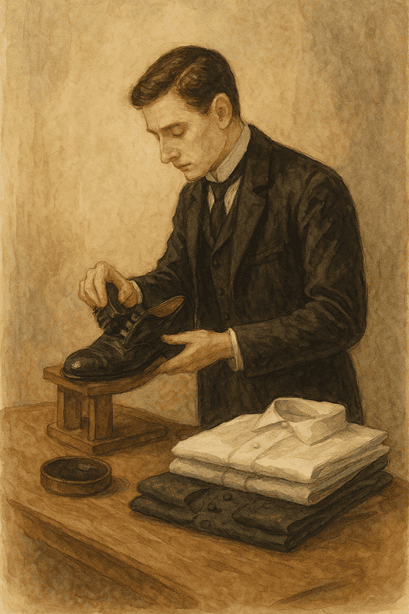
The valet was expected to be discreet, loyal, and always presentable. His closeness to the master of the house gave him a privileged but delicate position — he often overheard private conversations and witnessed personal matters.
The Lady’s Maid: Confidante and Attendant

The lady’s maid was the female counterpart to the valet, serving the lady of the house. Like the valet, her duties went far beyond wardrobe care:
- Dressing and appearance: Helping her mistress into gowns, arranging jewelry, and styling hair.
- Clothing maintenance: Cleaning lace and fine fabrics, mending dresses, and preparing outfits for different occasions.
- Personal care: Managing cosmetics, perfumes, and skincare — an important ritual of elegance in Edwardian society.
- Confidante role: Many ladies entrusted their maids with secrets, frustrations, and worries, making the role deeply personal.
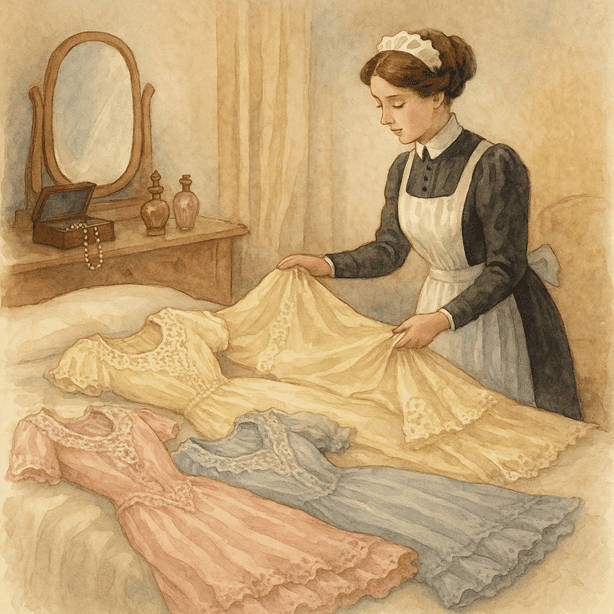
A skilled lady’s maid was invaluable, particularly one trained in hairdressing and fashion. Her discretion was paramount, as she lived in the private space of her mistress and knew more than most about the household’s inner life.
The Delicate Balance of Trust

Valets and lady’s maids occupied a unique space: though servants, they worked in constant proximity to the family, often one-on-one. This closeness could lead to deep loyalty — or to resentment and tension. They knew their employer’s moods, habits, and vulnerabilities, and were expected never to betray them.
In return, they often enjoyed privileges beyond other servants: better quarters, higher wages, and sometimes even gifts of clothing or jewelry once discarded by their employers.
To understand how daily discipline and structure governed even these privileged roles, explore Life Below Stairs: Daily Routines, Rules, and the Servants’ Door
Personal Attendants and Specialists
Beyond the valet and lady’s maid, large households sometimes employed additional personal attendants:
- Nursery maids and nannies, caring for the children.
- Companions, hired to provide company for elderly or single ladies.
- Traveling attendants, who accompanied the family abroad.
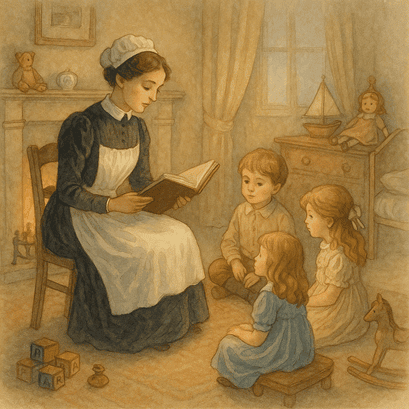
These roles reinforced the intimate nature of service, reminding us that the life of a great house was not only about grandeur but also about private comfort.
Final Thoughts
The valet and lady’s maid were at the heart of the Edwardian household’s private world. They ensured that masters and mistresses appeared flawless in society, but also offered comfort and continuity in daily life. Their unique position as both servants and confidants reveals just how much the lives of the elite depended on trust, discretion, and the quiet dedication of those who served them.
As the servant world evolved and began to disappear after the First World War, many of these intimate roles vanished too — a change traced in The Decline of the Servant Era in Edwardian Britain.
Life Below Stairs Series
- Life Below Stairs: The Servant Hierarchy in the Edwardian Era
- Life Below Stairs: Daily Routines, Rules, and the Servants’ Door
- The Senior Staff: Butlers, Housekeepers, and Cooks
- Valets, Lady’s Maids, and Personal Attendants
- The Working Staff: Footmen, Maids, and Chauffeurs
- The Junior Roles: Scullery Maids, Hall Boys, and Other Assistants
- The Decline of the Servant Era
- Life Below Stairs: The Servant Hierarchy in Downton Abbey