The Working Staff in Edwardian Households: Footmen, Maids, and Chauffeurs

If the butler, housekeeper, and cook were the leaders of the household, the working staff were its backbone. These men and women carried out the daily tasks that kept the estate running — serving, cleaning, and driving. Their work demanded stamina, attention to detail, and often, a willingness to remain invisible even while performing highly visible duties.
Footmen: Elegance in Service
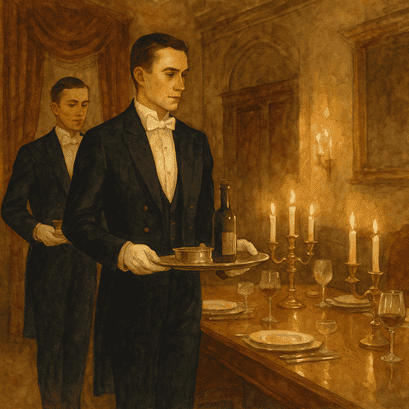
The footmen were among the most recognizable servants in an Edwardian household. Dressed in livery uniforms, they combined ceremonial appearance with practical service. Their responsibilities included:
- Serving meals at the dining table.
- Carrying trays, messages, and refreshments.
- Answering doors and attending to guests.
- Polishing silver, glassware, and fine furniture.
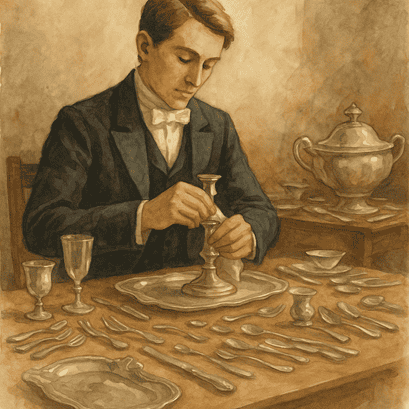
Footmen were chosen not only for their ability but also for their height, appearance, and posture. Their presence was a mark of prestige — the more footmen a household employed, the greater the family’s display of wealth.
Housemaids: The Tireless Keepers of the Home
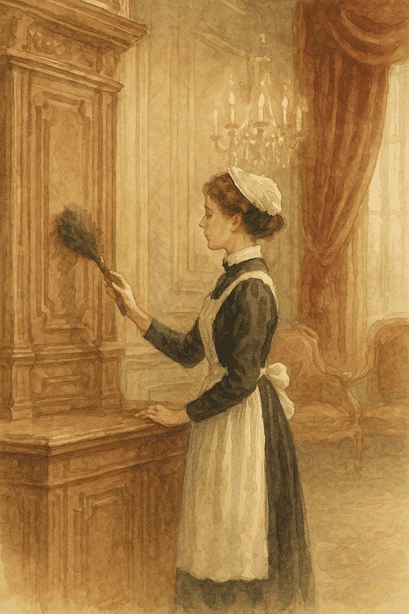
Behind the glamour of the drawing rooms, housemaids carried out endless labor to keep a large house running smoothly. Their duties included:
- Cleaning bedrooms, corridors, and reception rooms.
- Dusting, sweeping, and polishing surfaces.
- Making beds, laundering linens, and hanging curtains.
- Lighting fires in bedrooms and sitting rooms.
There were often several housemaids, each with a different rank:
- Head housemaid, who supervised others.
- Parlour maids, who cleaned and prepared reception rooms.
- Chamber maids, who managed bedrooms.
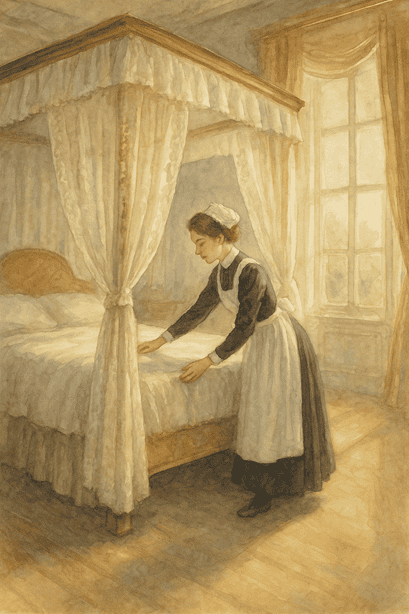
Though their work was constant, housemaids were essential for creating the spotless impression of comfort and elegance that Edwardian families prized.
To see how their days unfolded within the rhythm of household life, read Life Below Stairs: Daily Routines, Rules, and the Servants’ Door.
Chauffeurs: Symbols of Modernity
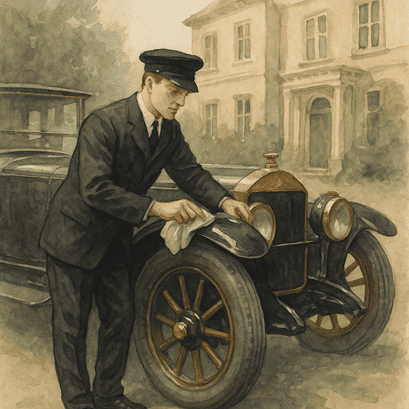
By the early 20th century, the chauffeur became one of the most modern roles in the servant hierarchy. With motorcars replacing carriages, families relied on skilled drivers who could:
- Maintain and repair vehicles.
- Drive the family safely and stylishly.
- Keep up with the rapidly changing technology of engines.
Chauffeurs often had more independence than other servants. They were seen as specialists — part mechanic, part driver — and their proximity to the family (escorting them in public) gave them a unique social position within the household staff.
The Backbone of Service
Footmen, housemaids, and chauffeurs formed the visible face of service in Edwardian households. Whether answering doors, maintaining spotless rooms, or driving through the countryside, they represented the efficiency and discipline that great houses demanded. They may not have held the authority of senior staff, but without them, the rhythm of country house life would have fallen apart.
Final Thoughts
The working staff carried the household on their shoulders — sometimes literally. Their labor was both physical and ceremonial, blending duty with presentation. In them, we see the balance between tradition and modernity: the footmen in livery recalling centuries of service, the housemaids continuing a cycle of tireless labor, and the chauffeurs pointing toward the future of a changing age.
Life Below Stairs Series
- Life Below Stairs: The Servant Hierarchy in the Edwardian Era
- Life Below Stairs: Daily Routines, Rules, and the Servants’ Door
- The Senior Staff: Butlers, Housekeepers, and Cooks
- Valets, Lady’s Maids, and Personal Attendants
- The Working Staff: Footmen, Maids, and Chauffeurs
- The Junior Roles: Scullery Maids, Hall Boys, and Other Assistants
- The Decline of the Servant Era
- Life Below Stairs: The Servant Hierarchy in Downton Abbey