The Medieval Gardener: Skills, Tools, and Daily Life
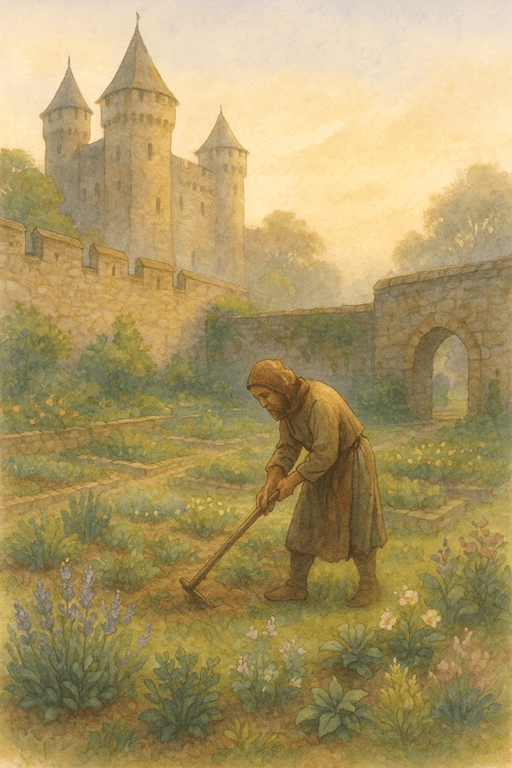
Behind every flourishing medieval garden—whether an herb patch, orchard, or enclosed sanctuary—stood the quiet labor of the gardener.
While noblewomen and lords admired the beauty of roses or strolled among trimmed hedges, it was the gardener who made such beauty possible through skill, patience, and constant work.
The medieval gardener was not merely a laborer; he was a craftsman and caretaker, combining practical knowledge of soil, weather, and plants with deep respect for the rhythm of nature. His world was one of seasons and cycles, of silent discipline and devotion to growth.
The Role of the Gardener in Castle Life
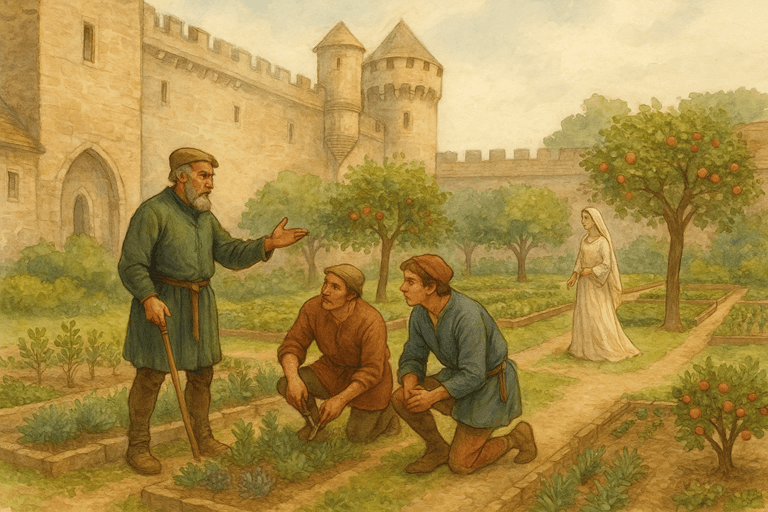
In the complex hierarchy of castle life, the gardener held a position that balanced between servant and specialist.
Large estates often employed a head gardener, sometimes called a master of the gardens, who oversaw both the productive and ornamental spaces: the physic garden, kitchen garden, orchards, and pleasure grounds. Beneath him worked assistants and peasants who dug, watered, weeded, and harvested.
The gardener’s responsibilities extended far beyond planting. He managed irrigation, monitored soil fertility, and protected crops from pests and frost. He might advise the cook on fresh herbs or ensure flowers for the chapel were available on holy days. In some castles, the gardener even helped prepare herbal ointments in the stillroom or contributed ingredients to the apothecary.
His success—or failure—affected the comfort and reputation of the entire household.
Knowledge and Training

To tend a medieval garden required both experience and inherited wisdom. Much of a gardener’s education came through apprenticeship, passed from father to son or master to apprentice. But his work was also influenced by written knowledge.
Monastic texts like the Capitulare de Villis (issued under Charlemagne) and later gardening manuals such as the Hortus Sanitatis or Tacuinum Sanitatis detailed the uses of plants and their ideal growing conditions. A literate gardener might keep his own notes, while others memorized planting schedules, herbal lore, and weather patterns.
Observation was key. Without modern tools of measurement, medieval gardeners read the sky and soil, trusting instinct and the subtle signs of nature—bird migrations, frost on leaves, or the scent of rain. They knew which herbs grew best in shade, which vegetables demanded rich compost, and which flowers thrived near fountains or walls.
Their work, though humble, was deeply scientific in its own way.
Tools of the Trade
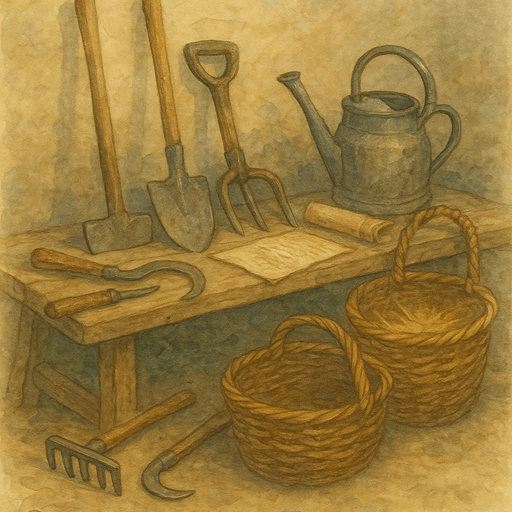
The gardener’s tools were simple but effective—shaped by hand, made from wood and iron, and passed down for generations.
- Hoes and mattocks for breaking and turning soil.
- Spades and shovels for digging and transplanting.
- Knives and pruning hooks for cutting herbs or trimming vines.
- Rakes and forks for clearing debris and spreading compost.
- Wooden watering cans or leather buckets for carrying water from wells or ponds.
- Scythes and sickles for mowing grass and harvesting crops.
Iron tools were valuable possessions, often repaired rather than replaced. Gardeners also used organic aids like manure, ash, and mulch to improve soil, relying on knowledge built over centuries of trial and error.
Each tool bore the marks of its user—polished handles, repaired blades, and signs of daily use that spoke to a lifetime of labor.
A Day in the Life of the Gardener
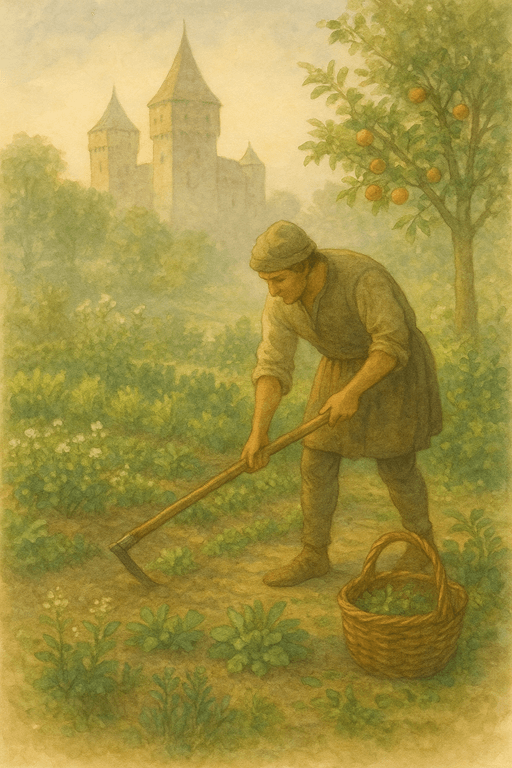
A gardener’s day began with dawn. Before the castle stirred, he was already outside, checking the beds for damage from frost, animals, or overnight rain.
Morning was devoted to heavy work—digging, weeding, planting, or pruning. By midday, he delivered freshly cut herbs and vegetables to the kitchen and gathered flowers for the lady’s chambers or the chapel altar. In the afternoon came lighter tasks: watering, gathering seeds, or cleaning tools.
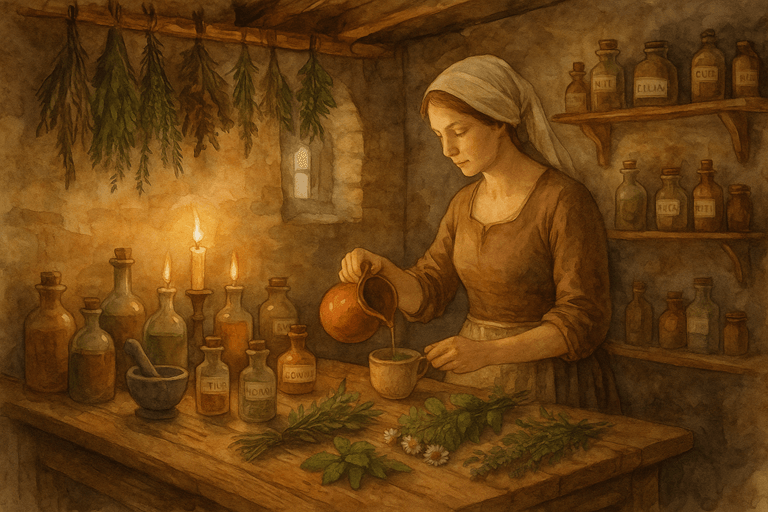
He might also work in the stillroom, drying herbs and preparing bunches for storage or healing. During harvest season, his hours lengthened until dusk.
Even winter offered little rest. Though the soil slept, the gardener repaired tools, planned the next year’s beds, and tended the castle’s indoor plants. His was a life of steady rhythm—one defined by faith in renewal.
Relationship with Nature
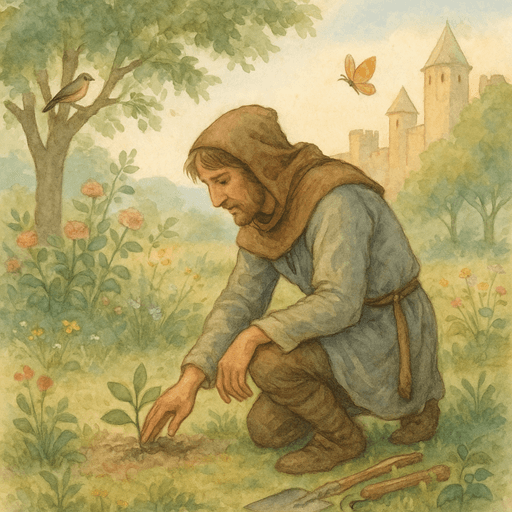
In an era when survival depended on the land, gardeners were mediators between humanity and nature. They shaped the earth but respected its mysteries. A good gardener observed the balance between wildness and order, ensuring that every plot reflected harmony rather than domination.
Gardening was, in many ways, a spiritual act. Monks viewed it as a form of prayer, while castle gardeners practiced it as service—sustaining the household and honoring creation. Every seed planted was an act of hope; every harvest, a small miracle.
Challenges and Hardships
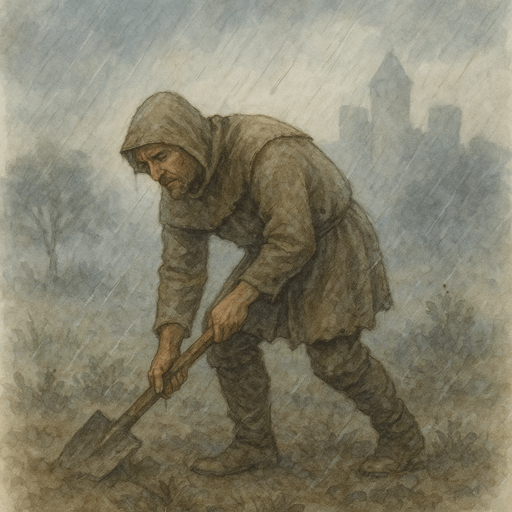
Despite its beauty, gardening in the Middle Ages was physically demanding and unpredictable. Gardeners worked through heat, rain, and cold, battling pests, drought, and disease. A single frost could destroy months of effort.
Tools were heavy, injuries common, and pay modest. Yet the gardener’s skill earned quiet respect—his work visible in every blossom, herb, and feast. Castles depended on his persistence. Without him, both the noble table and the chapel altar would soon be bare.
The Gardener in Art and Literature
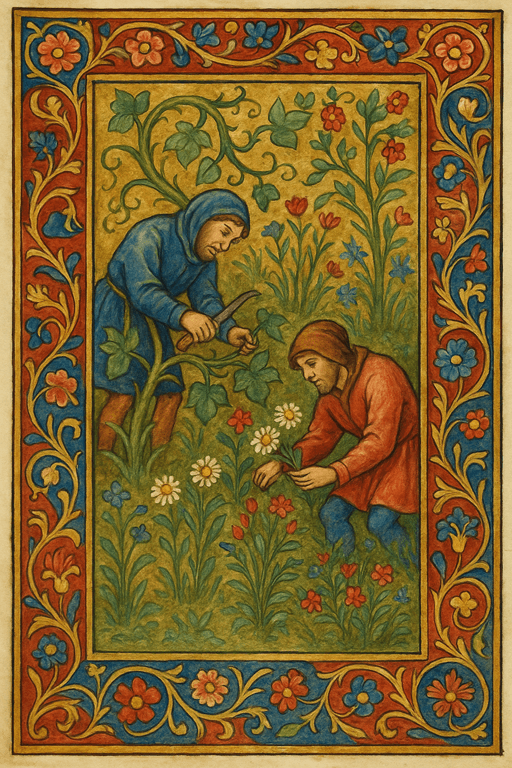
Though rarely the hero of medieval stories, the gardener often appeared as a symbol of humility and wisdom. In literature, he might represent the faithful servant or the moral guide who tends not just the earth but the heart.
In art, miniature paintings and tapestries occasionally depict gardeners at work—stooping over herb beds or pruning fruit trees, surrounded by the walls of a noble estate. These images capture a quiet dignity: the human link between the luxury of the castle and the fertility of the soil.
Legacy
The medieval gardener left behind no signature, yet his influence endures. Many gardening traditions—crop rotation, companion planting, pruning, and herbal preservation—owe their roots to these early cultivators.
His work bridged science, art, and faith, nurturing both sustenance and beauty. Every castle garden, from the humblest vegetable patch to the most elaborate rose bower, was a testament to his quiet mastery.
Today, as we rediscover slow living, organic growth, and the rhythms of nature, we walk in the footsteps of the medieval gardener—one who saw in every seed a reflection of the divine cycle of life.