Medicinal Herbs in the Medieval Castle: Healing with Nature
When illness or injury struck within the stone walls of a medieval castle, there was no apothecary to visit and no physician’s cabinet of modern cures. Instead, the remedy often grew just beyond the kitchen door — in the humble but vital herb garden.
These plots, sometimes called herbularies or physic gardens, were not separate institutions as they later became in the Renaissance, but rather small, enclosed areas of cultivated plants grown for healing, cooking, and even spiritual protection. Herbs in medieval times were not just plants; they were lifelines. Within them lay the castle’s most dependable medicine chest — one shaped by generations of observation, monastic learning, and faith in nature’s power to heal.
The Physic Garden: A Lifeline Within Castle Walls
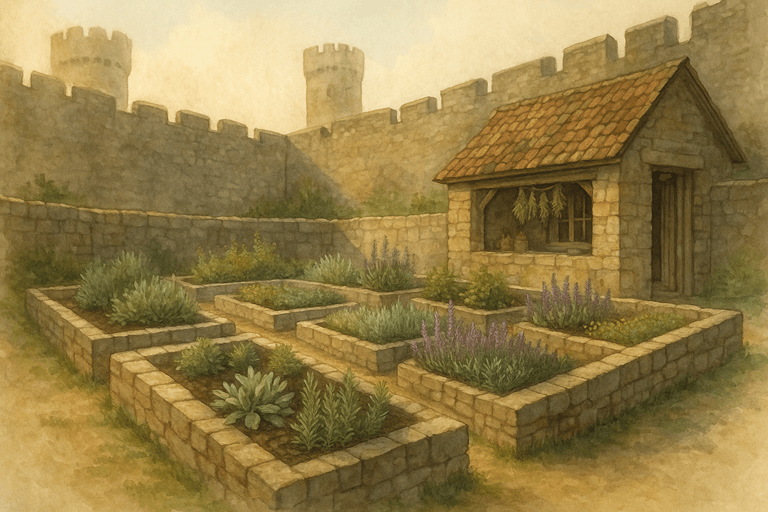
Inside a medieval castle, life could be harsh and uncertain. Accidents in the kitchens or stables, illnesses from poor sanitation, or injuries from war were all part of daily life. A small garden devoted to medicinal herbs was therefore not a luxury — it was essential.
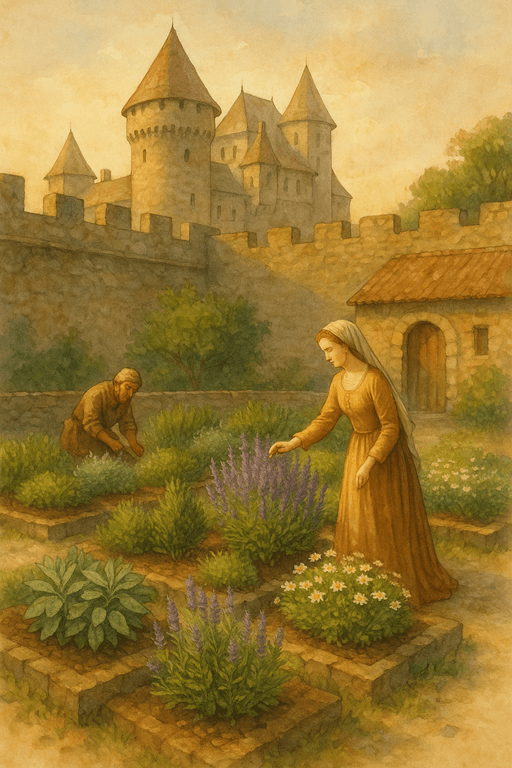
Typically set close to the kitchen, chapel, or infirmary, this garden was enclosed by low stone walls, wooden fences, or wattle hurdles to protect the plants from wandering animals. Paths of earth or gravel divided neat rectangular beds where each herb had its own space. The design followed the medieval love of order — practical yet pleasing to the eye.
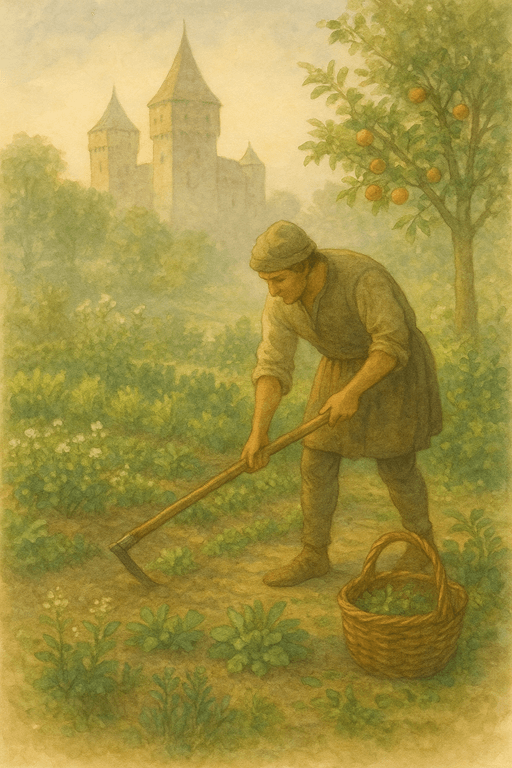
Tended by skilled gardeners, kitchen servants, or sometimes the noble lady herself, the garden produced the household’s natural pharmacy. Herbs were planted not only for their healing virtues but also for their scents and symbolism. Lavender might line the pathways, sage and rosemary filled the air with their fragrance, and chamomile spread low and soft underfoot.
In larger estates, a small stillroom or chamber nearby served as the heart of medieval medicine-making. Here herbs were dried, ground, and steeped into remedies for all manner of ailments — from stomach pains and fevers to wounds and sleeplessness.
The castle’s physic garden was a place of science, superstition, and hope — a small sanctuary where life’s fragility met the quiet persistence of nature.
Common Medicinal Herbs of the Medieval Castle
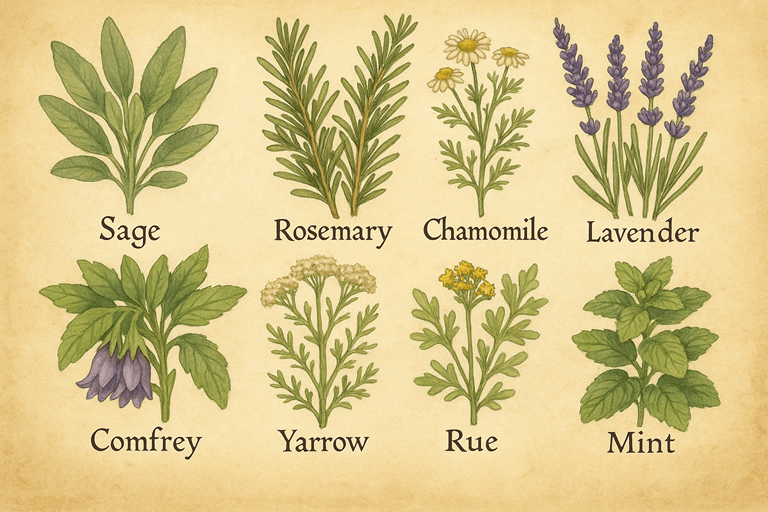
The herbs grown in a medieval castle’s garden reflected a blend of monastic influence, folk tradition, and practical necessity. Each plant carried a specific role in maintaining health and treating illness — and many were believed to hold both earthly and divine power.
- Sage — The “king of herbs.” Known for aiding digestion and preserving meats, sage was considered so valuable that a proverb declared, “Why should a man die whilst sage grows in his garden?”
- Rosemary — Symbol of remembrance and fidelity. Its leaves were boiled to stimulate circulation and sharpen memory, and its fragrance was thought to ward off evil spirits.
- Chamomile — Gentle and calming, chamomile was brewed into tea to soothe the stomach, calm anxiety, and ease sleepless nights.
- Comfrey — Nicknamed “boneset,” comfrey leaves were mashed into poultices for broken bones, bruises, and wounds, believed to help them knit faster.
- Yarrow — Called “soldier’s woundwort,” this hardy herb was used to stop bleeding and prevent infection — a vital ally in times of war.
- Lavender — Beyond its lovely scent, lavender was used to ease headaches and nervous tension and to perfume linen and living quarters.
- Rue — A bitter plant valued for its protective reputation. It was used against fevers and infections but also carried symbolic meaning as a guard against misfortune.
- Mint and fennel — Common in kitchen and medicine alike. These refreshing herbs aided digestion and freshened breath.
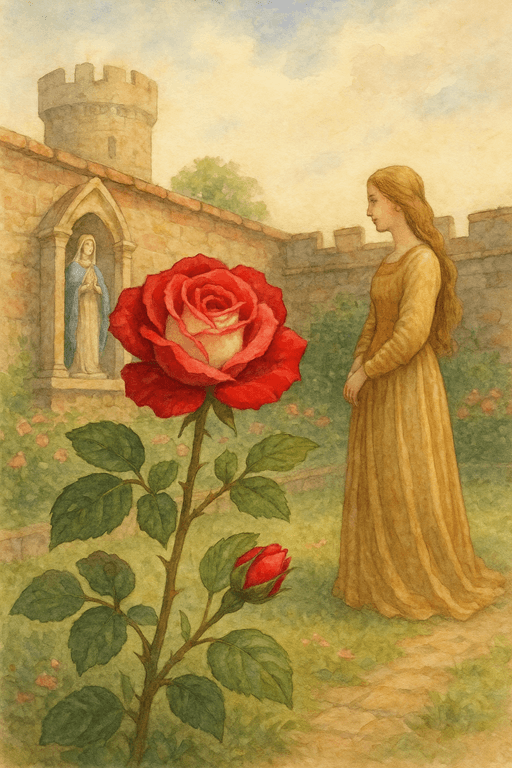
- Rose and poppy — Rose petals were distilled into soothing waters and salves for the skin, while poppy extracts eased pain and induced rest — a rare comfort in the harshness of medieval life.
These plants, though simple, formed the backbone of medieval medicine. They were cultivated not only for their physical effects but also for the spiritual comfort they provided. Each leaf and blossom was a fragment of wisdom passed down from monasteries, classical texts, and village healers alike.
Remedies and Applications
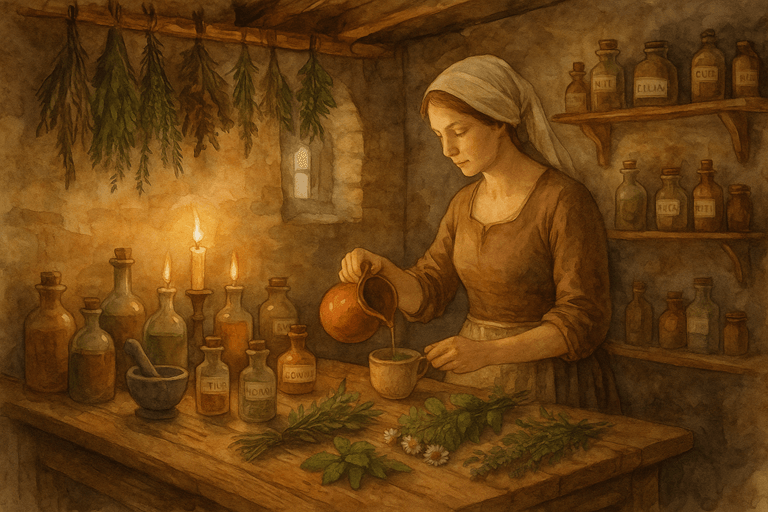
Transforming herbs into usable medicine was both a craft and a ritual. Remedies were prepared with great care, often guided by the moon’s phases or the church calendar, when certain plants were believed to hold greater virtue.
- Infusions and teas were the most common: chamomile, mint, or sage steeped in boiling water to soothe stomach pains or fevers.
- Poultices and compresses were made from crushed comfrey, plantain, or yarrow leaves, applied directly to wounds or bruises.
- Ointments and salves mixed herbs with animal fat, beeswax, or oil to treat burns, rashes, and aching joints.
- Syrups and cordials sweetened with honey offered relief from coughs, sore throats, and chest ailments.
In every castle, the methods were similar but the recipes unique — passed down within families or copied from monastic herbals. Some preparations were mild tonics; others, dangerously potent. A healer’s judgment was as vital as her ingredients.
Who Used the Herbs?
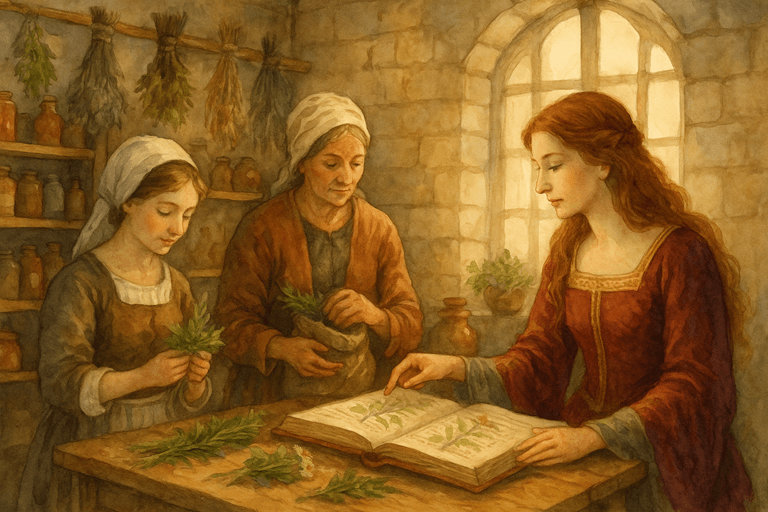
Knowledge of herbs was passed down through generations of women, from noble ladies to peasant wives. Castle kitchens and stillrooms (special rooms for brewing remedies) were often managed by women who combined practical experience with inherited lore.
Professional healers also played a role:
- Herbalists specialized in plants and remedies.
- Midwives relied heavily on herbs to aid in childbirth and recovery.
- Cooks doubled as healers, adding restorative herbs to broths and wines.
- Physicians and apothecaries, though rarer and more expensive, sometimes combined herbal treatments with astrology and humoral theory. Health depended on balancing blood, phlegm, yellow bile, and black bile, and herbs were prescribed to “warm,” “cool,” “dry,” or “moisten” the body as needed.
Monks and nuns, too, played an important role in shaping herbal medicine. Their monasteries maintained some of the most organized gardens in Europe, exchanging plant seeds and healing knowledge with noble households. Thus, the medieval castle’s herb garden was both local and connected — part of a larger network of living medicine.
Belief and Spiritual Dimension

In the Middle Ages, healing was inseparable from faith. Every herb was seen as a gift from God, created with purpose. Before cutting plants, a prayer might be whispered, or the gardener would face east toward the rising sun.
Many remedies included spiritual rituals:
- Rosemary or lavender might be blessed in church on holy days.
- St. John’s Wort was hung above doors to keep away evil spirits.
- Rue and sage were carried in pouches as protection against disease.
Even the design of the enclosed garden — the hortus conclusus — held sacred meaning, symbolizing purity and paradise. Within its walls, nature, healing, and faith intertwined.
To medieval minds, illness was not only a physical imbalance but also a moral or spiritual test. Thus, the garden became both a place of medicine and quiet reflection — where caring for the body and tending the soul were part of the same act.
Herbs in Times of War
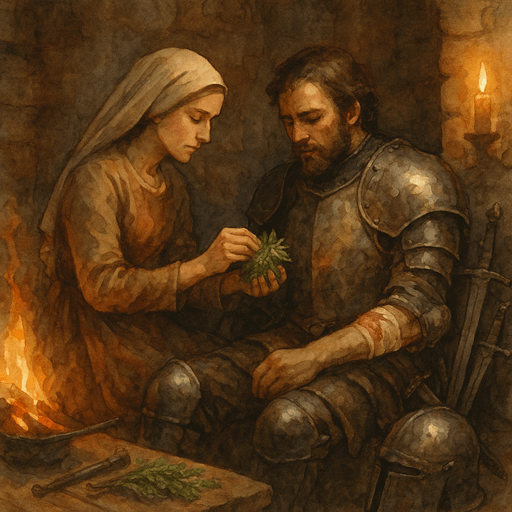
When a castle came under siege, its herb garden became a lifeline. With no access to outside supplies, the garrison depended entirely on what grew within the walls.
Herbs like yarrow, comfrey, and garlic were indispensable for treating wounds, cleaning cuts, and preventing infection. Teas and broths made from chamomile, thyme, and sage helped ease fever and pain. Dried herbs and prepared salves were stored carefully for emergencies.
Sometimes, a castle appointed a herbal master or healer to oversee the care of the injured — an early echo of the field medic. In the chaos of war, a few handfuls of dried leaves could mean the difference between life and death.
Amidst iron and fire, the herb garden remained the quiet heartbeat of survival — proof that even in the shadow of battle, life persisted through green things.
Traces Today
Few original medieval herb gardens have survived, but their spirit endures in modern reconstructions. Across Europe, abbeys and castles now cultivate historical gardens based on manuscripts and archaeological findings.
Visitors can wander through beds of sage, rosemary, and lavender, breathing the same fragrances that once comforted medieval households. Places like Alnwick Castle in England and Villandry in France recreate these living links to the past, blending botanical knowledge with medieval symbolism.
These gardens remind us that healing in the Middle Ages was not merely about survival — it was about harmony. Between body and soul, human and earth, faith and nature.
Final Thoughts
Medicinal herbs were the unseen heroes of medieval castle life. They mended wounds, eased suffering, and infused daily existence with scent and meaning. In an age before modern medicine, the herb garden represented both science and sanctuary — a place where knowledge met devotion.
Each leaf told a story of resilience. Each root held the memory of generations who trusted the earth to heal. And though centuries have passed, the whispers of those green remedies still linger — reminding us that even behind fortress walls, healing was, and always will be, a deeply human art.