What Was Grown in the Castle Kitchen Garden?

Life inside a medieval castle was not sustained by banquets alone. While feasts dazzled with roasted meats and rich wines, the daily meals of both nobles and servants depended heavily on what grew just outside the kitchen: the castle kitchen garden.
These gardens were the unsung heroes of medieval life, providing vegetables, legumes, and fruits that filled pots and bowls every day. Without them, castles could not function, especially during long winters or times of siege.
The Role of the Kitchen Garden
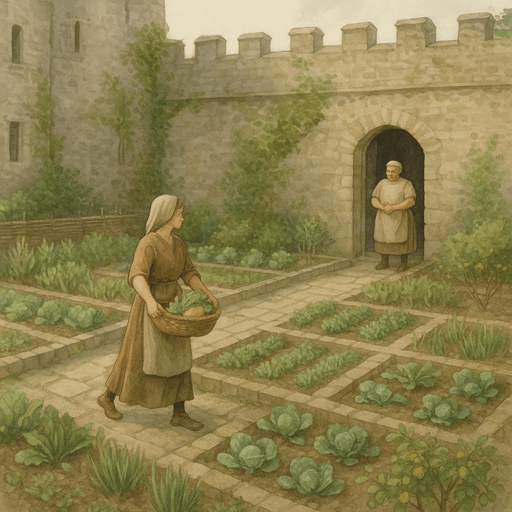
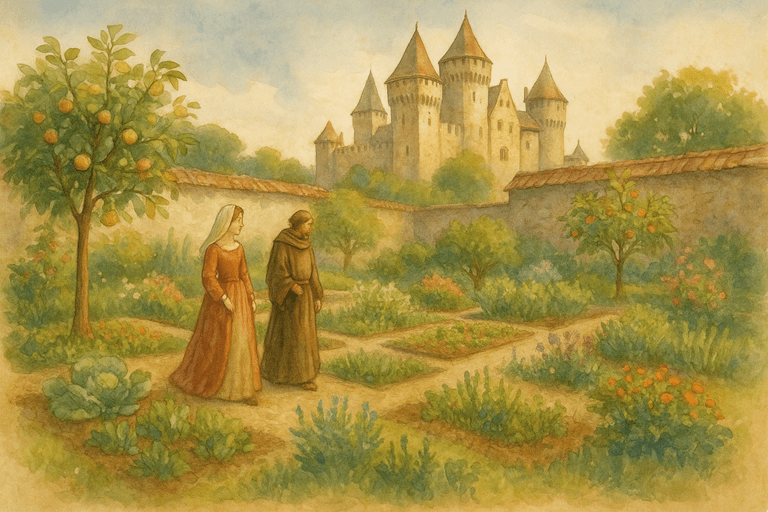
Every castle maintained a garden dedicated to feeding its household. Placed close to the kitchens for easy access, these spaces were enclosed by stone walls or wattle fencing to protect crops from wandering animals.
Unlike pleasure gardens filled with roses and bowers, the kitchen garden was practical, orderly, and essential. It ensured a steady supply of food for both the great hall and the servants’ quarters, helping balance diets that could otherwise lean too heavily on grains or preserved meat.
These gardens also reflected the self-sufficiency of the medieval household. A well-tended kitchen garden meant resilience in times of scarcity, while a neglected one could spell hunger.
Staple Vegetables

Vegetables were the foundation of sustenance in the medieval castle, far more central to the diet than we often imagine from tales of endless meat at feasts. For most people—especially servants, workers, and peasants—vegetables were eaten daily in soups, stews, and pottages. Even the nobility, who had greater access to game and livestock, relied on vegetables to balance their meals and provide essential nutrients during times when fresh meat was scarce. These hardy crops were chosen for their resilience, their ability to grow in cooler climates, and their capacity to store well through long winters. Without them, castle life would have been impossible.
- Cabbage: A staple crop, often boiled into thick pottages (soups) that fed everyone from lord to laborer.
- Onions and Leeks: Essential for flavoring dishes, preserved well, and available nearly year-round.
- Carrots and Parsnips: Root crops that stored easily and provided nutrition through the winter.
- Turnips and Rutabagas: Humble but filling, often boiled or mashed.
- Beets: Used both for their roots and leaves.
These vegetables were hardy, capable of surviving cooler climates, and relatively easy to grow in enclosed plots.
Legumes: Protein for the Table

While vegetables offered bulk and vitamins, legumes were prized for their protein content, making them indispensable to the medieval diet. In an age when fresh meat was expensive and not always available, beans and peas provided a more accessible way to stay nourished. Legumes were also practical: they grew well in varied soils, were relatively easy to harvest, and could be stored dry for months, ensuring food supplies through the harshest seasons. Gardeners valued them not only for the table but also for the soil, since legumes replenished fertility by fixing nitrogen—making them part of an early crop rotation system.
- Beans: Broad beans (fava beans) were the most common, eaten fresh in summer and dried for winter.
- Peas: Another staple, used in pottages and stews. Split peas were a reliable winter food.
- Chickpeas and Lentils: Less common in northern Europe but grown in warmer regions.
These crops were filling, nutritious, and could be stored dried for long-term use.
Fruits and Berries
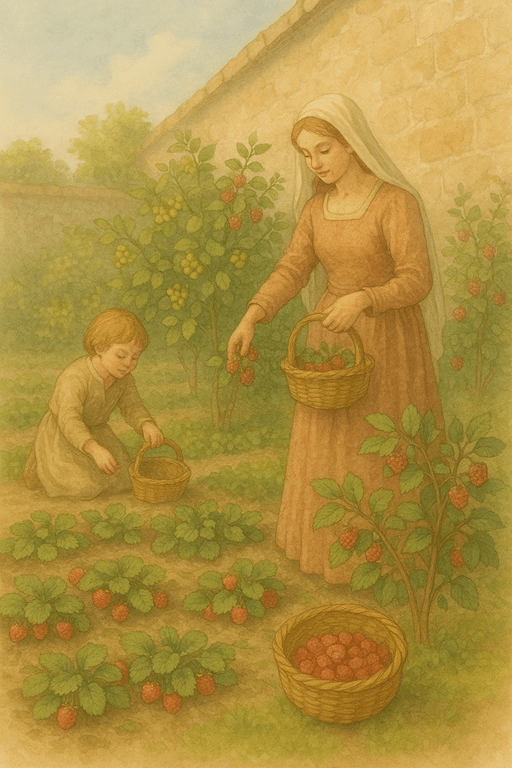
While the bulk of the castle’s fruit came from orchards, kitchen gardens often included smaller fruiting plants that offered sweetness and variety. Fruits were especially valued in noble households, not only for their taste but also for their use in sauces, preserves, and decorative dishes at feasts. For servants and peasants, berries provided rare seasonal treats that added diversity to otherwise simple meals. Some fruits were cultivated in garden beds, while others—like raspberries and blackberries—might be foraged from the surrounding landscape. Their fleeting season made them precious, but preserved fruits could bring a taste of summer into the depths of winter.
- Strawberries: Wild varieties were cultivated in small plots.
- Gooseberries and Currants: Used for sauces, preserves, and flavoring dishes.
- Raspberries and Blackberries: Sometimes planted, but often gathered from nearby woods.
- Grapes: In warmer regions, small vines might be trained against walls.
Fruit added much-needed sweetness to diets otherwise dominated by grains and savory foods.
Herbs for Cooking

Though herbs had a starring role in physic gardens for their medicinal properties , many were also key to the kitchen. Medieval cuisine relied heavily on herbs to bring flavor and freshness to meals that might otherwise have been bland, particularly in winter when fresh produce was scarce. Herbs also played a role in preserving food and masking the taste of meats or fish that were less than fresh—a real concern in an age before refrigeration. Castle kitchens often grew culinary herbs alongside vegetables, blurring the line between medicine and flavor.
- Parsley: Used in sauces and as a garnish.
- Fennel: Added sweetness and used in fish dishes.
- Mint: Refreshed the palate and flavored drinks.
- Dill: Used in pickling and sauces.
This overlap between the physic and kitchen garden shows how interconnected medieval gardening really was.
How Crops Were Used in Daily Meals
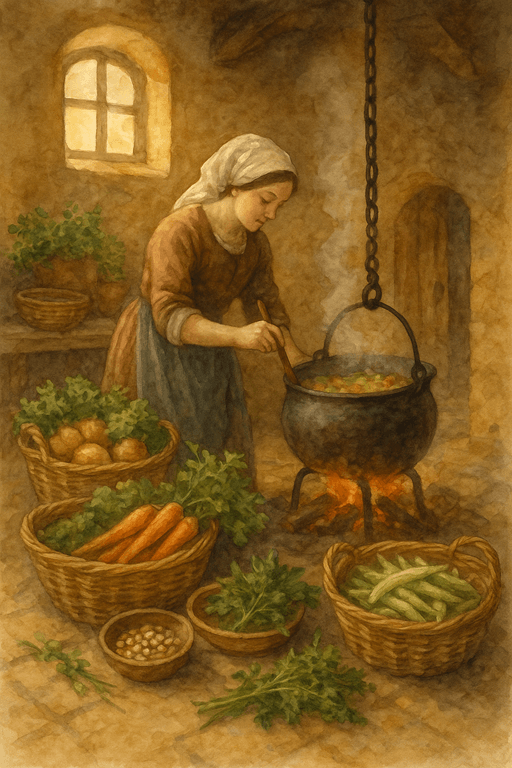
The produce of the kitchen garden was not eaten raw as much as in modern times, but instead formed the backbone of cooked meals. Vegetables and legumes were combined with grains, broth, or small amounts of meat to create filling dishes that could feed both large households and hungry workers. Food from the garden provided sustenance at every level of the social hierarchy: servants depended on it almost entirely, while nobles enjoyed it as part of their larger banquets. By varying ingredients with the seasons, cooks kept meals interesting and ensured that the castle table never went empty.
- Pottages: Thick vegetable stews, often flavored with meat or bones, were the daily staple for all.
- Soups and Broths: Onions, leeks, and herbs formed the base of many simple soups.
- Preserves: Fruits were dried or cooked down with honey for winter storage.
- Sauces: Herbs and berries created sharp, flavorful sauces to accompany meat and fish.
For servants and workers, vegetables and legumes were often the main dish. For nobles, they played a supporting role at the banquet table.
The Work Behind the Garden
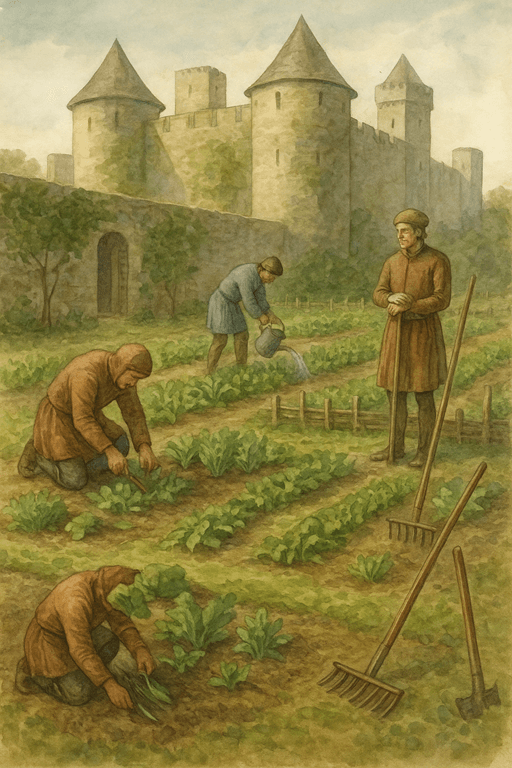
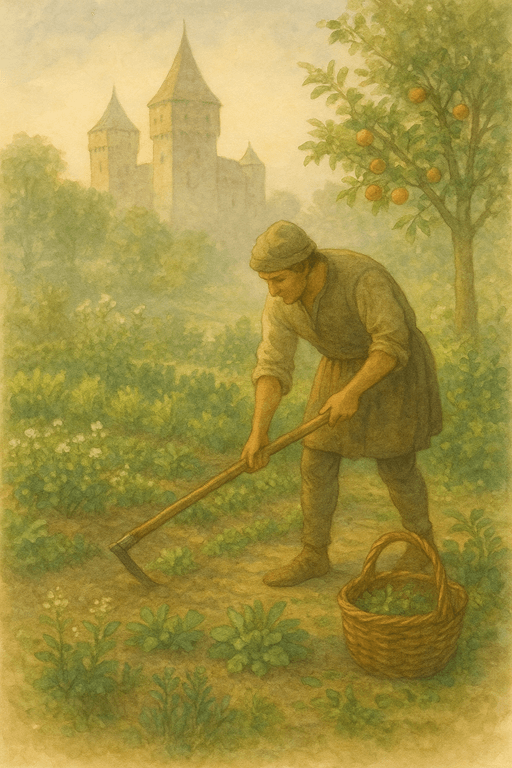
A castle’s kitchen garden did not thrive on its own. Behind every bowl of pottage and every tray of berries lay hours of careful, backbreaking work. Gardeners and peasants alike were responsible for digging, planting, watering, and harvesting throughout the year. This work required not only muscle but also knowledge: which crops could grow side by side, how to rotate plantings to maintain soil health, and how to preserve produce for the months when fresh food was scarce. These tasks often fell to the lower classes, whose labor ensured that the lord’s household never went hungry.
- Rotate crops to prevent soil exhaustion.
- Protect plants from pests and harsh weather.
- Harvest quickly to prevent spoilage.
- Store root vegetables in cool cellars for winter.
This constant effort meant that the castle household could remain independent even in times of hardship.
Legacy and Traces Today
Reconstructed kitchen gardens at castles and monasteries give us a glimpse into medieval diets. Sites like Alnwick Castle and the Cloisters in New York recreate beds of leeks, beans, and herbs, showing how carefully these gardens were planned.
Archaeological evidence—such as pollen analysis and preserved seeds—also helps historians identify what was grown in medieval times.
Final Thoughts
The castle kitchen garden was far more than a patch of vegetables—it was the engine of survival within fortress walls. From hearty cabbages and onions to delicate strawberries and herbs, these gardens provided the daily fuel that sustained both nobles and workers.
Though overshadowed by tales of knights and feasts, the kitchen garden reminds us that the medieval world depended on soil, seeds, and the patient work of gardeners.