Entertainers, Minstrels, and Jongleurs: Bringing Joy to the Medieval Castle
The stone walls of a medieval castle often echoed with the clash of arms, the bustle of servants, and the solemn tones of prayer. But during feasts, celebrations, and times of leisure, those same halls rang with music, laughter, and wonder. At the center of this world of merriment stood the entertainers: minstrels with their songs, jongleurs with their tricks, and storytellers with their tales of faraway lands. They transformed the austere atmosphere of the castle into one of color, movement, and delight, offering a glimpse of joy in lives otherwise defined by hierarchy and duty.
The Role of Entertainers in Feasts
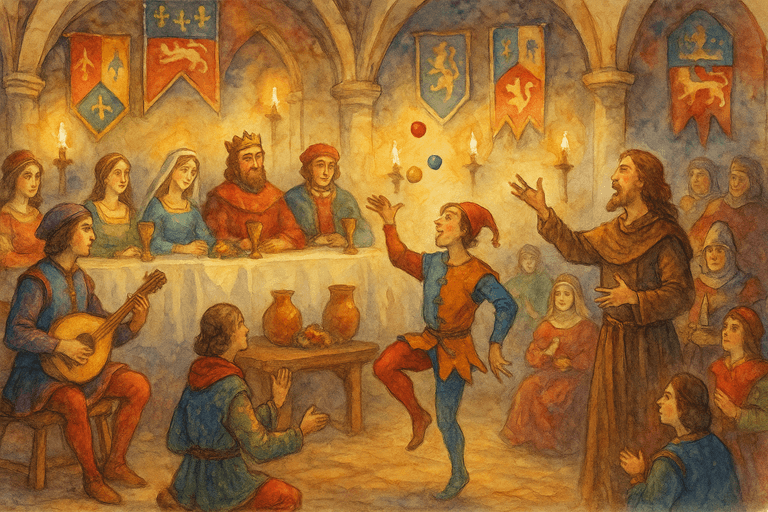
Feasts inside the medieval castle were as much about spectacle as they were about food. They were highly choreographed events where every detail—the dishes, the decorations, the seating order, and the entertainment—was meant to reflect the power, wealth, and refinement of the lord or lady hosting it. Entertainers played a central role in this carefully staged drama. Without them, the long hours of dining would have seemed solemn, even tedious. Their music, performances, and wit transformed the hall into a space of celebration and wonder, keeping guests engaged while reinforcing the host’s ability to provide not just sustenance, but joy and culture as well.
- Centerpieces of Celebration: Minstrels and jongleurs performed between courses, filling long hours of eating and drinking with song, storytelling, and tricks. Their art was not mere background but a highlight of the evening.
- Patronage: Noble families competed to employ or attract the finest entertainers, as their presence reflected the refinement and prestige of the host.
- Atmosphere: Without music and laughter, a feast risked feeling like just another meal. Entertainers created an atmosphere of festivity, making banquets unforgettable occasions.
To be invited to perform at a castle feast was both an honor and a chance for entertainers to secure patronage or gifts.
Minstrels: Singers of Tales and Songs
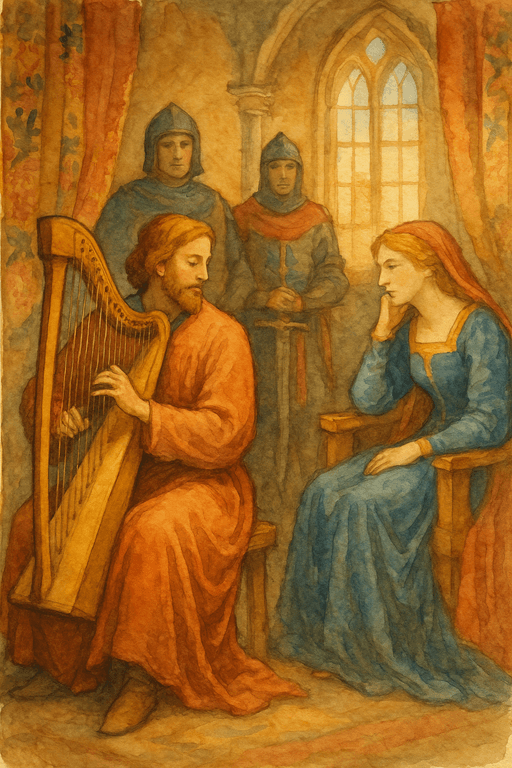
Minstrels were not just musicians—they were cultural treasures. They preserved stories, legends, and historical memory through their songs, shaping how nobles understood themselves and their past. Unlike jongleurs, who relied more on humor and physical feats, minstrels cultivated an aura of refinement. Their songs elevated the mood of the feast, sometimes solemn, sometimes joyful, but always tied to the ideals of chivalry, devotion, and loyalty. Many lords considered them indispensable, not only for their entertainment value but also for their ability to honor ancestors, inspire knights, and celebrate noble deeds in verse and melody.
- Music and Instruments: They played lutes, harps, fiddles, and psalteries, weaving melodies that could be soft and intimate or loud and stirring, depending on the occasion.
- Storytelling through Song: Minstrels sang of heroes, saints, and tragic lovers, retelling epics like the Song of Roland or romantic tales of King Arthur. Their performances kept oral tradition alive.
- Close to Nobles: Unlike traveling jongleurs, many minstrels enjoyed steady employment at noble courts. Some even became trusted companions of their lords.
Their art reminded audiences of their lineage, faith, and ideals—turning entertainment into a form of cultural memory.
Jongleurs: Masters of Tricks and Humor
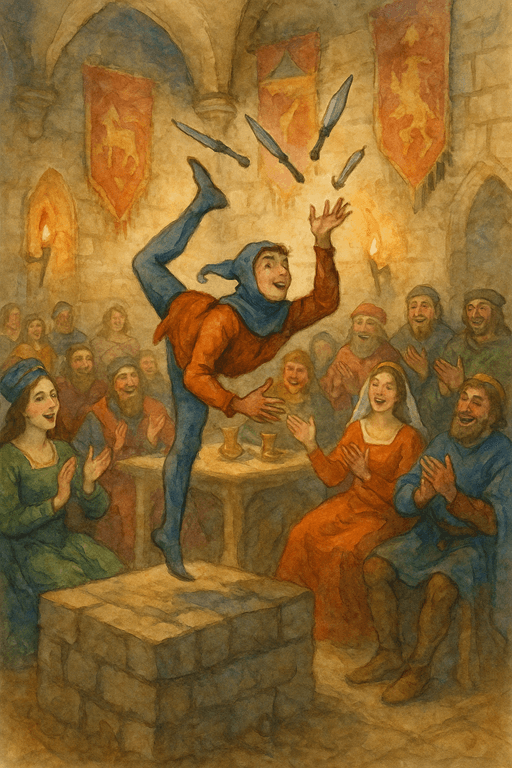
If the minstrel appealed to the heart and mind, the jongleur appealed to the belly and the eyes—eliciting laughter, surprise, and delight. Jongleurs thrived on their versatility, adapting quickly to the mood of the hall and the demands of the audience. They could be clowns one moment and daring acrobats the next, their bodies and wit tools of their trade. Though often viewed as lower in status than minstrels, jongleurs had a special power: they could make nobles laugh at themselves, offering a release from the rigid etiquette of the feast. In a world where daily life was filled with danger and formality, jongleurs embodied the sheer joy of entertainment.
- Juggling and Acrobatics: Jongleurs impressed with juggling balls, knives, or torches, sometimes performing handstands or balancing acts in crowded halls.
- Comic Relief: They often played the fool, poking fun at everyday life, nobles, or even themselves. Their humor lightened the mood in a world filled with rigid etiquette.
- Versatility: Many jongleurs also sang, danced, or played instruments. Their goal was to entertain in whatever way the audience demanded.
Though often less respected than minstrels, jongleurs provided an essential counterbalance to the solemnity of courtly culture.
Storytellers and Poets
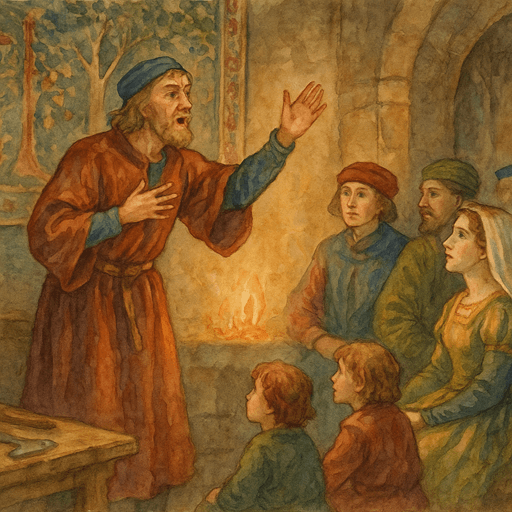
Storytellers and poets brought the magic of words into the castle, weaving tales that could inspire, teach, or entertain. Their role went beyond mere amusement; they acted as moral guides, chroniclers, and keepers of tradition. Unlike jongleurs, who performed for laughter, or minstrels, who combined music and verse, storytellers often relied on the spoken word alone, accompanied perhaps by a dramatic gesture or change in tone. Their presence at a feast or gathering reminded everyone that the castle was not just a place of war and politics but also a cradle of culture, imagination, and learning.
- Tales of Chivalry: Knights and ladies relished hearing stories of courage, devotion, and courtly love, which often mirrored their own aspirations.
- Moral Lessons: Many stories carried a moral, reminding audiences of virtue, loyalty, or faith.
- Local and Exotic Lore: Storytellers blended local legends with news from distant lands, making them both entertainers and informal chroniclers.
Their words brought faraway adventures to life within the safety of castle walls.
Traveling from Castle to Castle
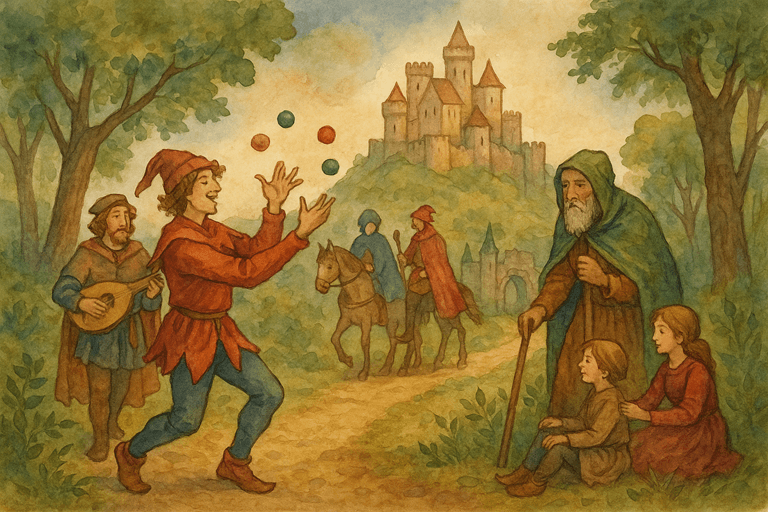
Unlike most castle residents, entertainers were rarely tied to a single household. Their lives were shaped by constant movement, carrying their songs, stories, and tricks across regions and kingdoms. This itinerant lifestyle gave them a unique freedom compared to servants or laborers, but it also exposed them to hardship. Roads were dangerous, food was uncertain, and hospitality could never be guaranteed. Yet their wandering allowed them to spread culture between castles, bringing news of battles, rumors of romance, and songs from distant courts. In this way, entertainers served as living threads that connected the noble world across borders.
- Constant Travel: Minstrels and jongleurs traveled from castle to castle, seeking audiences willing to pay in coin, food, or clothing.
- Risks and Hardships: Travel in the Middle Ages was dangerous—roads were rough, bandits lurked, and weather was unforgiving. Entertainers had to endure hardships between the luxuries of the feast halls.
- Brotherhoods and Guilds: In later centuries, some entertainers organized into guilds for mutual protection, training, and standards of performance.
This itinerant lifestyle gave entertainers freedom but also uncertainty, always dependent on the generosity of nobles.
Beyond the Halls: Entertainment for All
While feasts were their grandest stage, entertainers also performed outside the castle. Market days, fairs, and town gatherings echoed with music and tricks. Entertainers bridged the divide between noble and common life, carrying news, stories, and culture from one social world to another.
Their role was not only to amuse but to connect: linking castle to village, noble to peasant, past to present.
Final Thoughts
Entertainers, minstrels, and jongleurs were more than mere distractions in the medieval castle. They were keepers of tradition, creators of joy, and agents of cultural exchange. Their music, stories, and humor gave rhythm to courtly life, turning banquets into festivals and transforming stone halls into theaters of human expression.
Though they often lived precarious lives, wandering from one patron to another, their legacy remains in the songs, stories, and images that still shape our imagination of the Middle Ages.