Castle Orchards: Apples, Pears, and the Fruits of Nobility
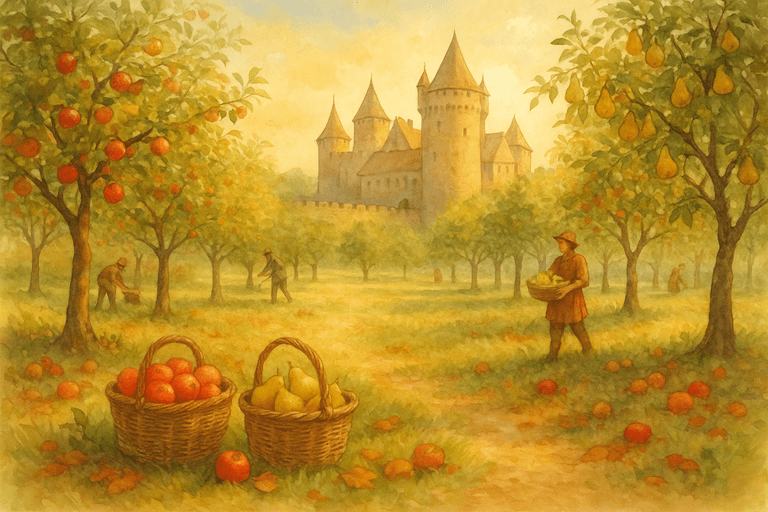
Behind the stone walls and great halls of medieval castles, life was not only about defense and display. It was also about sustenance. One of the most valuable food sources cultivated within or near castle grounds was the orchard.
More than just groves of trees, orchards symbolized stability, abundance, and the wealth of the lord who owned them. They provided fresh fruit in summer and autumn, preserved goods for the winter, and, in many cases, beverages like cider and perry. For noble households eager to balance practicality with prestige, the orchard was both useful and beautiful—a living emblem of prosperity.
The Role of Orchards in Castle Life
Unlike the smaller kitchen gardens, orchards required more space and careful planning. They were usually located just outside the main castle walls or within the outer bailey, where sunlight and air circulation were better. Fruit trees could take years to mature, so planting an orchard was both an investment in the future and a statement of permanence.
Orchards contributed to the self-sufficiency of the castle. They offered reliable harvests, which were especially important during sieges or times when supplies from outside were disrupted. They also provided variety to diets that might otherwise rely heavily on grains, vegetables, and salted meats.
Apples: The Medieval Staple
If one fruit deserves the title of medieval staple, it is undoubtedly the apple. Grown across nearly every region of Europe, apples thrived in varied soils and climates, making them the backbone of castle orchards. For medieval households, they represented both practical reliability and spiritual symbolism. Their long storage life made them indispensable through the cold months, and their versatility allowed cooks to use them in savory dishes, desserts, and drinks alike. From the kitchen of the lord to the servants’ hall, apples were everywhere—sliced fresh at breakfast, baked in tarts, or pressed into golden cider. Even the smallest castle garden often held a few apple trees, as they required minimal care and gave generous harvests year after year.
- Fresh eating: Eaten raw when newly picked.
- Cooked dishes: Baked, stewed, or added to pottages for sweetness.
- Preserves: Turned into conserves with honey or sugar (when available).
- Beverages: Pressed into cider, which became a common drink, especially in northern Europe.
Apples also carried deep symbolic meaning. In Christian tradition, they were associated with temptation and knowledge, while in daily life they stood for fertility and abundance.
Pears: A Noble Favorite
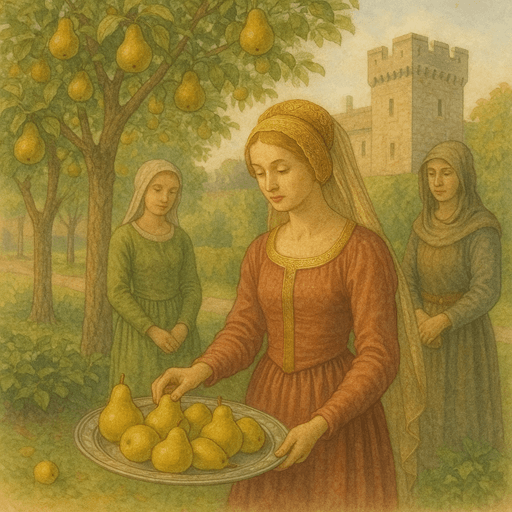
If apples were the everyday fruit of the Middle Ages, pears were their elegant cousin—more refined, delicate, and prized by the upper classes. Pear trees required careful cultivation and warmer conditions to bear well, which made them less common in northern regions and therefore more exclusive. Their texture and fragrance made them a favorite at noble banquets, often appearing as decorative centerpieces or prepared in elaborate dishes that showcased a cook’s skill.
Pears also reflected social distinction. While apples might feed the masses, pears were a luxury, often consumed stewed with wine or spices and reserved for the lord’s table. Medieval gardeners grafted different varieties to produce larger, sweeter fruits—a practice that required patience and expertise.
- Table fruit: Served sliced at noble banquets.
- Cooked delicacies: Poached in wine or spiced and baked into tarts.
- Drinks: Like apples, pears could be fermented into perry, a refreshing medieval beverage.
Because some pear varieties were fragile and harder to store, they became prized delicacies—an orchard with many pear trees was a mark of status.
Plums, Cherries, and Beyond
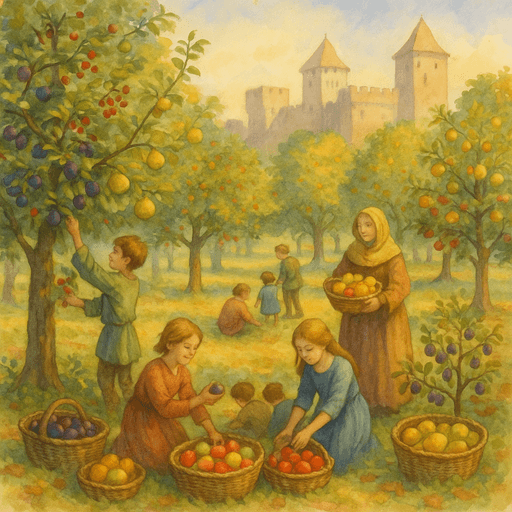
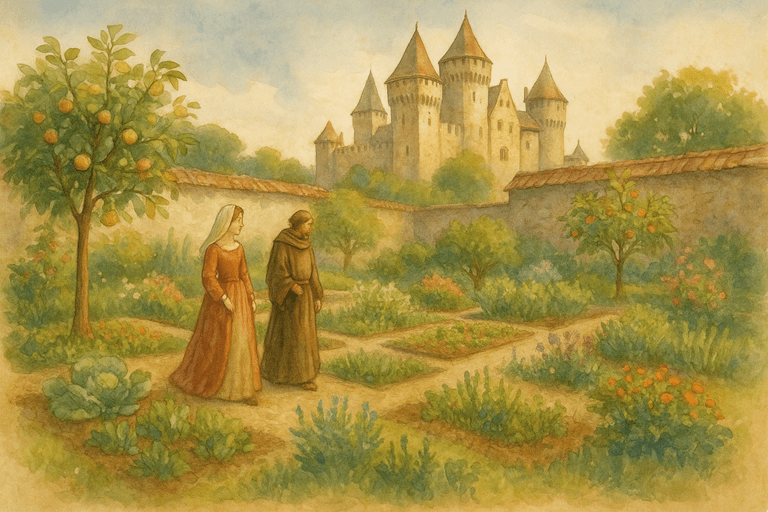
Though apples and pears dominated the medieval orchard, many castles also cultivated a variety of secondary fruits that brought color and flavor to the table. Plums, cherries, quinces, and medlars each had their own unique place in the medieval diet and imagination. These trees often lined the edges of larger orchards or grew near gardens and walkways, creating spaces that were as beautiful as they were practical.
Plums and cherries were particularly valued for their sweetness in a world with limited access to sugar. They were turned into syrups, sauces, and sweetmeats, adding richness to feasts and special occasions. Medlars and quinces, with their curious textures, were transformed into thick pastes or conserves—a sign of refined taste and culinary sophistication.
- Plums: Used fresh, dried into prunes for winter, or cooked into sauces.
- Cherries: Highly seasonal but much loved, often preserved with honey.
- Medlars and Quinces: Less common but cultivated for jams, pastes, and sauces.
Each fruit added diversity to the castle table and, when preserved, offered flavors that could brighten cold winter months.
From Orchard to Table and Cellar
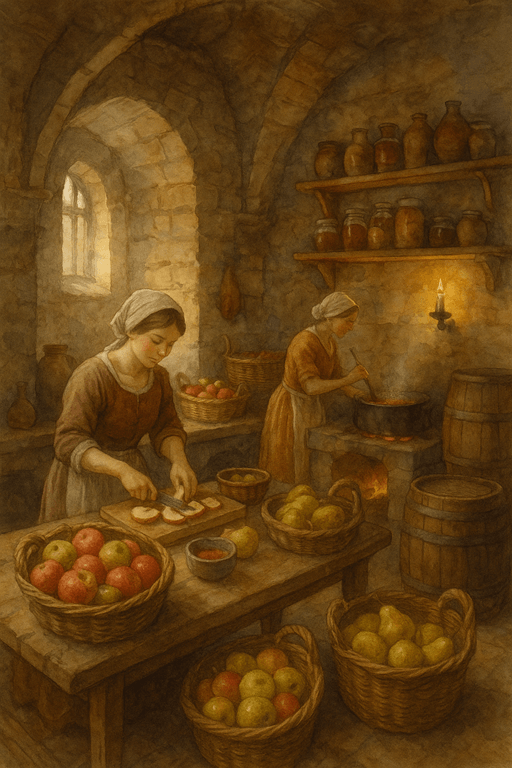
The work of the orchard didn’t end with the harvest—it continued in the storerooms, kitchens, and cellars where fruits were carefully processed and preserved. In a time before refrigeration, these methods were crucial to ensure food supplies through the winter.
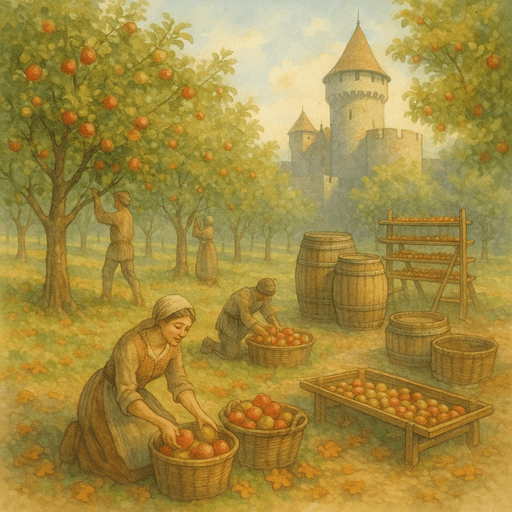
Castles developed sophisticated systems for storing and transforming fruit. Apples and pears were wrapped in straw and stacked in cool, dry cellars. Others were dried on racks near fires or simmered into thick preserves. Honey, and later imported sugar, helped extend the life of delicate fruits, turning them into treats for feast days. Meanwhile, cider and perry brewing became an annual ritual, filling barrels that would keep the castle well-supplied with drink throughout the year.
- Stored: Apples and pears were kept in cool cellars or lofts.
- Dried: Plums and apples dried for winter storage.
- Preserved: Fruits stewed with honey or, in wealthier households, imported sugar.
- Fermented: Apples and pears made into cider and perry, safer to drink than water.
This variety made the orchard indispensable to castle households. It provided both everyday food and luxuries for festive occasions.
Labor and Care
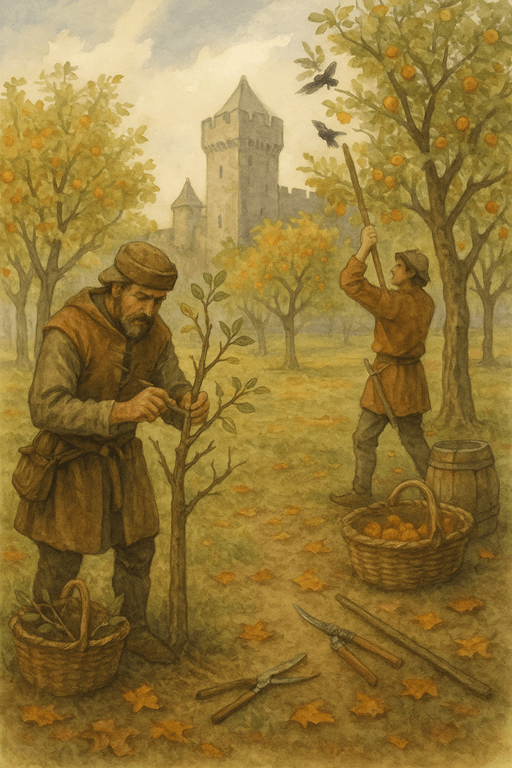
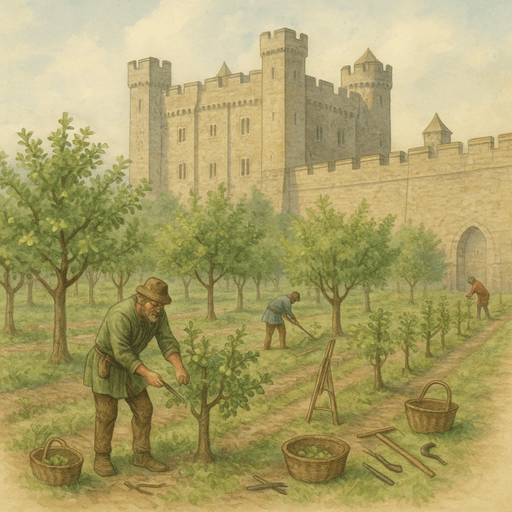
An orchard may seem peaceful, but behind its calm rows of trees lay constant labor. Establishing a productive orchard required years of dedication—trees could take up to seven or ten years to bear fruit. Gardeners needed patience, expertise, and intuition to tend the land. They had to know how to graft and prune trees, protect blossoms from frost, and combat pests without modern tools. Birds, insects, and even wild animals posed daily threats to the crop. Every season brought a new challenge: pruning in winter, pollination and pest control in spring, harvesting in autumn. For peasants and gardeners, the orchard represented steady, year-round work that demanded both strength and knowledge passed down through generations.
- Pruning trees to improve yields.
- Protecting fruit from pests and birds.
- Harvesting at the right time to avoid waste.
- Caring for young trees that took years to bear fruit.
Maintaining an orchard required patience and skill. Its rewards, however, were long-lasting—an orchard could feed generations.
Orchards as Symbols of Status
To own an orchard was to hold a symbol of civilization and abundance. For nobles, it showed more than wealth—it represented harmony, stewardship, and permanence. The ability to cultivate fruit trees was seen as proof of refinement and wisdom, echoing biblical and classical ideals of the good ruler who nurtures both land and people. Orchards often became part of the castle’s landscape design, arranged for beauty as well as utility. Walking among fruit trees in blossom became a symbol of prosperity, peace, and leisure. Medieval poetry and manuscripts often used orchard scenes to represent romance, virtue, or spiritual awakening—places where nature and humanity coexisted in harmony.
For nobles, a flourishing orchard was a mark of good stewardship and prosperity. To walk among flowering trees in spring or to serve poached pears at a banquet was to display refinement, culture, and success.
Traces of Orchards Today
Though centuries have passed, hints of medieval orchards still survive across Europe. In some castle grounds, the gentle slope of the earth or the alignment of ancient tree roots reveals where orchards once stood. Archaeologists identify these spaces by studying soil composition, pollen remains, and planting pits, while historians rely on estate records that meticulously documented yields. A few heritage sites now cultivate medieval fruit varieties, many of which differ dramatically from modern ones—smaller, tarter, and hardier. Visiting these reconstructions allows us to step back in time and appreciate the patience, artistry, and care that shaped the medieval landscape.
Places like Alnwick Castle have recreated orchards to reflect the medieval past, giving us a taste—sometimes literally—of what castle life once offered.
Final Thoughts
Castle orchards were far more than pleasant groves. They were essential food sources, symbols of wealth, and settings for cultural life. Apples, pears, plums, and cherries fed households, filled cellars with cider and preserves, and decorated banquet tables with beauty and sweetness.
By planting and tending orchards, castle lords invested not just in the survival of their people but in the prestige of their estates. To explore them is to understand how deeply medieval life was tied to the rhythms of nature and the rewards of patience.