A Mother’s Heart in the Middle Ages: Letting Children Go into Service
Editor’s Note
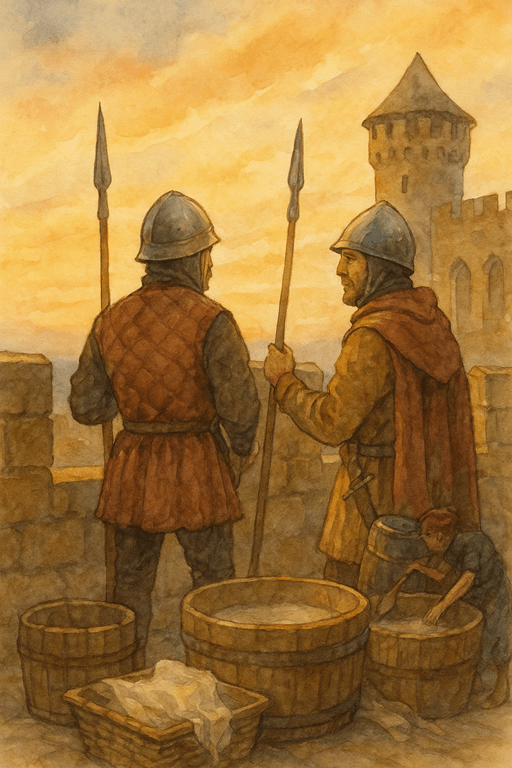
As I researched the lives of child servants and apprentices in medieval castles, I found myself reading not just as a writer but as a mother. The thought of sending my own children—still so young—away to live, train, and work under the authority of strangers stirred something deep in me. This reflection is not a formal history but a personal meditation: what it might have felt like for the parents who let go, for the children who entered those gates, and for the unspoken emotions that rarely make it into the chronicles.

History often speaks in dates, contracts, and duties. But as a mother, when I read about children entering castle service at seven, eight, or nine years old, I can’t help but pause and feel a weight in my chest. What must it have been like for a mother to watch her little one walk away, knowing he would not sleep under her roof again for years—or maybe ever?
Pride and Pain Intertwined
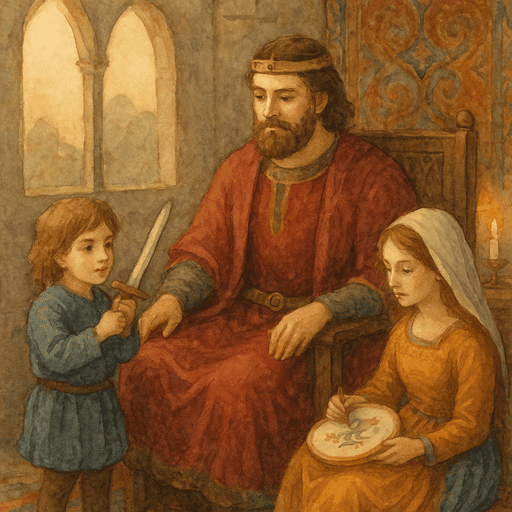
In the Middle Ages, sending a child into service was often seen as an honor or necessity. A noble family might proudly place their son as a page in another lord’s household, securing alliances and training for knighthood. A blacksmith’s daughter might be apprenticed to a noble lady, ensuring she learned refined skills and perhaps rose in status. For poorer families, placing a child meant one less mouth to feed, and the hope that the boy or girl would have food, clothing, and a future.
Yet pride could not erase the ache. No chronicle records the tears of a mother after her child disappeared through the castle gates. We can only imagine the silent grief tucked behind the necessity of survival.
Did Parents Visit Their Children?
The answer depends. Some parents lived close enough to see their children on feast days, market days, or festivals. Others lived too far, and the separation stretched for years. Unlike us, they had no daily letters, no messages, no photographs to comfort them. Children became shadows carried in memory.
And yet, when those children grew—into squires, craftsmen, or ladies-in-waiting—they carried a piece of their family with them. Service wasn’t only about learning—it was about representing the household that had let them go.
What If They Fell Ill?
Here the heart clenches again. If a child sickened or was injured, they depended on the care of their masters. Some households provided food, warmth, and basic remedies, but if an illness was severe, the child might be sent home—sometimes to recover, sometimes to die. For parents, the fear of never seeing their child again was always real.
The Quiet Sacrifice
What strikes me most is that these separations weren’t recorded in history books. Kings and queens, knights and lords, fill the pages, but the quiet grief of parents rarely appears. And yet, those parents existed. They hugged their children goodbye. They held back tears. They whispered prayers.
Their sacrifice was not glamorous. But it was essential, shaping the very fabric of medieval society.