Gardens in Medieval Art and Manuscripts
Before photography or landscape painting existed, medieval gardens lived not only in soil but in art and imagination. Tapestries, manuscripts, and altarpieces preserved their colors, symbols, and meanings long after real flowers had faded.
In these artworks, gardens were more than background—they were allegories, mirrors of paradise, virtue, love, and the human soul. Whether woven into silk, painted in gold leaf, or sketched in the margins of prayer books, they captured the medieval dream of harmony between nature, faith, and beauty.
Gardens as Sacred Spaces in Art
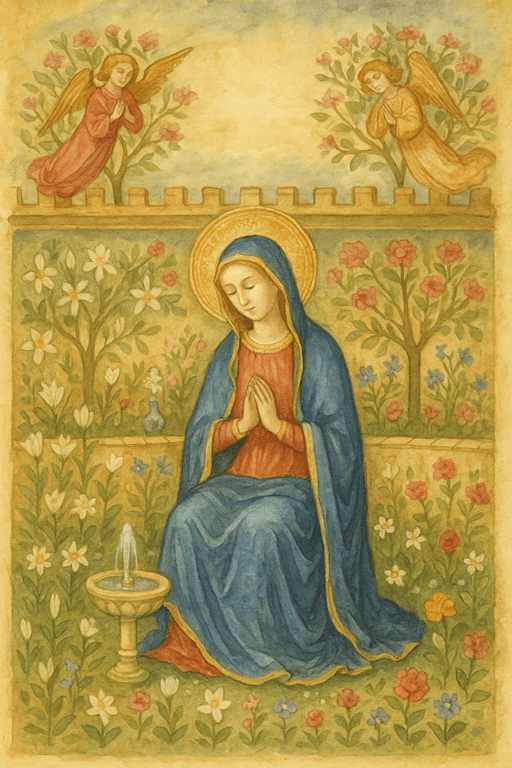
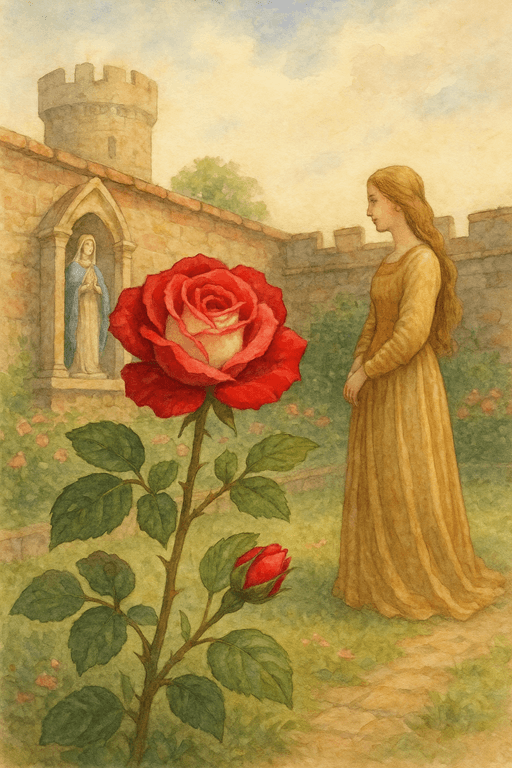
In religious art, gardens often symbolized heavenly order and divine purity. The most famous example was the hortus conclusus, or enclosed garden, representing the Virgin Mary. Within its walls bloomed lilies for purity, roses for love, and violets for humility.
In paintings of the Annunciation or Madonna and Child, Mary is frequently shown seated in a garden surrounded by flowers and fountains—an earthly paradise contained within the frame. These gardens were designed not as realistic landscapes but as spiritual settings, where every plant and object carried theological meaning.
Artists of the 14th and 15th centuries, such as Fra Angelico, Stefan Lochner, and the masters of the Flemish schools, used gardens to bridge heaven and earth—visual sermons on faith, purity, and rebirth.
The Garden of Love: Romance and Allegory
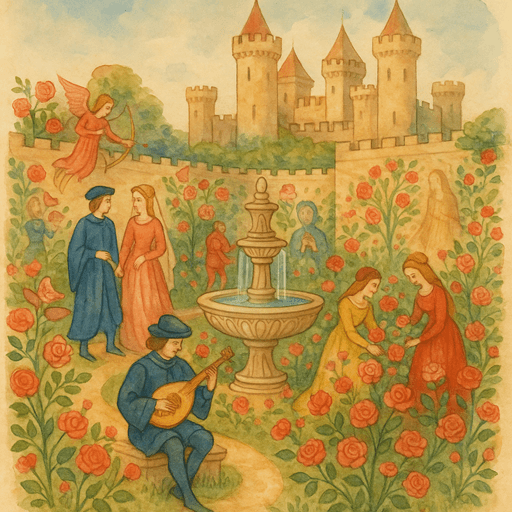
Just as religion found its paradise in the garden, romance and poetry found theirs too.
In secular art and manuscripts, the garden became the stage of courtly love—a setting for music, conversation, and secret glances.
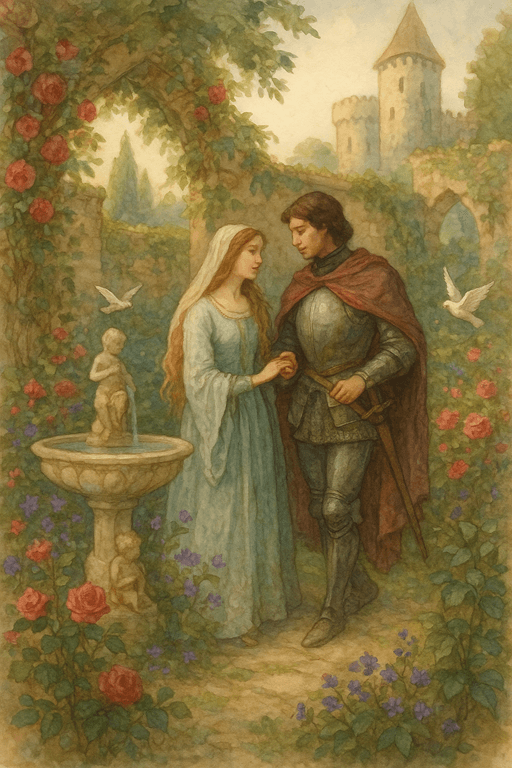
Miniatures in illuminated manuscripts show couples walking among roses, musicians playing by fountains, and noble ladies gathering flowers. These scenes were not merely decorative; they were coded allegories of love, virtue, and temptation.
The 13th-century French poem Roman de la Rose inspired hundreds of illustrations that portrayed the “Garden of Love” as a walled space filled with symbolic figures: Lady Idleness, Courtesy, and Danger. Its influence rippled across Europe, shaping the way artists imagined desire—as a cultivated space, both safe and forbidden.
Tapestries such as The Garden of Love and The Lady and the Unicorn echoed these same ideals, turning textile into storytelling.
The Lady and the Unicorn Tapestries
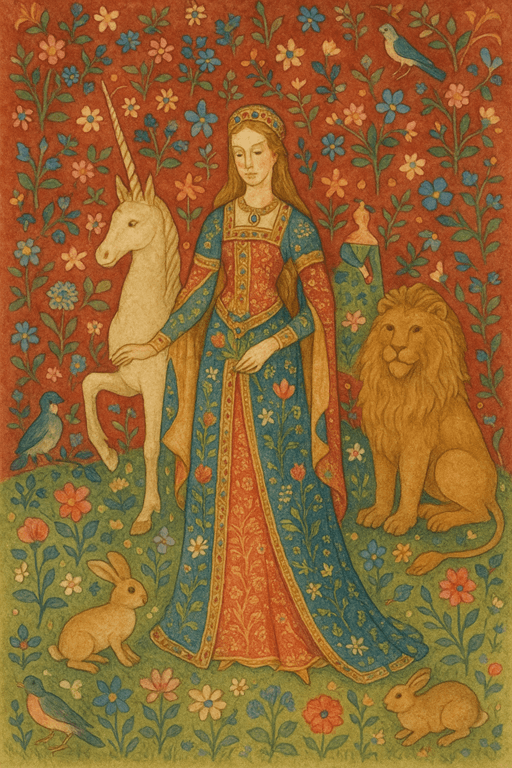
Among all surviving artworks, few capture the spirit of the medieval garden as vividly as The Lady and the Unicorn tapestries (c. 1500), now housed in the Musée de Cluny in Paris.
Set against a deep red millefleurs (“thousand flowers”) background, each tapestry surrounds a noble lady with animals and plants in symbolic harmony. The tiny blossoms—carnations, daisies, violets, and periwinkles—float like jewels in a woven meadow.
Though their meaning remains partly mysterious, scholars interpret the series as an allegory of the five senses and the sixth, Love. The garden here is both real and imagined: a tapestry Eden where human emotion meets divine creation.
The millefleurs style itself became one of the most beloved ways to depict gardens—dense, detailed, and filled with symbolic life.
Illuminated Manuscripts: Gardens in the Margins
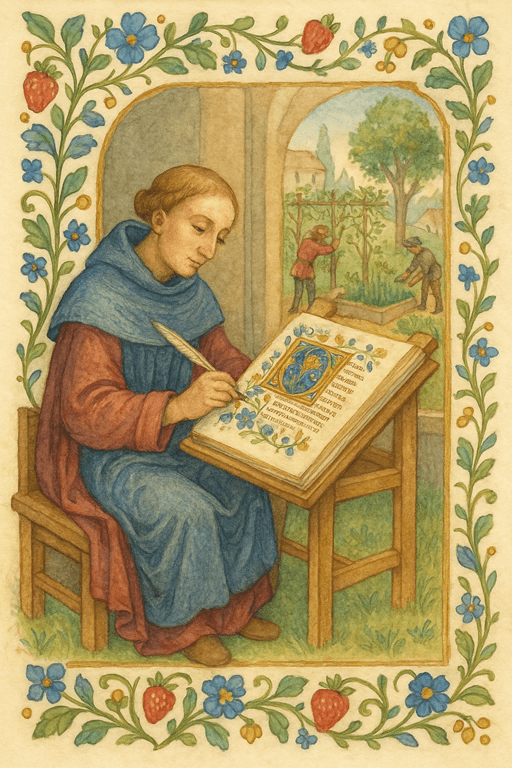
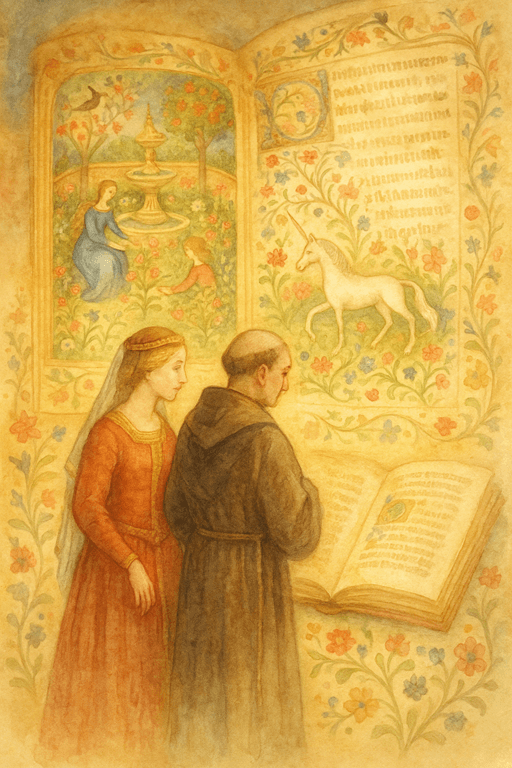
In the margins of medieval books, gardens blossomed again—tiny, perfect, and eternal. Illuminated manuscripts like the Book of Hours, Tacuinum Sanitatis, and Très Riches Heures du Duc de Berry turned pages into landscapes.
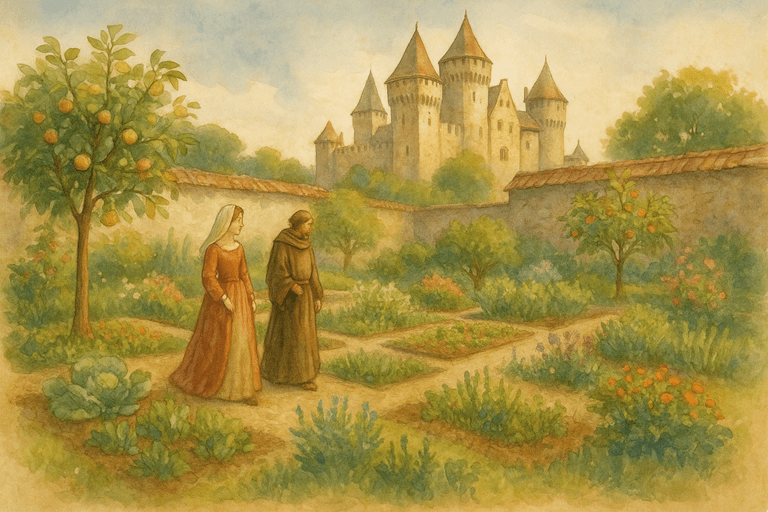
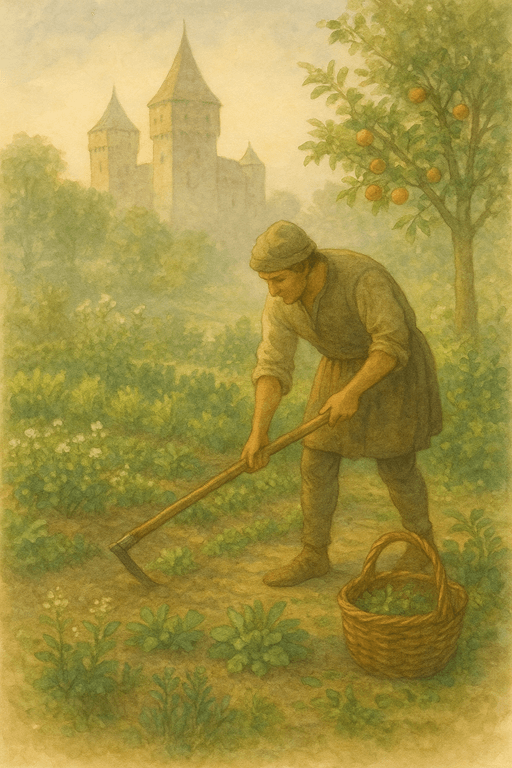
The Tacuinum Sanitatis, a 14th-century health manual, depicted real gardening scenes: women weeding herb beds, men pruning vines, and gardeners carrying baskets of fruit. The Très Riches Heures, meanwhile, included lush calendar illustrations of castles surrounded by gardens in bloom—some of the most detailed portraits of medieval horticulture we possess.
The Book of Hours took the garden further into devotion. Margins brimmed with delicate ivy, strawberries, and flowers—each symbol a meditation aid. To turn its pages was to walk through a miniature paradise.
Allegory and Symbolism
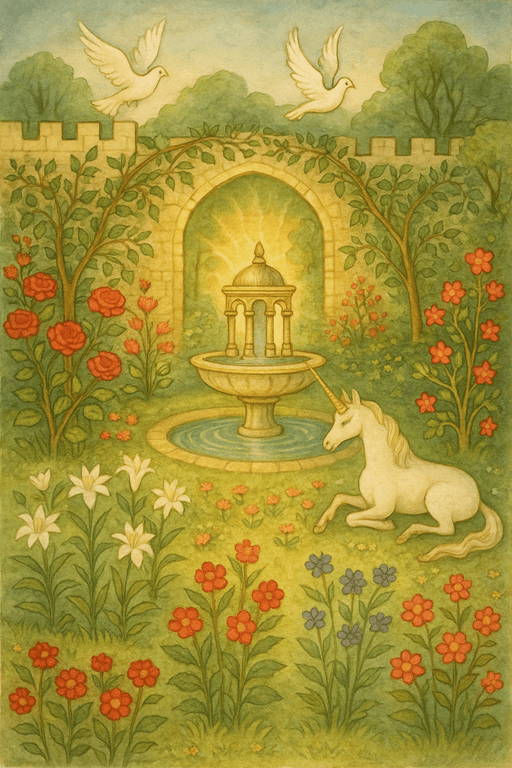
To medieval artists, every element of the garden was symbolic. The fountain represented the source of divine wisdom; the enclosed wall stood for chastity; the tree symbolized both knowledge and life.
Animals, too, played allegorical roles:
- Unicorns represented purity and Christ.
- Harts and deer symbolized the soul’s longing for God.
- Birds evoked freedom and the spirit.
In both sacred and secular art, the garden became a moral stage—a setting where human virtue, sin, and redemption unfolded through flowers, fountains, and walls.
This allegorical tradition would later influence Renaissance painters like Botticelli and Leonardo, whose gardens continued to bridge nature and meaning.
The Garden as a Reflection of Order and Beauty
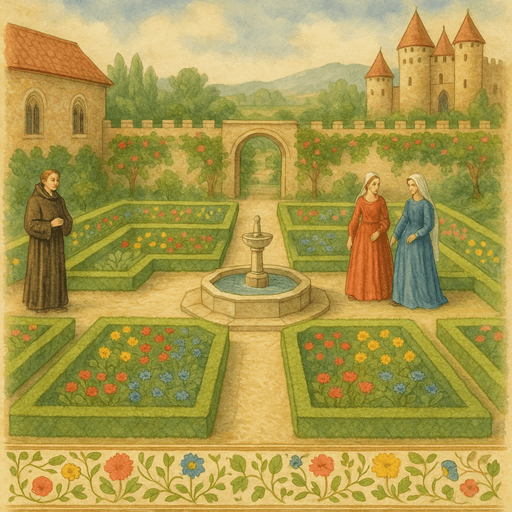
Beyond symbolism, medieval gardens in art reflected the ideal of harmony—both visual and moral. The carefully enclosed spaces, straight paths, and symmetrical beds mirrored the structure of the cosmos as conceived by medieval thinkers: a world governed by divine order.
Depicting a garden was thus a statement about balance and civilization. It showed humanity’s ability to work with nature, not against it—to shape beauty through understanding. Even in the darkest centuries of war and plague, artists painted gardens as symbols of hope, faith, and the persistence of life.
Traces in Modern Imagination
Today, the image of the medieval garden still blooms in modern culture. From museum exhibits to illuminated book reproductions, these artworks continue to inspire. They remind us that for medieval people, a garden was never just a garden—it was a vision of paradise, a sanctuary of meaning.
Every rose painted, every leaf woven, every fountain gilded on vellum was an act of devotion to beauty, faith, or love. Through art, the medieval garden became eternal.
Final Thoughts
Medieval art preserved what time could not. The gardens once hidden behind castle walls now live forever in tapestry and parchment, where flowers never wilt and fountains never run dry.
Whether sacred or romantic, real or symbolic, these gardens continue to speak across centuries of humanity’s longing for order, grace, and the eternal spring of creation.