Flowers and Symbolism in Medieval Gardens
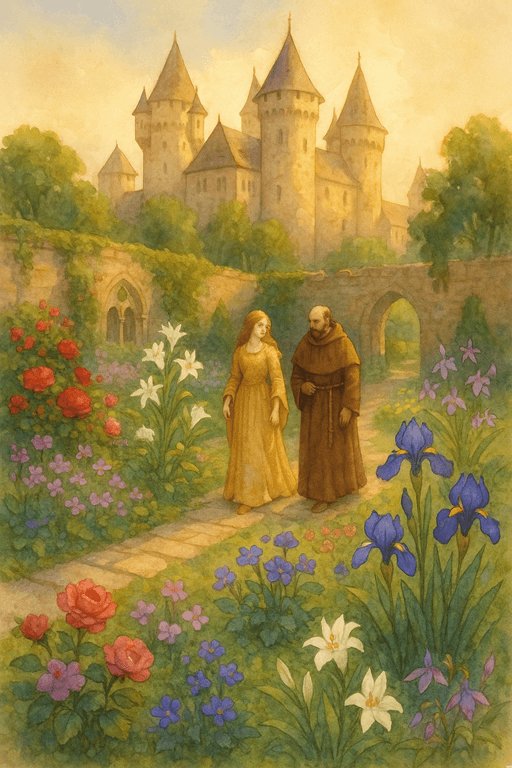
To a medieval eye, every flower carried meaning. In an age when literacy was rare but symbolism was universal, gardens were living books—each plant a word in the language of faith, love, and virtue. The blooms that filled castle courtyards and cloister walks were not chosen only for color or scent but for what they represented: purity, devotion, humility, passion, and the fleeting beauty of life itself.
From illuminated manuscripts to tapestries and poetry, flowers shaped the moral and spiritual imagination of the Middle Ages. They appeared in prayers and romances alike, bridging heaven and earth, sacred and profane.
The Rose: Love, Beauty, and the Virgin
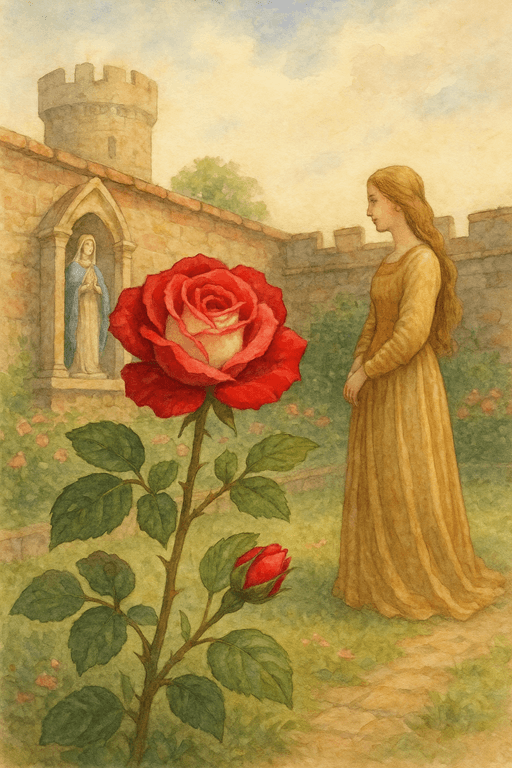
No flower captured the medieval imagination more completely than the rose. It was both queen of flowers and a symbol of profound contradiction—representing the Virgin Mary’s purity and divine love, yet also the sensual desire of human romance.
In Christian symbolism, the rose without thorns evoked the immaculate conception; red roses stood for Christ’s passion and the blood of martyrs; white roses for spiritual innocence. Gardens dedicated to Mary were often called “rosaries,” their circular layout echoing both the flower’s form and the prayer beads that bore its name.
In secular poetry, however, the rose became the emblem of courtly love—the ultimate reward of devotion, beauty hidden behind walls of virtue. The Roman de la Rose, one of the most celebrated allegories of the 13th century, depicted love’s quest as the pursuit of a single rose within a walled garden, guarded by personifications of jealousy, fear, and chastity.
Thus, in both chapel and garden, the rose bloomed as the eternal paradox of medieval thought: purity and passion intertwined.
The Lily: Purity and Divine Grace
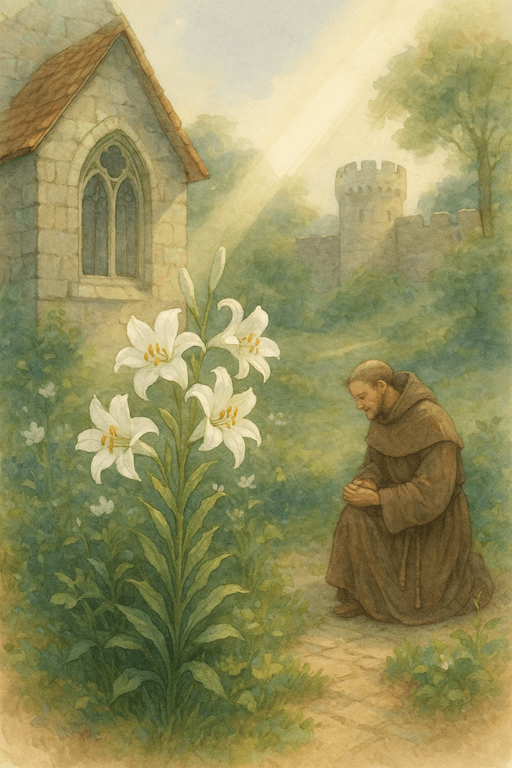
The lily stood at the very heart of medieval religious imagery. Tall, elegant, and radiant white, it symbolized the Virgin Mary, divine purity, and heavenly grace. In countless Annunciation scenes, the angel Gabriel presents Mary with a lily as the sign of her immaculate virtue.
Castles and monasteries planted lilies in enclosed gardens as living emblems of holiness. Their vertical shape, rising straight from the ground, mirrored the soul’s ascent toward heaven. Some varieties, like the Madonna lily (Lilium candidum), were treasured for their medicinal use as well, soothing burns and swelling.
To see lilies blooming beside roses was to read a silent sermon: love redeemed by purity, beauty elevated by grace.
The Violet: Humility and Modesty
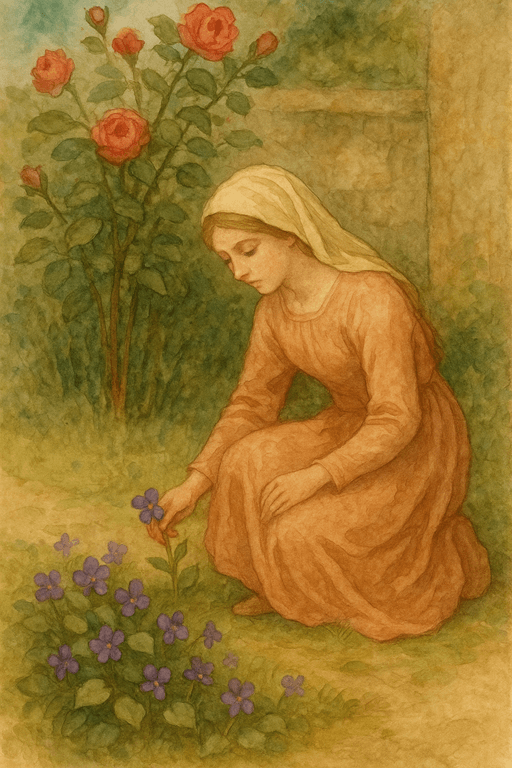
Hidden low among the leaves, the violet was the flower of humility. Its modest size and deep color made it a favorite symbol in both religious and romantic imagery. The Virgin Mary was often called “the violet of humility,” while lovers offered violets as tokens of faithfulness and quiet devotion.
In medieval poetry, violets were praised not for grandeur but for sincerity—the beauty of the heart rather than the body. In gardens, they provided the gentle carpet beneath grander blooms, a reminder that virtue often grows close to the ground.
The Iris: Faith, Sorrow, and Royalty
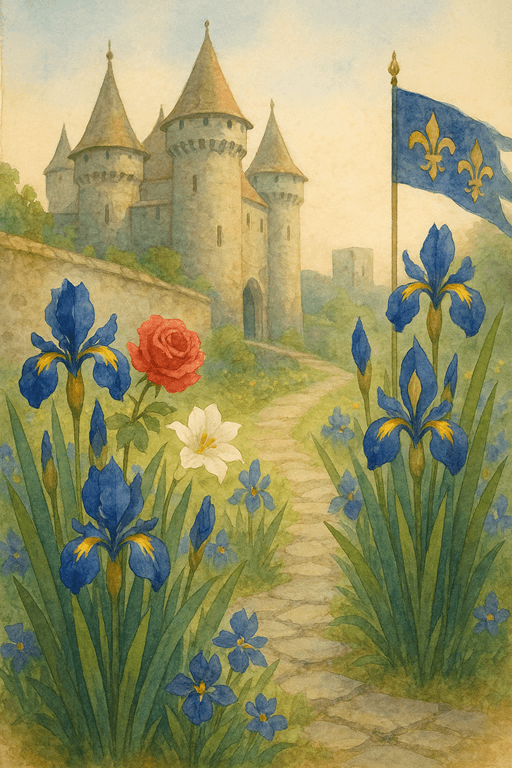
Known also as the fleur-de-lis, the iris carried powerful religious and political meanings. Spiritually, its three petals represented faith, wisdom, and valor, or alternately the Holy Trinity. In art, the sword-shaped leaves of the iris symbolized Mary’s sorrows, as foretold by Simeon—“a sword shall pierce your soul.”
The fleur-de-lis became the heraldic emblem of French monarchy, representing divine right and the protection of the Virgin. Castles across France and beyond displayed it in carvings, manuscripts, and embroidery, blending piety with royal authority.
The Columbine: The Holy Spirit and the Heart
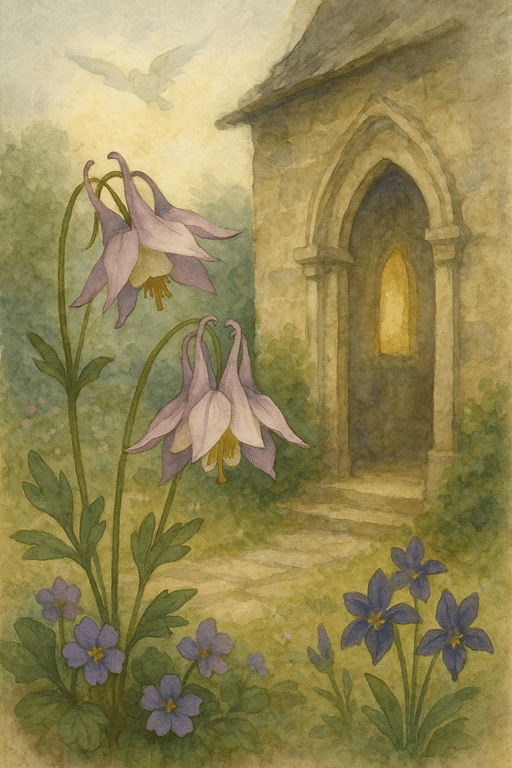
Delicate and distinctive, the columbine (from columba, Latin for “dove”) was associated with the Holy Spirit. Its drooping flowers, resembling a cluster of doves, appeared in paintings of Pentecost and in Marian symbolism.
In another layer of meaning, the columbine was linked with melancholy and unrequited love, its nodding blooms expressing gentle sorrow. This dual significance—joyful spirit and wistful longing—made it a favorite in both devotional and romantic art.
The Strawberry: Modesty and Reward
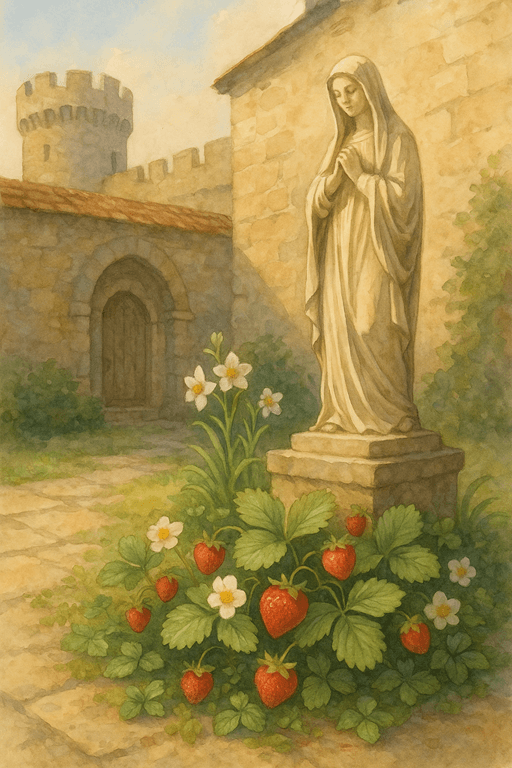
The strawberry was admired for its low-growing habit and sweet fruit, making it a symbol of both modesty and virtue rewarded. It frequently appeared in paintings of the Virgin or saints, growing at their feet as a sign of righteous simplicity.
At the same time, strawberries bridged the gap between heaven and earth: they were small, humble, and yet filled with sweetness—a perfect metaphor for the rewards of a virtuous life.
The Garden as Moral Landscape
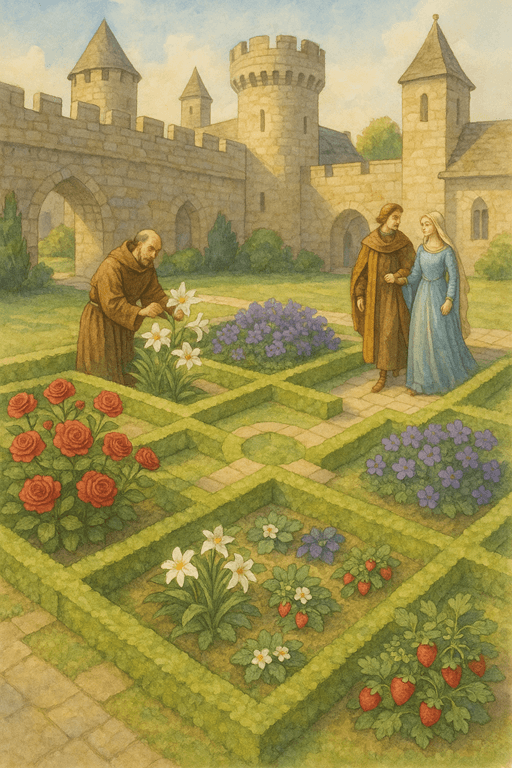
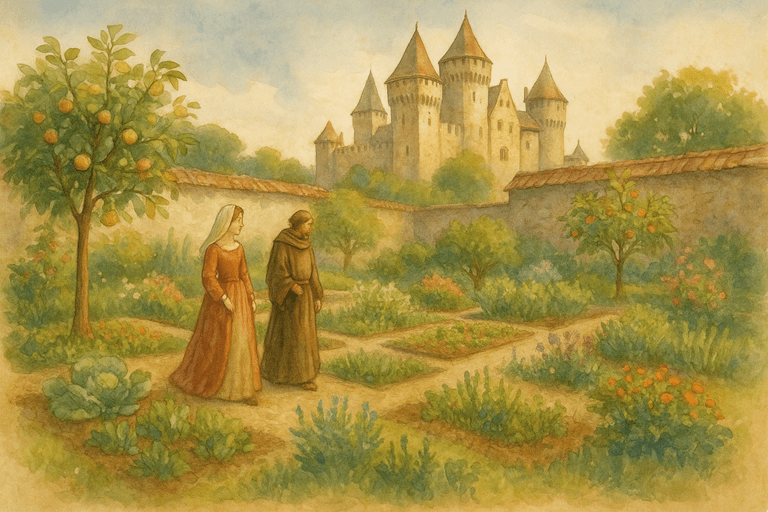
To medieval minds, gardens were not merely places of beauty—they were moral landscapes, mirrors of the soul. Every flower embodied a lesson. Together, they formed allegories of paradise lost and regained, of virtue tested and renewed.
Monastic writers described the soul as a garden where faith must be tended and sin uprooted. Noble poets extended the metaphor to love, where patience and loyalty were the gardener’s tools. The medieval garden thus spoke to every human longing: for order, harmony, and grace.
Flowers in Medieval Art and Manuscripts
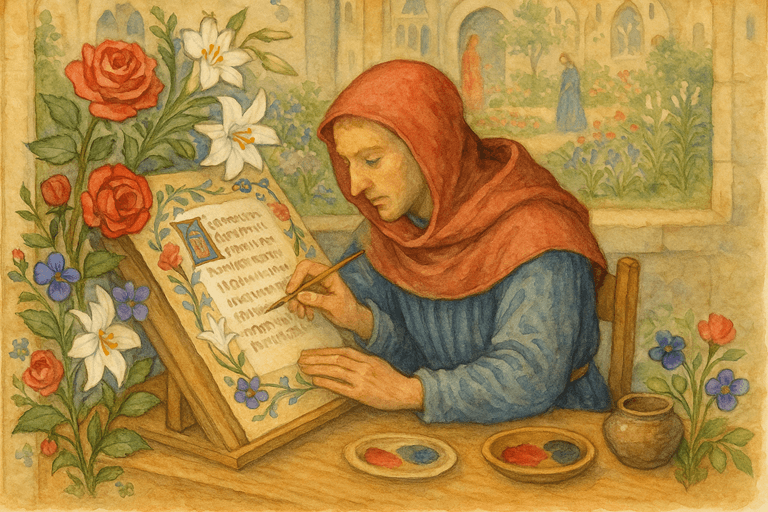
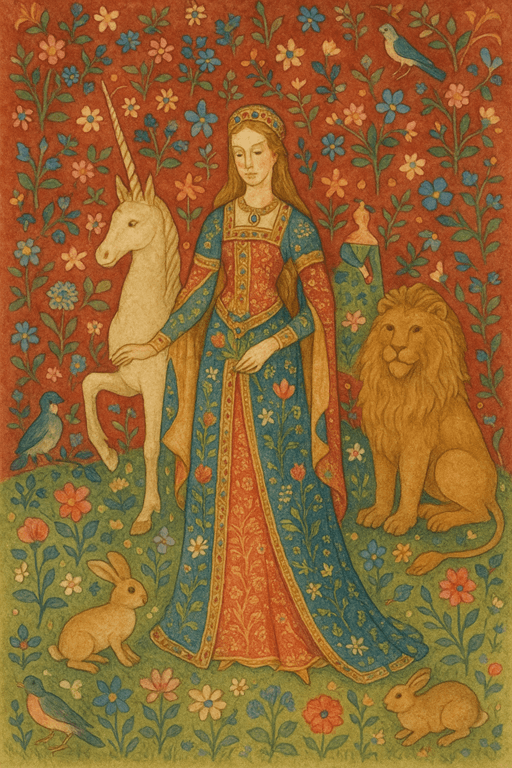
The symbolism of flowers blossomed not only in gardens but also in art and literature. Illuminated manuscripts were filled with botanical borders—delicate roses, lilies, and violets intertwined around sacred text. In tapestries like The Lady and the Unicorn, flowers create enchanted meadows where moral and sensual themes entwine.
Artists used real botanical accuracy to convey spiritual truth. The same rose that grew in a castle garden might also bloom in the pages of a prayer book, its painted petals carrying divine meaning. In this way, medieval gardens and medieval art formed a single continuous world of symbols—each reinforcing the other.
Final Thoughts
To step into a medieval garden was to walk into a language of flowers—a world where every petal told a story and every fragrance carried a prayer. Roses spoke of love, lilies of holiness, violets of humility; together they wove a tapestry of meaning that shaped the spiritual and emotional life of the Middle Ages.
Even today, these symbols endure. The roses we plant for beauty, the lilies we bring to altars, the violets we associate with faithfulness—all echo the medieval conviction that nature itself speaks of the divine.