Vineyards of the Castle: Wine, Ritual, and Daily Drink
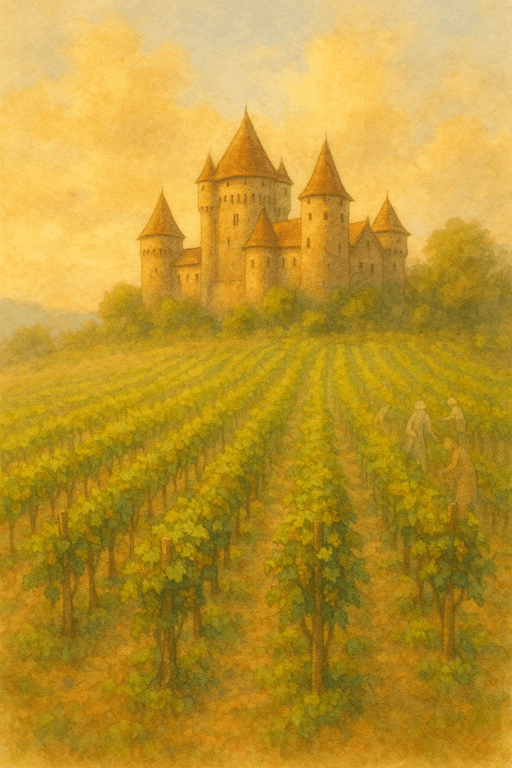
In the Middle Ages, wine was far more than a luxury—it was a necessity, a ritual symbol, and a mark of civilization. Within castle walls, where life revolved around faith, feasting, and survival, wine flowed through every layer of society, from the lord’s table to the monastery cellar.
Some castles owned sprawling vineyards on their estates, while others relied on nearby abbeys or villages for their supply. But wherever it came from, wine was indispensable. It was safer to drink than water, served as medicine, enriched trade, and played a central role in both religion and celebration.
The Castle Vineyard
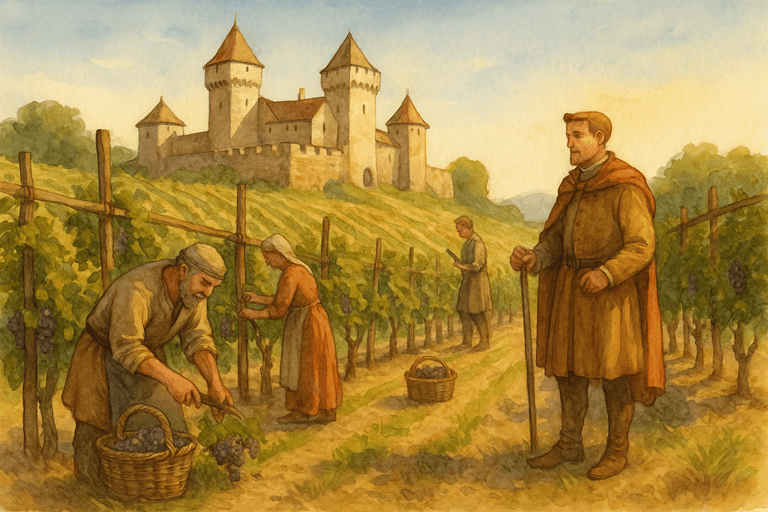
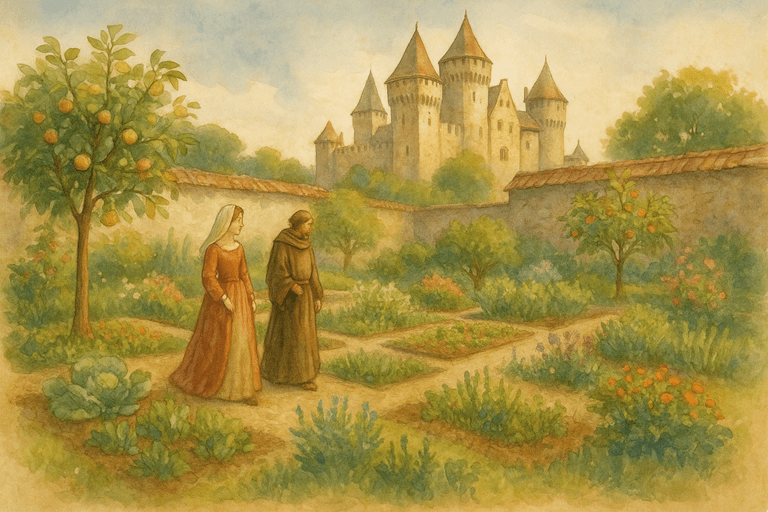
While not every castle grew its own grapes, many noble households maintained at least a small vineyard within or near the outer bailey. Warm, south-facing slopes and fertile valleys were preferred, and vines were carefully trained along trellises or low wooden stakes. In northern regions where the climate was harsher, vines were sometimes planted against stone walls that absorbed the sun’s heat by day and released it at night—creating a miniature microclimate.
Cultivating grapes was a sign of refinement and wealth. It required skill, labor, and patience. Planting and pruning followed the rhythm of the seasons, and harvest time—known as the vendange—was a moment of collective joy and hard work. Laborers, peasants, and servants all took part, cutting bunches by hand and carrying them to wooden presses where the grapes were crushed for juice.
Even castles without their own vines often participated in regional wine production, leasing vineyard plots or purchasing wine in barrels from nearby monasteries, which were among the greatest vintners of the age.
Wine as Daily Drink
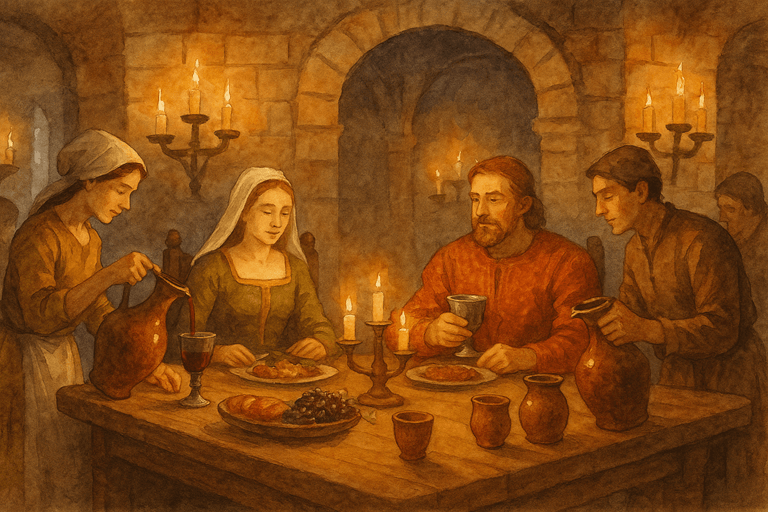
Although modern readers may think of wine as a luxury, in medieval times it was a daily staple—especially for the upper classes. Water sources were often contaminated, so diluted wine or small wine (a light, low-alcohol version) was considered safer to drink.
Meals were rarely complete without it. At the lord’s table, fine wines from Bordeaux, Burgundy, or the Rhine were prized imports. Servants, meanwhile, drank coarser local varieties or watered-down blends. Even children and clerics consumed weak wine known as posset, believed to strengthen the body and aid digestion.
In a world without modern preservation, wine also functioned as a form of storage: fruit transformed into liquid that could be kept for months, even years, providing calories, comfort, and warmth through winter.
Wine and Religion
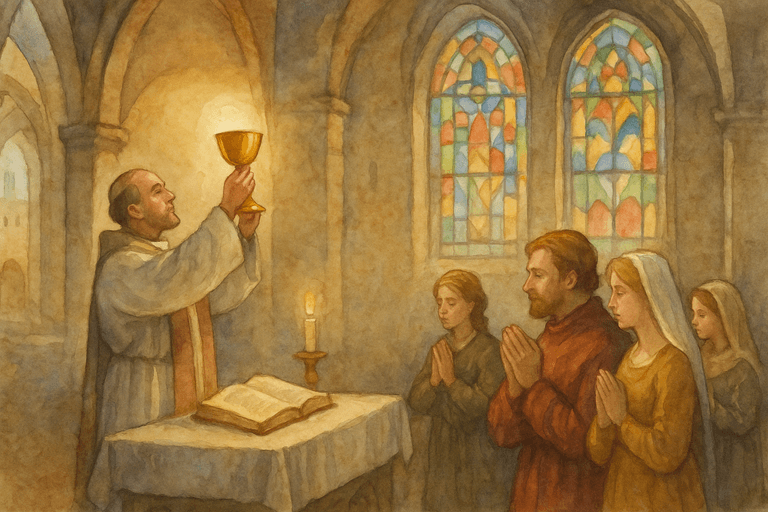
Nowhere was wine more sacred than in the ritual life of the castle chapel. As a symbol of Christ’s blood in the Eucharist, it held deep spiritual meaning. Castle priests and chaplains ensured that the supply of sacramental wine never ran dry, importing the purest vintages for Mass and holy days.
Religious festivals often coincided with vineyard cycles: blessings of the vines in spring, prayers for good weather in summer, and thanksgiving feasts after harvest. Monks, who preserved much of Europe’s winemaking knowledge, believed that cultivating vines was an act of devotion—a way of transforming God’s creation into something transcendent.
Wine also marked life’s passages. It was poured at weddings, baptisms, victories, and funerals, binding the sacred and the social in one golden cup.
The Winemaking Process
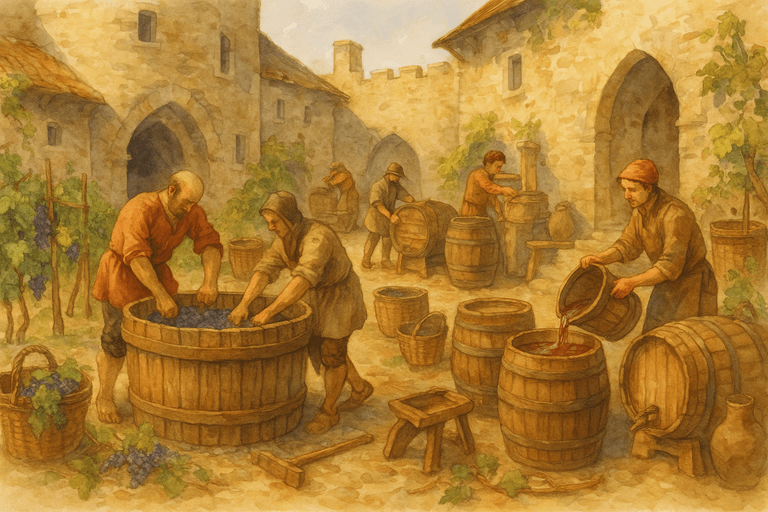
The medieval process of turning grapes into wine was both simple and laborious. After harvesting, grapes were pressed in large wooden vats or stone troughs. The juice was then collected in casks, where it fermented naturally for several weeks. Yeast from the grape skins converted sugars into alcohol, while temperature and cleanliness determined the wine’s quality.
- Fermentation: Grapes were crushed and left to ferment in open vats.
- Aging: Once fermentation ended, wine was transferred to oak barrels or earthen jars for storage.
- Clarification: Sediment settled at the bottom; the clearer wine was siphoned off for the lord’s household.
- Preservation: Sulfur fumes were sometimes used to keep wine from spoiling, an early form of sterilization.
The results varied dramatically—from sweet, heavy reds to pale, acidic whites. In noble circles, imported French wines became symbols of sophistication, while local varieties served everyday needs.
Wine in Medicine and War
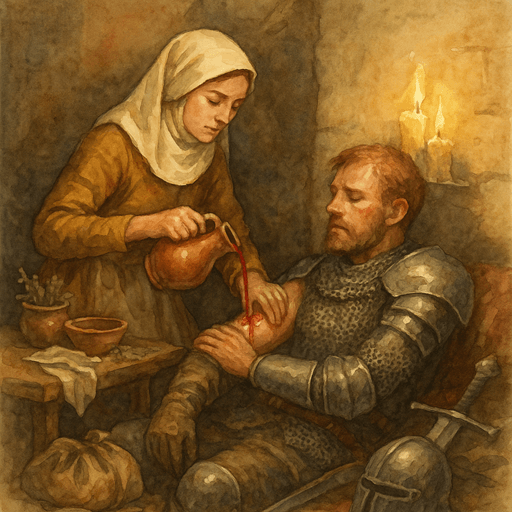
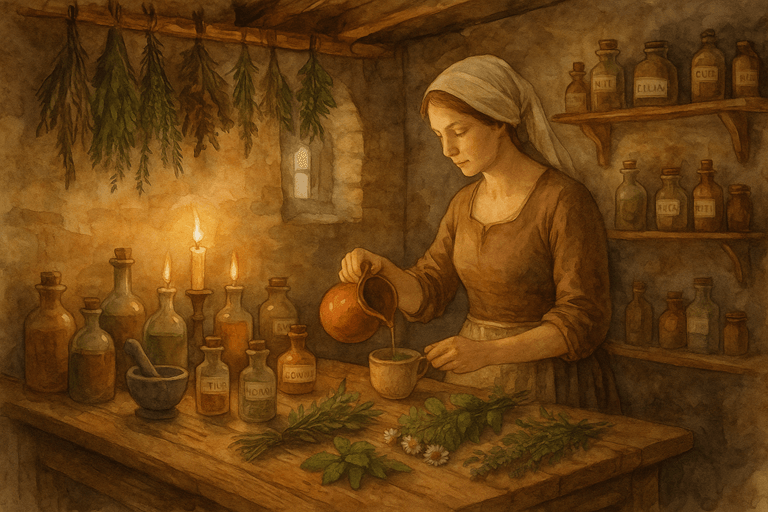
Beyond the banquet table, wine served a host of practical and medicinal purposes. Physicians recommended it as a tonic for the heart, a disinfectant for wounds, and a base for herbal remedies. Mixed with sage, rosemary, or myrrh, it became a cure for fevers and infections.
In times of war or siege, wine was rationed like grain. It fortified soldiers, lifted morale, and cleaned wounds when clean water was scarce. During long campaigns, barrels of wine were as essential to an army as swords or armor.
Monastic healers even made spiced or medicinal wines—early versions of tinctures—infused with herbs from the physic garden. These brews bridged the gap between medicine and indulgence, showing how fluid medieval life could be between the sacred and the sensual.
Wine as Symbol and Status
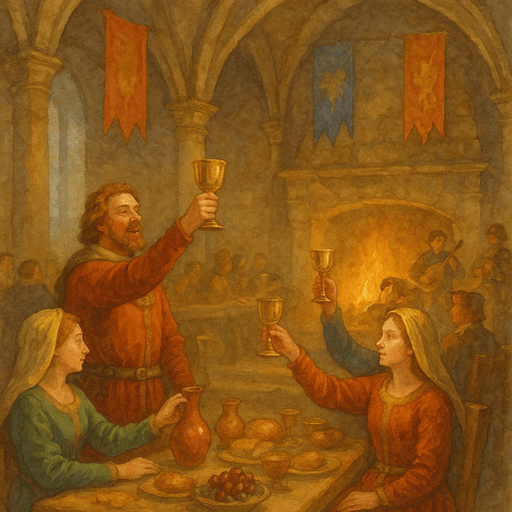
To drink wine in the Middle Ages was to participate in a ritual of power and identity. For nobles, it expressed refinement and divine favor. Golden goblets filled with imported vintages glittered in candlelight, reinforcing hierarchy at the great hall’s table. To offer wine to a guest was an act of hospitality and diplomacy.
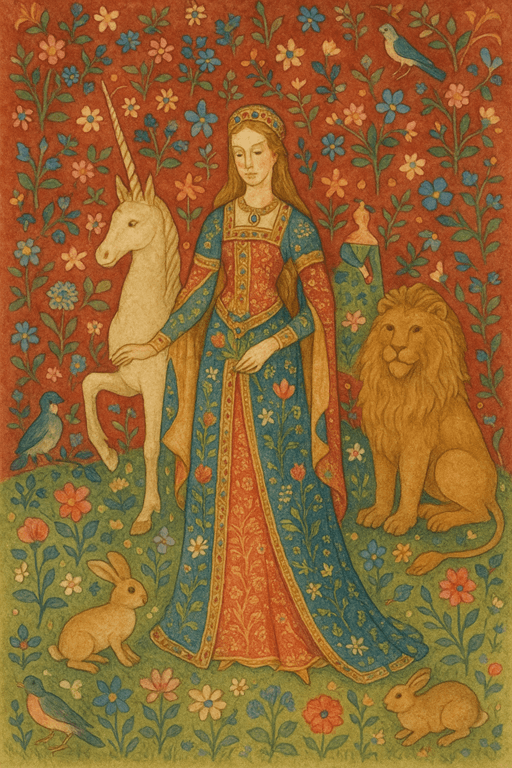
For the church, wine symbolized sacrifice and salvation. For commoners, it represented aspiration—a glimpse of luxury and warmth in a difficult life. The grapevine itself, often carved into stone or embroidered on tapestries, became a metaphor for prosperity and continuity.
The Legacy of Medieval Vineyards
Many medieval vineyards disappeared after wars, plagues, or climate shifts like the Little Ice Age. Yet their legacy endures in Europe’s greatest wine regions. Estates that once supplied castles—such as Burgundy, the Loire, and the Rhine Valley—evolved into the viticultural heartlands of modern France and Germany.
Archaeologists have uncovered remnants of old vineyard terraces near castles like Château de Pernes-les-Fontaines and Castello di Brolio, revealing how early viticulture shaped both landscape and economy. Today, some castles—particularly in France and Italy—have revived historical winemaking as part of heritage tourism, allowing visitors to taste the very tradition that once filled the goblets of lords and priests.
Final Thoughts
Wine flowed through every facet of medieval castle life. It sustained workers, comforted the sick, sanctified worship, and symbolized nobility itself. From the sunlit vineyards on castle slopes to the dim cellars where barrels aged in silence, wine was a bridge between earth and spirit, necessity and luxury.
By cultivating vines and cherishing their fruit, medieval people honored both the bounty of nature and the rituals of their faith. The story of castle vineyards reminds us that even within fortresses of stone, life was rooted in the soil—and celebrated with a raised cup.