Merchants and Traders: Supplying the Castle with Exotic Goods
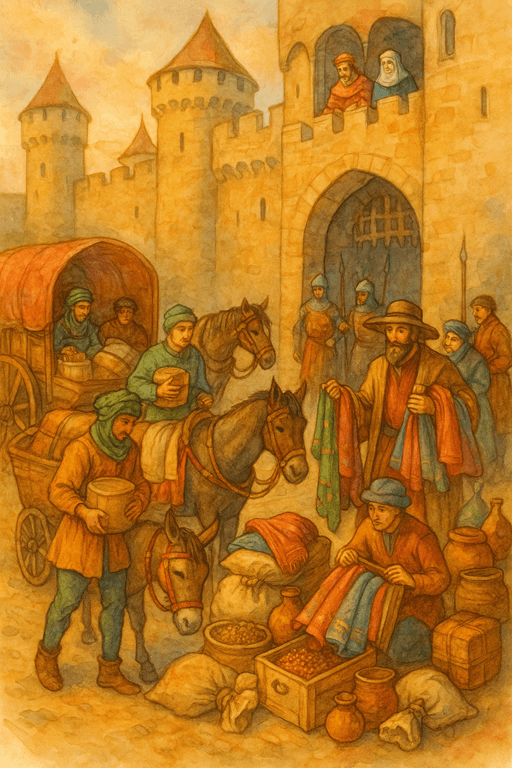
While castles may appear self-sufficient—surrounded by farmland, filled with servants, and protected by thick walls—they were also deeply connected to the outside world. Nobles demanded luxuries that could not be produced within their estates: fine cloth, rare spices, precious metals, and crafted goods from distant lands. Merchants and traders were the lifeline that supplied these items, turning castles into hubs of consumption and symbols of wealth. Their wagons brought the wider world to the gates of stone fortresses, and their presence reflected the intricate web of medieval commerce.
Trade Routes and Connections to the Castle
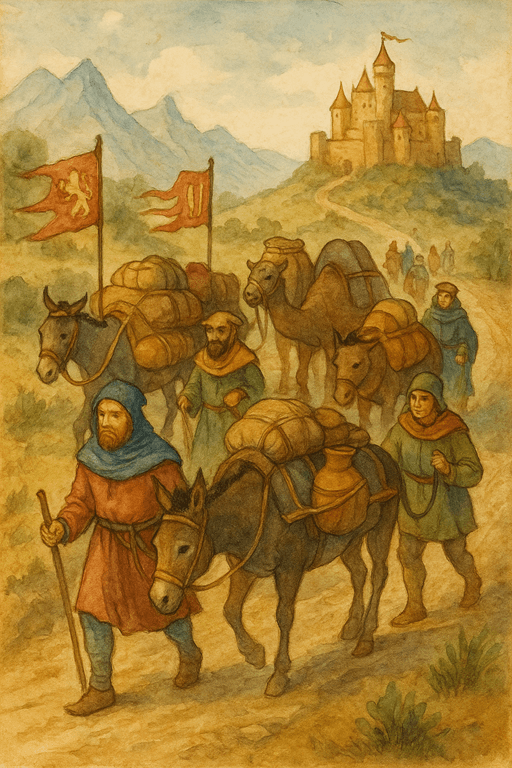
Castles were not isolated fortresses cut off from the world; they were plugged into vast networks of exchange that stretched across medieval Europe and beyond. Every wagon arriving at the gates carried not only goods but also stories of distant markets, ports, and cities. A single sack of spice could trace its journey back to India or the Levant, crossing deserts, seas, and bustling trade fairs before finding its way to a noble’s table. Thus, even a castle perched high on a hilltop was connected, however indirectly, to the farthest corners of the known world.
The movement of goods reflected a web of interdependence. Land routes brought local staples, maritime routes connected Europe to the East, and trade fairs served as bridges between merchants and noble buyers. When caravans appeared at the gates, they were physical proof that the castle was not a world unto itself but a participant in global commerce. Without these routes, the grandeur of feasts, clothing, and display within the walls would have been impossible.
- Land routes: Traders carried cloth from Flanders, salt from inland mines, and wine from nearby vineyards. Roads were often rough and dangerous, but caravans of pack animals ensured a steady flow of goods.
- Sea routes: Exotic items such as pepper, cinnamon, and silk reached European ports via the Mediterranean trade, brought by Venetian and Genoese merchants from markets in Constantinople or the Levant. From there, goods were sold inland to noble households.
- Local fairs: Great trade fairs, like those of Champagne in France, were key gathering points where merchants struck deals with castle stewards or agents representing lords.
Trade routes meant that castles, though rooted in their lands, were never isolated from global networks of commerce.
Exotic Goods and Everyday Necessities
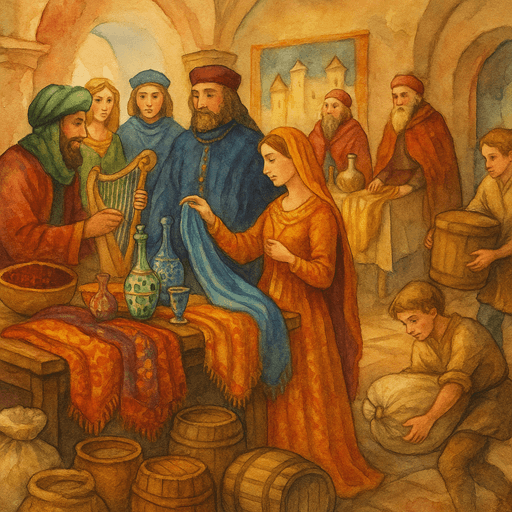
When we think of castle trade, it is tempting to imagine only shimmering silks, golden goblets, and rare spices. And indeed, such luxuries were central to the noble desire for display. But the reality of trade was a balance between the exotic and the ordinary. Barrels of salt, sacks of grain, iron tools, and rough cloth were as necessary as cinnamon or velvet. Merchants supplied castles with the practical as well as the prestigious, ensuring that everyday life continued alongside spectacle.
The true power of this system lay in contrast. Luxuries dazzled precisely because they were rare, while staples sustained the household through long winters and sieges. Together, they formed the dual lifeline of castle supply—ordinary goods for survival, extraordinary ones for prestige. This balance explains why merchants were not occasional visitors but constant presences in the rhythms of castle life.
- Luxury imports: Spices (pepper, cloves, nutmeg), silks, fine woolens, and glassware. These were prized for feasts, ceremonies, and displaying wealth.
- Everyday goods: Salt for preserving meat, iron tools, barrels of wine or ale, and cloth for household use. Though less glamorous, these items were essential for daily life.
- Symbolic items: Religious relics, illuminated books, and finely wrought jewelry also entered castles through merchant channels.
Nobles did not buy only for need—they bought to impress. A lavish table covered in sugar-dusted pastries or a hall lit by Venetian glass lamps was as much a political statement as a personal indulgence.
The Castle Market: Meeting Place of Buyers and Sellers
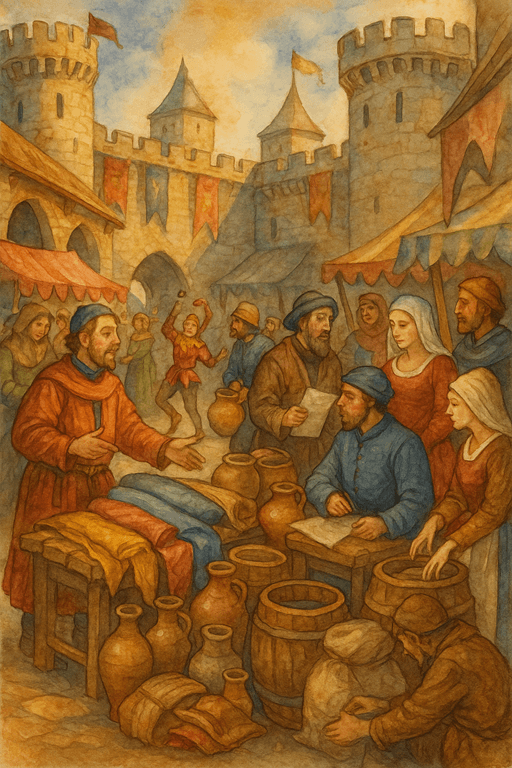
The arrival of merchants at a castle was not a dull transaction—it was an event. Wagons creaked through the gates, laden with barrels and crates, while villagers gathered to glimpse the latest goods. Within the bailey or at the outer courtyard, stalls might be erected temporarily, turning the castle into a lively market space. Here, the steward or chamberlain, armed with the lord’s accounts, haggled over prices while entertainers, peddlers, and local peasants mingled in the crowd.
Markets were more than places of exchange; they were theaters of social life. Every bargain struck between a steward and a merchant was also a negotiation of trust and reputation. Every barrel rolled into a cellar represented a bond between the outside world and the castle within. In these bustling scenes, the rigid hierarchy of feudal life softened for a moment, as commoner and noble household met on the common ground of trade.
- Negotiation: Bargaining was expected, and merchants had to be shrewd, especially when dealing with castle officials who represented the lord’s interests.
- Exchange and credit: Gold and silver were not always used directly. Barter—such as exchanging grain or wool from the castle estate—was common. In some cases, written promissory notes or credit arrangements replaced immediate payment.
- Festivity of markets: Merchants often arrived in groups, bringing vibrancy to otherwise insular castle life. Performers, peddlers, and local villagers mingled alongside noble agents, turning the event into a lively scene.
Thus, the arrival of traders was not just economic—it was social and cultural, reminding castle inhabitants of the wider world beyond the walls.
Risks and Rewards of Medieval Trade
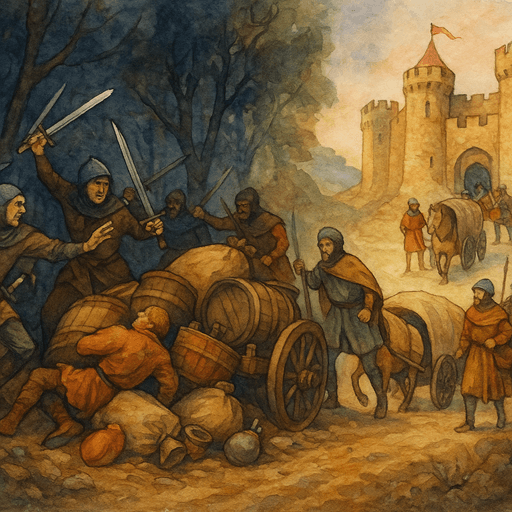
For every wagon that made it safely to a castle gate, countless dangers had been faced along the way. Roads were treacherous, bandits lurked in forests, and tolls imposed by lords or towns could drain profits. Even weather posed risks—rains could wash out paths, while snow could halt caravans altogether. To survive, merchants had to be resourceful, traveling in caravans, hiring guards, or securing safe-conducts from powerful rulers.
Yet, the dangers only increased the rewards. A single sack of pepper, worth its weight in silver, could justify the risks of robbery or ruin. The profits of successful merchants elevated them above ordinary tradesmen, giving them wealth that rivaled that of minor nobles. In this tension—between peril on the road and luxury at the feast—lay the drama of medieval commerce.
- Dangers on the road: Bandits, tolls at bridges, and harsh weather could ruin caravans. Merchants often traveled in groups for safety.
- Protection through charters: Some merchants gained safe-conduct letters from kings or lords, promising them protection on their routes.
- High rewards: Despite risks, profit margins on spices, silks, and other exotic items were enormous, making successful merchants wealthy and influential.
These dangers and rewards ensured that merchants were hardy individuals—practical, adaptable, and resilient.
Merchants’ Social Status
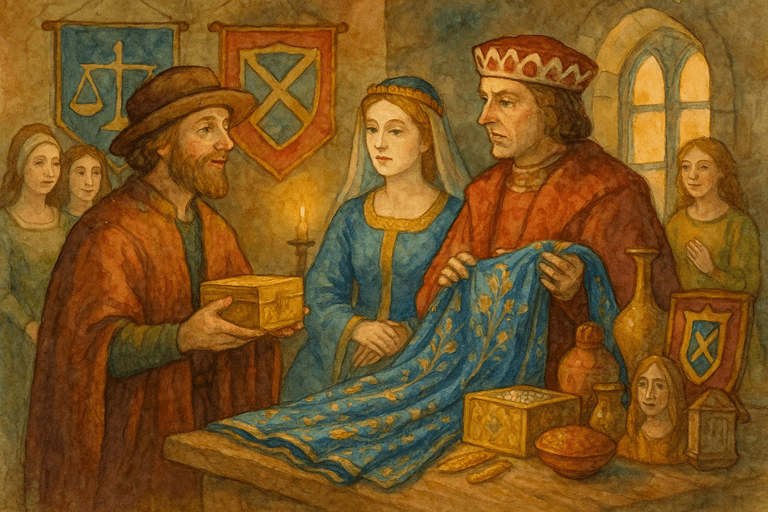
Merchants occupied a complicated place in the social fabric of the Middle Ages. Nobles needed them, yet often distrusted them, for merchants dealt in money and goods rather than land and lineage. Unlike peasants, they were free; unlike nobles, they lacked ancestral claims to power. This in-between status made them both indispensable and suspect. Their guilds gave them a collective voice, but in the eyes of some nobles, they remained outsiders.
Still, the rise of trade slowly shifted perceptions. Wealthy merchants could fund churches, sponsor civic works, or even marry into noble families. Some lords, in turn, relied on merchants as financial advisors or sources of credit. Castles, as consumers of luxury and necessity alike, stood at the heart of this social transformation. The presence of merchants at their gates symbolized not only the exchange of goods but also the gradual reshaping of medieval society itself.
- Respected yet distrusted: Nobles relied on them, yet often looked down on them as commoners who sought wealth instead of land.
- Guilds and associations: Merchants formed guilds for protection and regulation, giving them collective influence in towns and cities.
- Connection to nobility: Wealthy merchants sometimes rose above their status by marrying into noble families or gaining patronage, showing that trade could be a path to power.
Their ambiguous status highlights how castles, though symbols of feudal order, depended on those outside the noble class for survival and display.
Final Thoughts
Merchants and traders were the unseen bridges between the insular world of the castle and the vast networks of medieval trade. They supplied both the exotic goods that dazzled noble guests and the everyday necessities that kept households functioning. Traveling risky roads and navigating complex negotiations, they played a vital role in turning castles into centers of wealth, culture, and power.
Without merchants, even the mightiest fortress would have been reduced to a self-sufficient but dull existence. With them, castles became stages on which the drama of global trade, cultural exchange, and social ambition unfolded.