Child Servants and Apprentices: Growing Up in the Shadow of the Medieval Castle

When we think of castles, we often picture armored knights, noble ladies, and bustling halls filled with servants. Yet tucked into this busy world was another class of inhabitants—children who entered service at an age when most modern children are still in school. From as young as seven, boys and girls could be sent into castle life as servants or apprentices. For some, it meant years of backbreaking labor. For others, it offered rare opportunities to learn trades, skills, and even carve out a path toward a better future.
Entering Service at Age 7–10

Entering service at such a tender age was not unusual in the Middle Ages. Many families, especially those of modest means, saw service in a great household as both an economic relief and a chance for their children to improve their prospects.
- Young beginnings: Boys and girls as young as seven were often placed into the households of nobles, monasteries, or tradesmen. At this stage, their work was simple: running errands, carrying messages, fetching water, or tending fires.
- Household integration: These children lived as part of the castle household, sleeping in servants’ quarters and eating plain meals alongside older workers. While their parents may have seen them only on rare visits, the castle became their world.
- Early discipline: Service taught obedience, endurance, and discipline. Children quickly learned the rigid hierarchies of castle life and the value of hard work.

For poor families, sending a child into service might be a sacrifice, but it was often seen as better than leaving them idle or hungry at home.
Apprenticeships to Cooks, Blacksmiths, and More
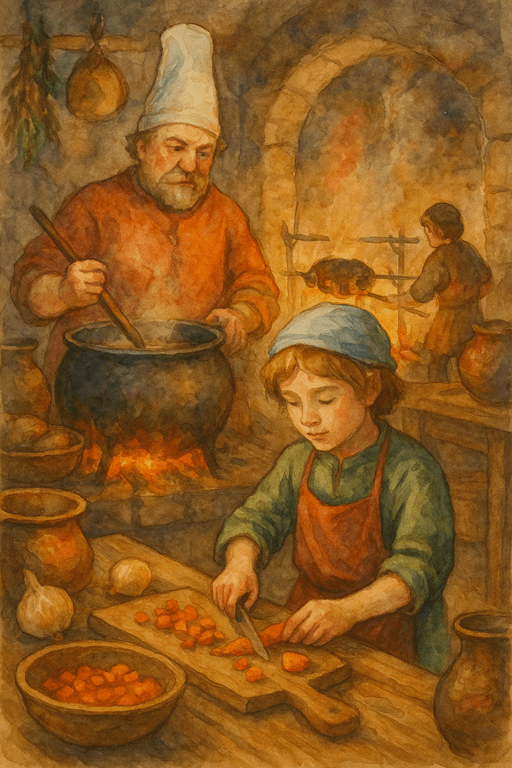
By their early teens, many child servants transitioned into apprenticeships—structured training under skilled adults. Apprenticeship was a cornerstone of medieval life, giving children the chance to move from menial tasks to specialized trades.
- Kitchen apprentices: Boys and girls worked under cooks, learning how to prepare meals in vast castle kitchens. This could mean years of chopping vegetables, tending fires, and cleaning before gaining responsibility for roasting meats or baking bread.
- Craft apprenticeships: Outside the kitchen, children could learn trades essential to castle life. Blacksmiths trained boys in forging horseshoes, nails, and tools. Carpenters taught woodworking for doors, furniture, and wagons. Tailors and seamstresses took on young helpers to stitch garments and linens.
- Length of training: Apprenticeships typically lasted 5–7 years, with children bound by contract to their masters. In return, they received food, lodging, and training—but little or no pay.
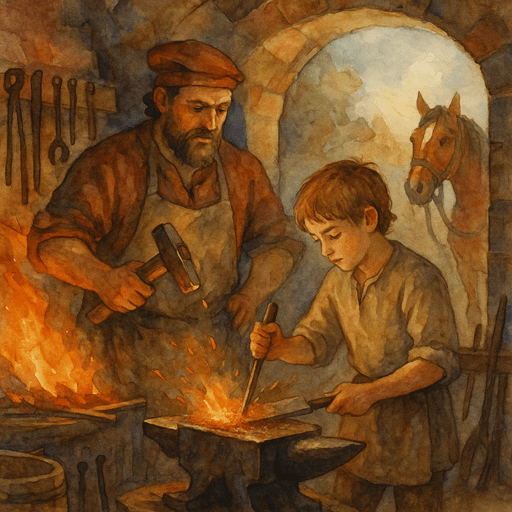
Though apprentices often endured long hours and harsh discipline, successful completion of training could open doors to independence, steady income, and even guild membership in towns.
Limited Education but Opportunities to Rise
Formal schooling was rare for servants and apprentices, yet castle life did provide learning of a different kind.
- Basic education: Some child servants, especially boys working near chaplains or clerks, might learn to read simple prayers or keep basic records. Girls attached to noble ladies sometimes learned sewing, music, or household management.
- Learning through service: More than books, children absorbed the rhythms of responsibility, hierarchy, and skill. They learned when to speak, how to address nobles, and how to fulfill their duties without complaint.
- Paths upward: A clever boy might rise from page to squire, and eventually to knighthood. A skilled apprentice might become a respected craftsman. For girls, a position as a lady’s maid could lead to marriage prospects better than those available at home.
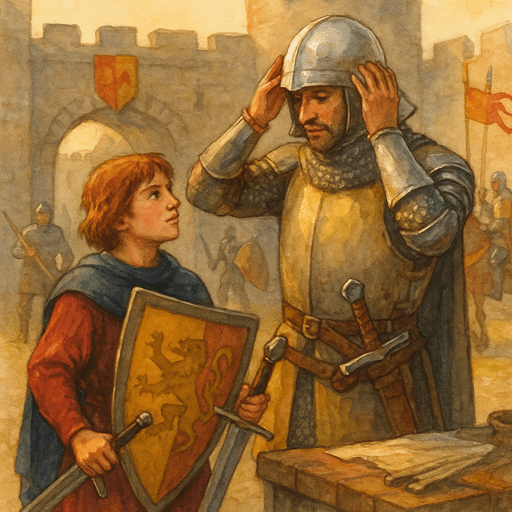
Service and apprenticeship rarely guaranteed a bright future, but they offered stepping stones out of poverty for those who survived the rigors of castle life.
Final Thoughts
Child servants and apprentices remind us that medieval castle life was not only sustained by nobles and adults but also by children pressed into work long before their time. Their small hands turned spits, carried water, and stitched garments. Their young voices called messages across the courtyards.
While their lives were harsh and their futures uncertain, the castle gave them structure, training, and—sometimes—a chance to rise higher than their parents ever could. In the shadow of stone walls, children were not merely bystanders; they were part of the beating heart of medieval society, their labor and learning ensuring that the castle continued to thrive.