

The Servant Hierarchy in a Medieval Castle: From Steward to Scullion

Behind the glittering banquets and richly dressed nobles of the medieval castle stood a vast network of servants. From the most trusted administrators to the humblest kitchen workers, the castle household was an intricate system, carefully ordered by rank and responsibility. This hierarchy ensured that daily life ran smoothly and that the lord and lady were freed from all practical burdens. To understand the lives of these workers is to glimpse the machinery that kept castles functioning.
Steward, Chamberlain, Marshal

At the top of the servant hierarchy stood the great officers of the household. These men (and occasionally women in smaller roles) held authority, not only over other servants but also over finances, supplies, and sometimes even the castle’s justice.
- The Steward: The steward was the lord’s right hand in managing the estate. He supervised finances, collected rents, kept ledgers, and ensured that provisions were stocked. A capable steward was vital, for he oversaw the entire household staff and coordinated large feasts or visits from important guests. His word carried weight second only to the lord or lady.
- The Chamberlain: If the steward managed the castle outwardly, the chamberlain managed its heart. He oversaw the lord’s private chambers, clothing, and treasury. Because of his access to the lord’s personal quarters, he was trusted with sensitive matters and often became a close advisor.
- The Marshal: The marshal had responsibility for the stables, horses, and sometimes military organization. Horses were essential to noble life—for travel, hunting, and war—so the marshal’s role was both practical and symbolic. He also supervised grooms and squires, making sure the household’s mounted retinue was always prepared.

These high officers were not mere servants; they were administrators and power brokers. In large castles, they could hold influence nearly equal to minor nobles.
Kitchen Staff: Cook, Scullions

If the great officers formed the brain of the household, the kitchen was its stomach. Castles needed vast amounts of food each day to feed not only the noble family but also guests, soldiers, clerks, and servants. The kitchen staff ensured that the Great Hall never lacked for bread, meat, or ale.
- The Cook: The cook directed the kitchen like a general on a battlefield. He managed assistants, supervised roasting and boiling, ordered ingredients, and ensured dishes reached the high table on time. A skilled cook was a prized asset, capable of creating both simple meals and elaborate feasts that displayed the household’s wealth.
- The Scullions: At the very bottom of the hierarchy were the scullions, often boys or young servants tasked with the dirtiest work. They scrubbed blackened pots, carried water, disposed of scraps, and endured the smoky, hot, and often dangerous conditions of the kitchen. Though lowly, their labor kept the system moving.

The kitchen was chaotic, smoky, and filled with the clatter of knives, spits, and cauldrons. Yet it was also the beating heart of the castle’s hospitality, where hierarchy was most visible—from the cook giving orders down to the scullions scrubbing in silence.
Household Staff: Laundress, Maid
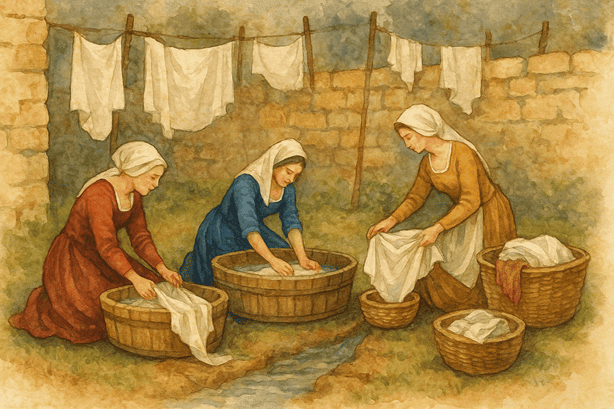
Beyond the kitchen, another group of servants maintained cleanliness and order in the domestic spaces of the castle. These workers might seem invisible, but their contributions ensured that the nobility lived surrounded by refinement.
- The Laundress: Laundry was a grueling but essential job. Laundresses hauled water, scrubbed linens in cold troughs or streams, and bleached cloth in the sun. Their work preserved the fine linens that symbolized status and hygiene in a time when cleanliness was tied to nobility.
- The Maid: Maids tended to the daily tasks of cleaning chambers, preparing beds, and assisting noblewomen. In the lady’s solar, maids might help with embroidery, fetch materials, or dress their mistress. Though less prestigious than the chamberlain or steward, they had proximity to noblewomen and sometimes became confidantes.
These roles highlight how gender shaped castle work. Women often managed clothing, linens, and domestic comfort, while men dominated administrative and martial service.
Wages, Privileges, Punishments

Life as a servant in a castle was not uniform—rewards and risks varied widely depending on one’s station.
- Wages: High-ranking servants like stewards or chamberlains might earn substantial salaries, enjoy rooms of their own, and even hold land. Lower servants, like scullions or laundresses, received modest wages or only food, clothing, and lodging. Payment in kind was common, with servants fed, housed, and clothed in livery.
- Privileges: Proximity to nobility came with perks. Trusted servants could dine better than common villagers, travel with the household, and receive gifts or tips. Some rose to positions of significant power, blurring the line between servant and official.
- Punishments: Discipline was strict. A servant caught stealing, shirking duties, or spreading gossip risked dismissal, whipping, or public humiliation. Yet loyalty could be richly rewarded; many servants found lifelong security in service.
The hierarchy of servants reinforced the hierarchy of nobility itself. Each rank mirrored the broader feudal order, where everyone—from king to peasant—had a clearly defined role.
Final Thoughts
The world of the medieval castle was one of strict order, and nowhere was this more visible than in its servant hierarchy. From the steward at the top, wielding authority over estates and finances, to the scullions at the bottom, scrubbing pots in smoky kitchens, each role was indispensable.
Together, these men and women created the rhythm of castle life: meals served on time, chambers cleaned, horses ready, linens fresh, and feasts executed with precision. Their work made noble comfort possible.
For nobles, the presence of such a hierarchy reinforced their own status—they were figures elevated above the daily grind of labor. For servants, the castle offered hardship, discipline, but also opportunities for security and advancement. The servant hierarchy was thus a microcosm of medieval society itself: unequal, ordered, and utterly dependent on the work of many for the privilege of the few.


