

Religious Life in the Medieval Castle
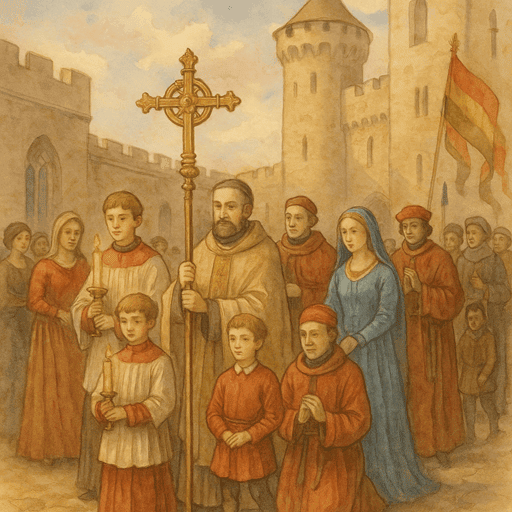
Life in the medieval castle was not only about politics, battles, and banquets. Faith permeated every corner of castle life, shaping daily routines, festivals, and even architecture. Religion was not a private affair but a public expression of noble duty and identity. From chapels carved into fortress walls to processions, pilgrimages, and holy relics, castles stood as both military strongholds and spiritual centers. A visitor entering such a place might hear the clang of armor in the courtyard and, at the same time, the faint echo of Mass being sung in the chapel—a constant reminder that temporal and spiritual power were deeply intertwined.
Chapels Inside Castles
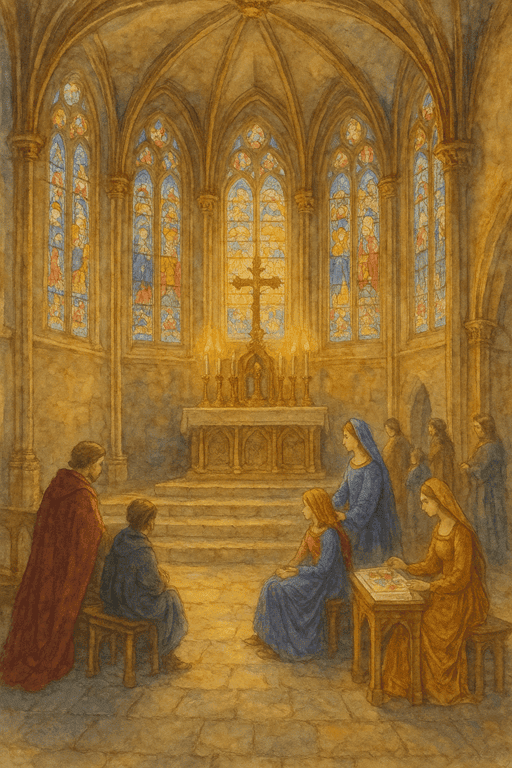
Nearly every great castle contained a chapel. While some were modest chambers, with only a simple altar and crucifix, others were richly adorned and rivaled parish churches in beauty and grandeur. These spaces were more than places of worship; they were architectural statements of piety and prestige.
- Placement: Castle chapels were often built within the inner bailey or keep, ensuring the lord’s family had access to daily worship without leaving the safety of the walls. In some castles, private chapels were located near the great hall for public ceremonies or attached to the lord’s solar for private devotion. This proximity reinforced the idea that religion was interwoven with governance and daily household life.
- Design: While smaller than cathedrals, castle chapels featured vaulted ceilings, stained glass, and painted walls. Rich decoration was not simply ornamental—it was meant to lift the mind toward heaven while also reflecting the wealth and piety of the family. Images of saints, coats of arms, and painted ceilings all served as visible links between faith and noble identity.
- Private devotion: A chapel allowed nobles to pray in relative seclusion, but it also became a gathering place for the household, especially on Sundays or feast days. These communal services unified lord, lady, children, and servants under the same prayers, strengthening the household’s sense of shared faith.
Example: The Sainte-Chapelle at the Château de Vincennes in France stands as a magnificent example of a castle chapel, designed to rival the famous Sainte-Chapelle in Paris. Its soaring windows and luminous glass showed that even within military fortresses, devotion and beauty were priorities.
Priests and Confessors
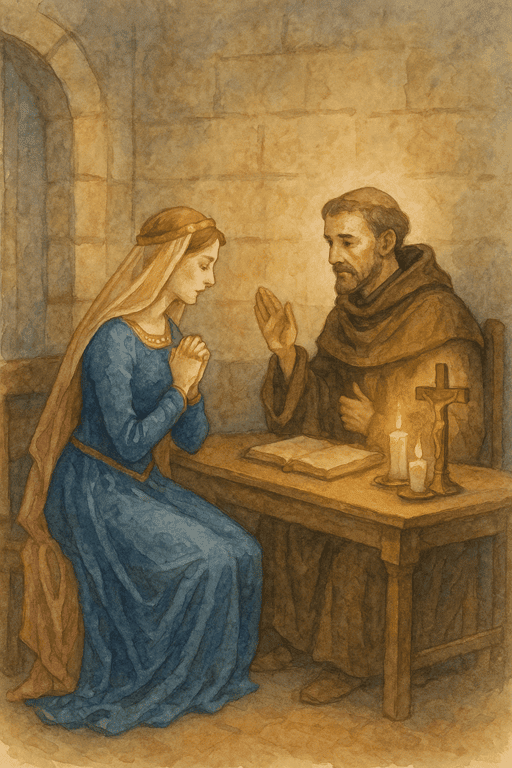
No castle functioned without clergy. Priests and confessors were essential figures who provided spiritual guidance, administered the sacraments, and ensured the castle remained within the good graces of the Church. Their presence also demonstrated the close alliance between secular power and religious authority.
- Resident priests: Many castles had chaplains who lived on-site, celebrating Mass daily for the lord, lady, and household. The daily sound of bells and prayers marked the rhythm of life as surely as the watchman’s call.
- Confessors: High-ranking nobles often had personal confessors, typically monks or friars. These confessors guided not only spiritual matters but sometimes political ones, offering moral counsel on decisions that affected entire domains. To confess to a trusted priest was to carry both personal sins and the weight of rulership to God.
- Education: Priests frequently doubled as teachers for noble children, instructing them in Latin, prayers, and Scripture. Religious instruction was considered the foundation of noble virtue, since the future of a dynasty depended not only on power but also on reputation for piety.
The presence of clergy within castle walls reminded all inhabitants—lords, ladies, servants, and guests—that religion was inseparable from noble life. Every decision, from feasts to war, was expected to have the blessing of the Church.
Daily Prayers, Feast Days, and Pilgrimages

Faith shaped the rhythm of each day, week, and year. From the rising of the sun to the passing of seasons, prayers and celebrations punctuated castle life, ensuring that even the most powerful lords recognized their dependence on divine grace.
- Daily prayers: Nobles were expected to begin and end the day with prayer, often kneeling before small altars in their private chambers. The household might gather in the chapel for morning Mass before attending to duties. Even servants, when permitted, joined these devotions, reinforcing shared spiritual identity across social ranks.
- Feast days: Religious festivals were highlights of the year. Christmas, Easter, Pentecost, and saints’ days filled castles with processions, special meals, music, and almsgiving. These feasts were not only moments of devotion but also opportunities to display wealth and hospitality. Nobles might commission plays, elaborate decorations, or music to honor the day, blending piety with spectacle.
- Pilgrimages: For the deeply pious—or those seeking penance—pilgrimages to holy sites were common. Nobles set out on journeys to shrines like Canterbury, Santiago de Compostela, or even as far as Rome and Jerusalem. Pilgrimage was both a religious duty and a social performance of devotion. For those unable to travel, symbolic processions and localized pilgrimages were sometimes organized within castle grounds, ensuring even stay-at-home nobles could participate in the wider rhythms of Christendom.
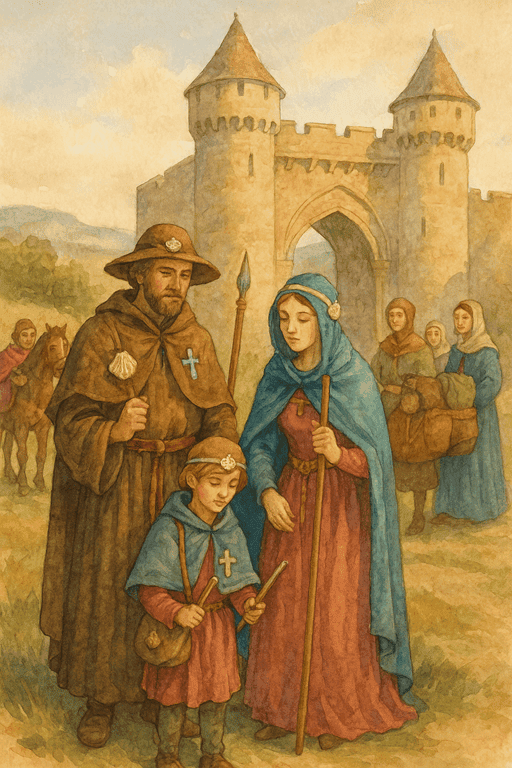
These practices ensured that religion was not confined to Sundays but intertwined with every stage of noble existence, shaping the daily and yearly calendar alike.
Reliquaries and Patronage
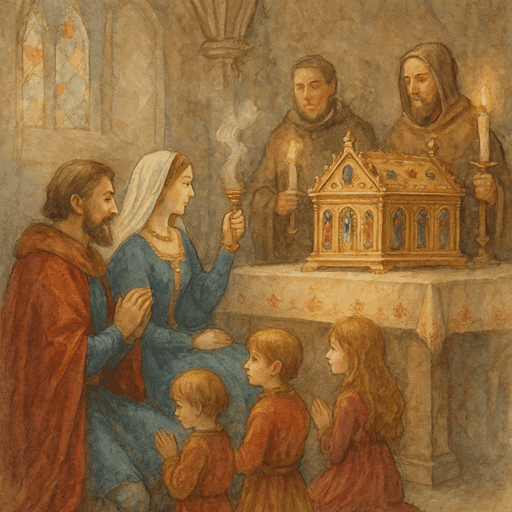
The piety of nobles was not only expressed in prayer but also in material devotion and patronage. Castles often housed sacred treasures, while noble families extended their influence through religious generosity.
- Reliquaries: Castles often displayed treasured relics—fragments of saints’ bones, pieces of the True Cross, or items linked to holy figures. These were housed in ornate reliquaries made of gold, silver, and enamel. Possessing relics enhanced both spiritual protection and prestige, as visitors could witness the family’s devotion and wealth. Relics were sometimes paraded in processions, reminding all of the household’s sacred ties.
- Patronage of monasteries: Many lords and ladies endowed abbeys or monasteries, donating lands and wealth in exchange for prayers on their behalf. This ensured spiritual protection, reinforced alliances with the Church, and enhanced family honor. Religious patronage also left lasting legacies in the form of libraries, hospitals, and schools.
- Almsgiving: Giving to the poor was a religious duty closely tied to noble identity. Leftovers from feasts were often distributed at the gates, and nobles might fund charitable works in their communities. Such acts reinforced their reputation for generosity and devotion, blending social responsibility with spiritual obligation.
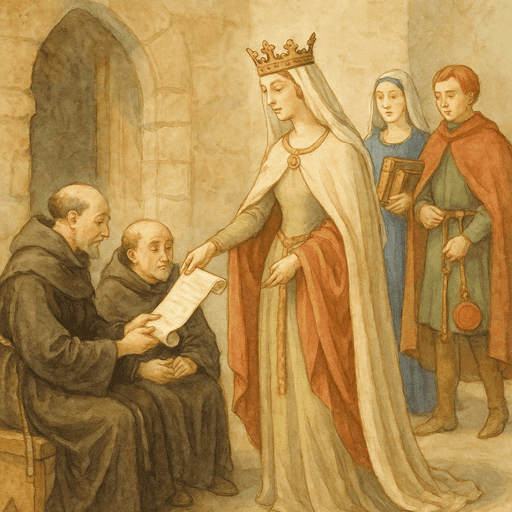
Example: Eleanor of Aquitaine and Blanche of Castile were both renowned for their religious patronage, funding monasteries, schools, and chapels that long outlived their own reigns. Through their acts of devotion, their names became entwined with the Church’s memory as much as with dynastic politics.
Final Thoughts
Religious life in the castle was more than ritual—it was the heartbeat of daily existence. From whispered morning prayers to the grandeur of feast-day processions, from the quiet of confession to the spectacle of reliquary displays, religion structured the rhythm of life within castle walls.
Chapels, confessors, pilgrimages, and holy relics reminded everyone—from lord to servant—that castles were not only fortresses of stone but also sanctuaries of the soul. Faith defined noble identity as surely as bloodlines or banners. To be a lord or lady was not only to command men-at-arms but also to protect the spiritual well-being of a household. Within these sacred spaces, religion offered comfort, demanded devotion, and tied noble families to both eternity and community.


