The Lady of the Medieval Castle: More Than Just Embroidery?
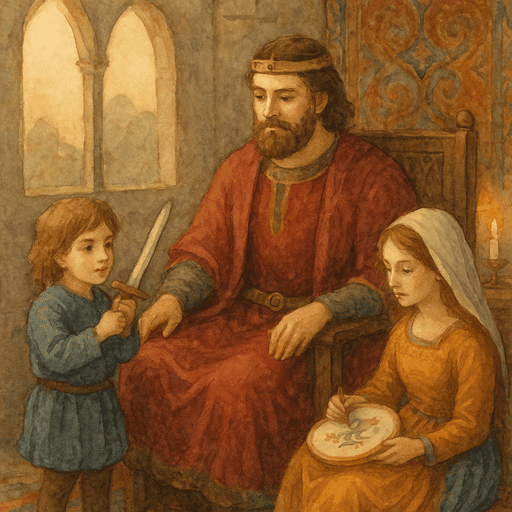
When we picture the medieval lady of the castle, popular imagination often conjures an image of a noblewoman seated in her solar, stitching delicate embroidery while the world bustled beyond her chamber. While this scene contains some truth, it tells only part of the story. The lady’s responsibilities stretched far beyond needle and thread. She was the central figure in the daily rhythm of the castle—part manager, part diplomat, part mother, and part symbol of noble power. Her work, often subtle and behind the scenes, sustained not only her family but also the broader community tied to the castle.
Mistress of the Household
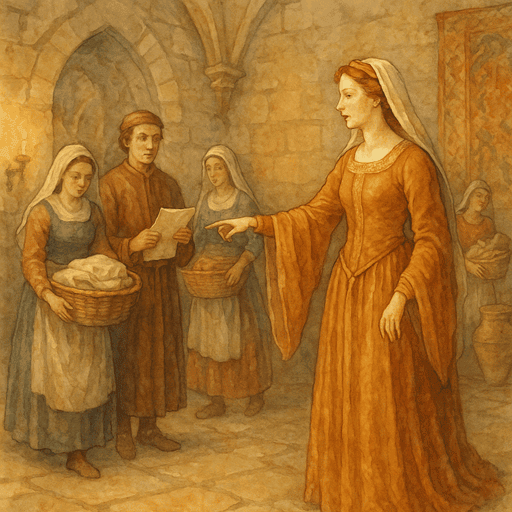
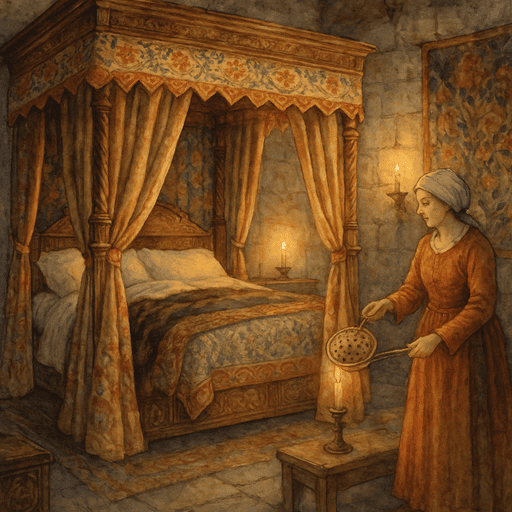
Running a medieval castle was not unlike running a vast and complex business. Behind every feast, every warm chamber, and every supply of grain stood the unseen coordination of countless servants. The lady of the castle acted as the household’s chief overseer, directing this web of activity to ensure everything functioned smoothly.
She worked closely with stewards and senior staff, but her authority was unmistakable. A well-managed household reflected her competence just as much as the lord’s victories on the battlefield.
- Servant supervision: She directed chambermaids, laundresses, cooks, and scullions, either directly or through trusted senior servants.
- Supplies and storage: She kept watch over pantries and storerooms, where everything from salted meats to candles had to be carefully managed to last through winter or siege.
- Textile production: Spinning, weaving, and sewing clothes for the household fell under her oversight. Even if she did not weave herself, she ensured the women who did had materials and guidance.
Her role as mistress of the household was both practical and symbolic: her efficiency was a reflection of the family’s order and honor.
Estate Management in the Lord’s Absence

When her husband was away—a common occurrence during campaigns, pilgrimages, or royal service—the lady’s responsibilities expanded dramatically. She often assumed full authority over the estate, ruling in his stead with the seal and keys of the household in her keeping.
In such times, she was no passive caretaker but an active leader:
- She could collect rents and supervise financial accounts, ensuring the estate’s income flowed steadily.
- She presided over the manorial court, hearing disputes among tenants and enforcing justice in the lord’s absence.
- She dealt directly with merchants and tradesmen, negotiating for supplies and ensuring the estate remained provisioned.
This role highlights the often-overlooked truth: medieval noblewomen were not powerless figures confined to embroidery hoops, but capable administrators who upheld the very functioning of their estates.
Guardian of Lineage and Alliances
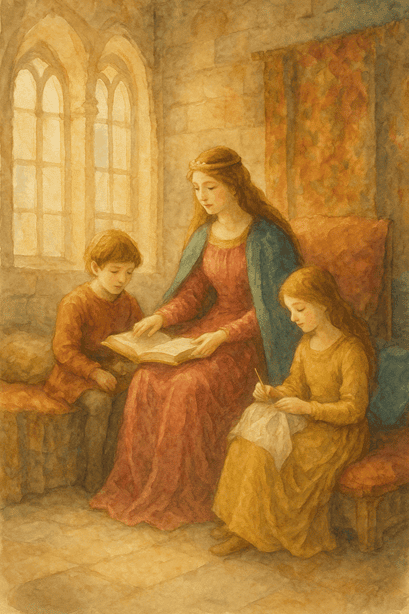
Beyond the walls of the castle, the lady’s role carried enormous weight in ensuring the survival and prosperity of her family’s lineage. Noblewomen were entrusted with the continuation of dynasties, and their responsibilities extended into the political realm.
- Raising children: She oversaw the education of sons—preparing them for knighthood, the Church, or inheritance—and daughters, preparing them to manage their own households one day.
- Marriage diplomacy: As alliances were often secured through marriage, ladies were central in arranging or supporting unions that could expand territory, wealth, or influence.
- Dowries and inheritances: A lady often managed her own dowry lands, making her a landholder in her own right. These assets could shape the power dynamics between families.
In short, she was both guardian and architect of her family’s future, her role extending well beyond her immediate household.
Patron of Piety and Charity
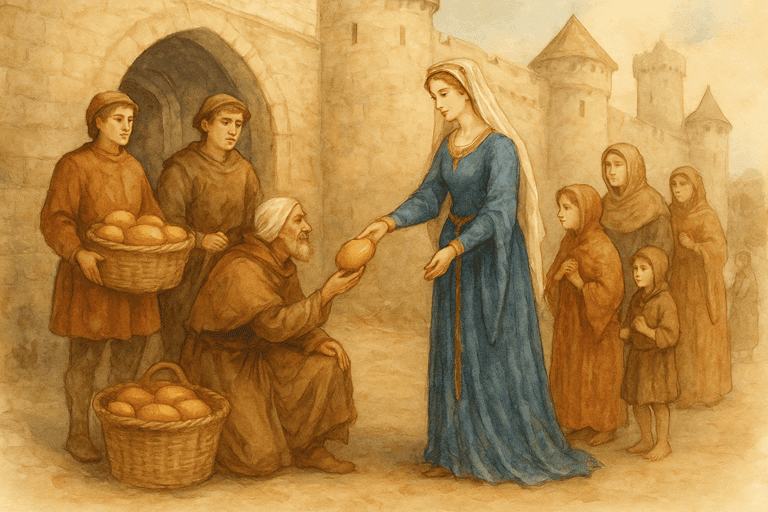
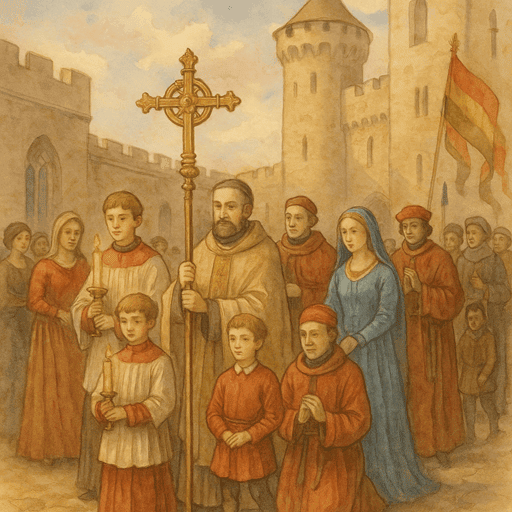
Religion was woven into every aspect of medieval life, and noblewomen were expected to embody and display piety. The lady of the castle often became the household’s moral and spiritual center.
- Religious devotion: She was expected to attend Mass daily, support the work of chaplains, and encourage devotion within the household.
- Charity to the poor: She organized almsgiving, distributing bread or leftovers from the castle’s feasts to the needy at the gates. Such acts not only fulfilled Christian duty but also displayed the family’s generosity.
- Patronage: Many noblewomen commissioned chapels, sponsored the creation of illuminated manuscripts, or donated to monasteries, leaving lasting cultural legacies.
Through acts of piety and charity, the lady reinforced both her faith and her family’s noble image.
Embroidery: More Than Decoration
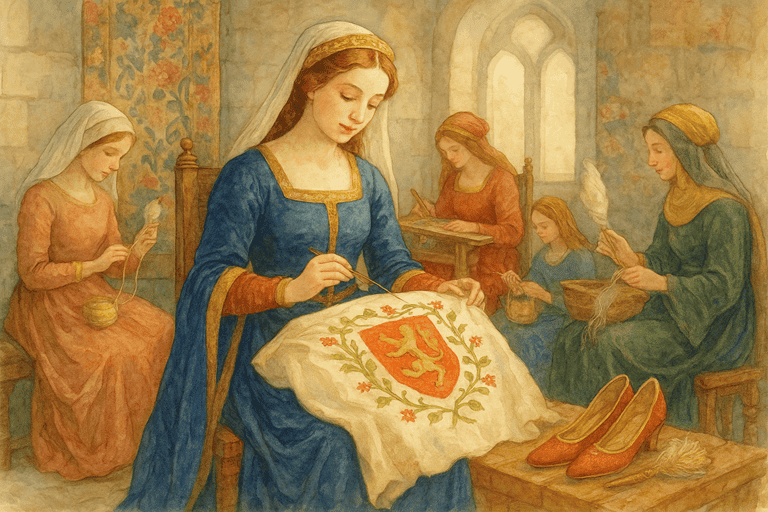
The image of the lady embroidering is not wrong—but it is incomplete. Textile work was highly significant in the medieval world, serving practical, political, and cultural purposes.
- Embroidered textiles decorated chapels and halls, displaying heraldic symbols or sacred imagery.
- Textiles were valuable political gifts, exchanged with bishops, nobles, or monarchs to cement alliances.
- Masterpieces like the Bayeux Tapestry—traditionally linked to noblewomen’s work—show the enormous cultural weight embroidery could carry.
Far from trivial, needlework was an art form and a tool of power, linking noblewomen’s skill to the preservation of history and identity.
The Lady as Symbol of Power
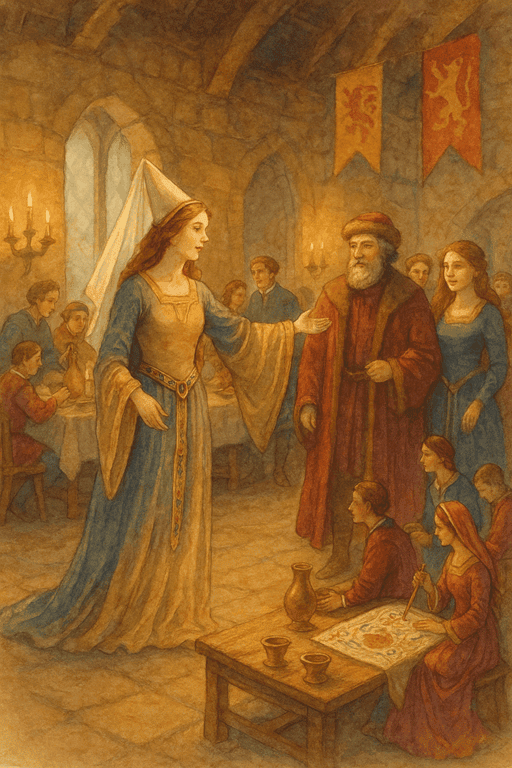
Beyond her practical duties, the lady of the castle was also a living symbol of her family’s prestige. Her appearance, conduct, and presence in public ceremonies mattered deeply. To walk into the Great Hall and see her richly dressed, poised, and surrounded by her attendants was to understand the wealth and refinement of the household.
- As a hostess at feasts, she welcomed and honored guests, strengthening alliances.
- In her dress, jewelry, and demeanor, she embodied the wealth and dignity of her lineage.
- Through courtesy, generosity, and visible piety, she modeled the virtues expected of her rank.
The lady’s power was often subtle, but it was ever-present. She was the face of the household, the link between domestic order and noble reputation.
Final Thoughts
The medieval lady of the castle was far more than an idle figure with embroidery in hand. She was the household’s administrator, an estate manager, a political actor, a spiritual patron, and the guardian of her family’s reputation. Her authority often worked quietly, in contrast to the loud spectacle of her husband’s tournaments or hunts, but it was no less vital.
To imagine her only as a passive figure in a tower is to miss the truth: she carried keys at her belt, scrolls in her hands, and the well-being of hundreds on her shoulders. Her role was indispensable to the rhythm of castle life—and to the very survival of the medieval estate.