

Fashion in the Great Halls of Medieval Castles: What Nobles Wore
Step into the Great Hall of a medieval castle during a feast or courtly gathering, and you would see far more than roasted meats and lively entertainment. Clothing itself was part of the spectacle. Each gown, cloak, or headdress was a carefully chosen signal, broadcasting wealth, rank, and identity. The hall was a living tapestry of color and texture, where fashion reinforced hierarchy as much as the seating arrangements or the food on the tables. For nobles, dress was not just personal expression—it was politics, culture, and power woven into fabric.
Clothing as a Language of Status
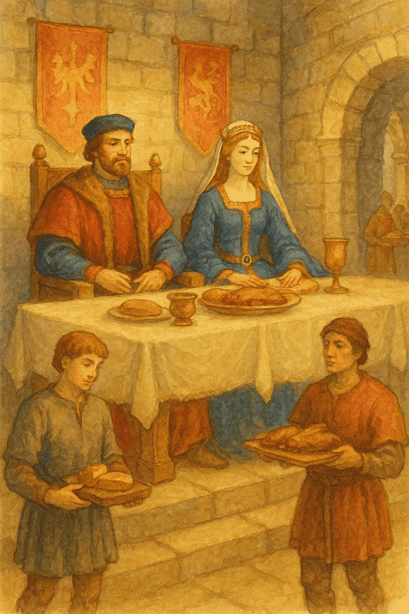
In the Middle Ages, what you wore was never simply a matter of taste. Clothing functioned as a visual language, instantly communicating social rank and privilege. A glance at a person’s tunic, gown, or headdress revealed who they were and what authority they carried. This was especially important in the Great Hall, where people from different ranks gathered under the same roof. The fine cuts and luxurious layers of noble clothing marked them apart from the simpler, functional garments of servants or peasants.
- Noblemen wore tunics of fine cloth, often reaching to the knees or longer, paired with hose or chausses. Cloaks fastened with ornate brooches were common in colder seasons.
- Noblewomen were draped in long gowns, fitted at the bodice and flowing into wide skirts. Sleeves could be extravagantly long, sometimes trailing to the ground, a practical impossibility for peasants but a deliberate show of leisure.
- Headwear was vital: men wore caps or hoods with liripipes (long tails), while women displayed elaborate headdresses, veils, or wimples. Later in the Middle Ages, tall hennins—the iconic cone-shaped headdress—became a courtly fashion.

Fabrics of Wealth and Prestige
More than the style of a garment, the fabric itself spoke volumes. Cloth was one of the most valuable commodities of the medieval world, and the nobility draped themselves in the finest available. To wear rich fabrics was not just to be comfortable, but to declare dominance, wealth, and international connections.
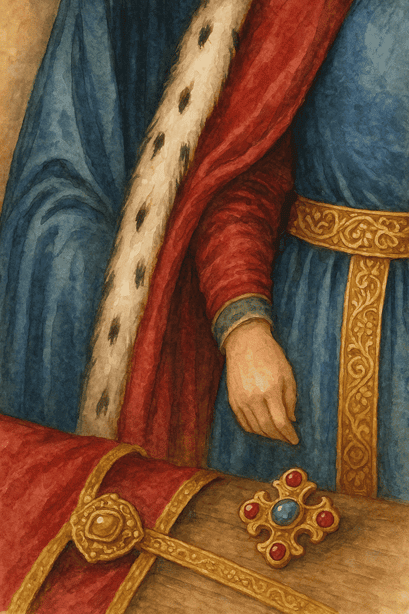
- Wool was the most common material, but nobles wore only the finest grades, soft and richly dyed.
- Linen was used for undergarments, offering comfort and cleanliness.
- Silk and velvet, imported at great expense from Italy, Byzantium, or even the East, were reserved for the highest ranks. A silk gown signaled international trade connections as much as fashion.
- Fur linings (ermine, vair, squirrel, mink) were especially prized for winter garments. White fur with black-tipped tails, ermine, became synonymous with royalty.
The Power of Color: Dyes and Symbolism
In an age when dyeing fabric was labor-intensive and costly, color itself became a status symbol. Nobles could afford the brightest, richest hues, while peasants wore muted tones that came directly from undyed wool or inexpensive plant dyes. Certain shades carried symbolic meanings, elevating fashion beyond mere decoration.
- Red symbolized power and authority. Bright scarlets, made with costly kermes dye, were worn by kings and high-ranking nobles.
- Blue, particularly deep woad or indigo hues, became associated with loyalty and later with the Virgin Mary, making it a favored choice for queens and noblewomen.
- Purple, reserved since antiquity for emperors, was rare and almost unreachable in medieval Europe, though violet tones appeared among the wealthiest.
- Black, when achieved with high-quality dyes, was incredibly expensive and symbolized dignity, piety, and power.
Cheaper, faded colors—brown, grey, or dull greens—marked lower classes, while jewel tones in velvet and silk dazzled under candlelight in the Great Hall.
Sumptuary Laws: Fashion by Law

Clothing’s power to signify status was so important that medieval rulers used the law to control it. Sumptuary laws dictated what individuals could and could not wear, ensuring that nobility retained their visible superiority. A finely dressed merchant might grow wealthy, but law ensured he could never look like a duke.
- In England, France, and other kingdoms, laws specified fabrics and colors reserved for the nobility.
- A commoner might be forbidden from wearing fur, velvet, or certain shades like crimson or deep blue.
- Breaking these laws could bring fines or social disgrace.
These laws meant that even in a crowded hall, one’s rank was impossible to disguise. Fashion was not merely preference—it was enforced hierarchy.
Accessories and Details
While gowns and cloaks made the first impression, it was the accessories that completed the picture of wealth and refinement. These items were the finishing touches that showed off artistry, wealth, and status in subtle ways.
- Belts and girdles: often encrusted with jewels or embroidery, serving as both fashion and status markers.
- Jewelry: gold rings, brooches, and pendants. Women might wear elaborate necklaces, while men displayed jeweled clasps.
- Shoes: by the 14th century, long pointed shoes (poulaines) were fashionable for men, though mocked by moralists as excessive.
- Gloves: richly embroidered gloves could be a gift of honor.
Each accessory carried meaning, whether practical or symbolic, and together they completed the spectacle of fashion in the Great Hall.
Fashion and Identity in the Great Hall

When nobles gathered in the Great Hall—whether for a feast, a diplomatic meeting, or a religious celebration—the room itself became a dazzling display of identity. The rustle of silk gowns, the glimmer of fur cloaks, and the gleam of gold and jewels created an atmosphere where everyone’s place was visible at a glance. In such a setting, fashion was not an afterthought but a deliberate part of courtly life. It communicated authority, devotion, wealth, and alliances as clearly as any speech or charter.
Final Thoughts
Fashion inside the medieval castle was a world of its own—ornate, expensive, and carefully regulated. Every color, fabric, and jewel reinforced the message of hierarchy. To sit at the high table in the Great Hall was not just to eat better food but to be seen in the trappings of power. And for nobles, being seen was everything.


