Daily Routines of a Medieval Lord and Lady
Imagine waking up in the chill of a stone chamber, the only light streaming in through narrow arrow-slit windows, the smell of rushes on the floor and a faint crackle from the embers of last night’s fire. Life inside a medieval castle was not all banquets and gallantry—it was structured, ritualized, and deeply tied to both religion and the rhythm of the seasons. For lords and ladies, every day was a mixture of duty, devotion, and a little bit of leisure.
Morning: Prayers, Dressing, and Business

The day began early, often at dawn, when bells from the chapel or sounds from the courtyard stirred the household to life. The lord and lady rarely woke in solitude. A chamberlain or personal attendants entered their chambers to assist them in dressing, for garments were complex and layers abundant. A lady’s gown might involve underdresses, laces, and a headdress that required skill to secure, while a lord’s attire involved hose, tunics, and cloaks chosen to reflect his status. (You can explore more about the splendor of noble fashion in Fashion in the Great Halls of Medieval Castles.)
The very first act was usually prayer. Religion underpinned every moment of life in the Middle Ages, and lords and ladies alike began their mornings with devotion. A chapel was almost always part of the castle, and the family was expected to attend Mass daily. Lords and ladies often kept their own chaplains, who read prayers aloud as they prepared for the day.
After prayers, the morning meal was usually modest, taken in private chambers rather than the Great Hall. The heavier meals came later. It might consist of bread, cheese, or ale—nourishment enough to carry them into the busiest hours of the day.
The lord’s first responsibilities involved managing his estates:
- Meeting with his steward to hear reports on harvests, rents, and disputes.
- Holding court in the Great Hall, where tenants or servants might present grievances.
- Discussing military matters with knights or castellans, especially if the castle was in a border region.

The lady’s role in the morning might be equally demanding. She oversaw the smooth running of the household, ensuring that every detail of household life was in order:
- Supervising domestic servants.
- Reviewing supplies in the kitchens, pantries, and storerooms.
- Organizing textile production, including spinning, weaving, and embroidery.
- Managing care for children and sometimes even the education of wards (other noble children sent to the household).
The morning set the tone for the day, as both lord and lady ensured the castle—and all who lived within its walls—remained in order.
Midday: The Main Meal and Courtly Life
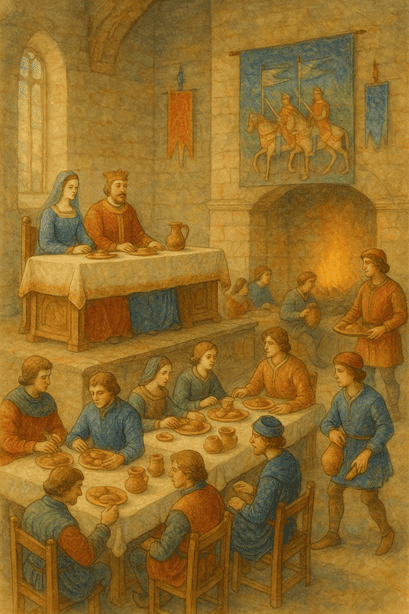
The largest meal of the day was served around late morning or noon. This was the heart of social life inside the castle. The Great Hall, with its high ceilings and long wooden tables, became the stage for displaying wealth and hospitality. The food, music, and ceremony surrounding them are explored further in Feasting and Banquets: What Was Really on the Table in a Medieval Castle?
Seating arrangements reflected the hierarchy of medieval society: the lord and lady at the high table on a raised dais, with family and honored guests close by. Knights, squires, and visiting merchants sat further down the tables, while servants and retainers ate even further from view.
Meals were not simply about eating. They were also moments of ceremony and performance:
- Entertainment filled the air, with minstrels singing ballads, jesters performing tricks, or storytellers reciting tales of heroes and saints.
- Displays of status were visible in the food itself—spiced dishes, sugared fruits, or rare meats were a sign of wealth and influence.
- Religious ritual punctuated the meal, with blessings before dining and alms given to the poor at the gates afterward.
The midday feast reinforced not only the bonds of hospitality but also the visible order of society.
After the meal, the lord might retreat to chambers for council or diplomacy, while the lady might receive visitors or host more private gatherings with her ladies-in-waiting.
Afternoon: Leisure, Training, and Devotion

Afternoons varied greatly depending on the season, political climate, and the health of the household. (Leisure was not idle time, but carefully structured, as seen in Medieval Castle Leisure: Hunting, Falconry, Music, and Games).
For lords, afternoons often blended work with leisure:
- Hunting or falconry were both prestigious pastimes and practical means of providing meat for the table. Hunts could last hours and often included knights, squires, and guests.
- Training in arms ensured readiness for war. Lords might practice with swords, lances, or bows, or supervise the training of their sons and squires.
- Tournaments or jousts, though not daily, offered an opportunity to show prowess, forge alliances, and entertain the court.
For ladies, the afternoon offered opportunities for more private, yet equally important pursuits:
- Embroidery or weaving created both functional textiles and works of art, some of which carried heraldic or religious significance.
- Music and reading, for those fortunate enough to be literate, provided leisure and refinement. Noblewomen often owned devotional books or psalters, richly illustrated with illuminations.
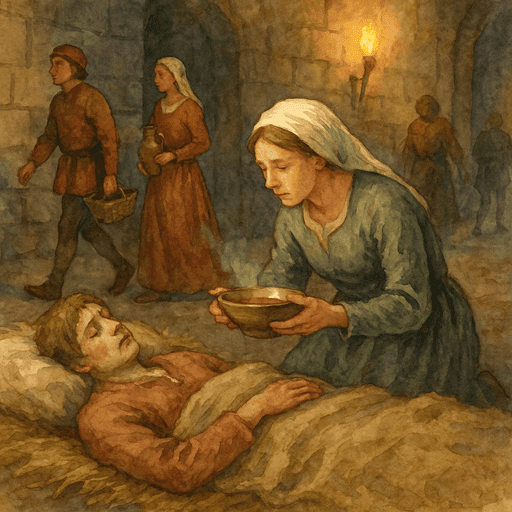
- Charitable work was a key part of a lady’s role. Organizing the distribution of food, clothing, or alms reinforced her Christian duty and the reputation of her family.
Religion shaped the rhythm of the day, and afternoons often included another visit to the chapel for prayer or a service.
Evening: Supper and Reflection
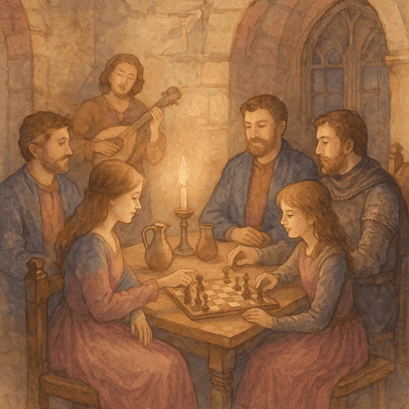
The evening meal, or supper, was lighter than the midday feast but still followed ceremony and order. It was often eaten in smaller, more private quarters, especially in winter when candlelight and fires created a more intimate atmosphere.
After supper, nobles turned to quieter entertainments:
- Storytelling and music around the fire.
- Board games like chess or tables (a precursor to backgammon), enjoyed as both recreation and mental training.
- Conversation with trusted friends or counselors.
As night fell, the castle darkened quickly. Torches, candles, and oil lamps gave limited light, so bedtime came earlier than in modern life. Lords and ladies knelt again for night prayers, entrusting themselves to God before sleep. Heavy curtains drawn around canopy beds provided privacy and warmth, while furs and feather mattresses softened the otherwise chilly stone chambers.

Variations: Not Every Castle Was the Same
While this pattern gives us a glimpse into the rhythm of a noble household, it’s important to note that not every castle or family lived the same way. Daily routines were shaped by:
- Region: French, English, German, or Italian customs varied in detail, especially in food and fashion.
- Wealth: A duke with vast estates enjoyed a richer lifestyle than a minor baron struggling with limited resources.
- Peace or War: In times of conflict, everything shifted toward defense, garrison duties, and military readiness.
- Season: Winter shortened days and forced life indoors, while summer allowed for outdoor hunts, festivals, and travel.
The “daily routine” was thus flexible, adapting to circumstance while still grounded in ritual and tradition.
Final Thoughts
The life of a medieval lord and lady was not idle luxury—it was full of obligations to family, tenants, and God. From dawn prayers to the flicker of candlelight at night, their days were structured by duty, shaped by hierarchy, and colored with ritual. Behind the glitter of banquets and tournaments lay a carefully ordered rhythm of prayer, work, and responsibility that made the castle not only a fortress but also the living heart of medieval society.