How Back Pain Was Treated in the Middle Ages
Lately, I’ve been dealing with a stubborn case of back pain—and it got me wondering: how did people in the past handle something so common and uncomfortable without modern medicine, chiropractors, or painkillers?
That curiosity led me down a fascinating rabbit hole into the world of medieval medicine, where back pain was treated through a mix of herbal salves, religious rituals, and a medical theory involving the balance of bodily fluids. In the Middle Ages—a period spanning roughly from the 5th to the 15th century—remedies were rooted in ancient traditions, spiritual beliefs, and the natural world.
If you had back pain in medieval Europe, your treatment might include a poultice of comfrey, a bloodletting session, or a pilgrimage to a saint’s shrine. In this post, we’ll explore the ideas and practices that shaped how people understood and treated back pain in one of history’s most intriguing eras.
The Medieval Understanding of Pain: The Humors

Before microscopes, anatomy textbooks, or physical therapy, medieval medicine was guided by the humoral theory—an idea inherited from ancient Greek thinkers like Hippocrates and Galen. According to this theory, the human body was governed by four fluids (or “humors”):
- Blood (hot and wet)
- Phlegm (cold and wet)
- Yellow bile (hot and dry)
- Black bile (cold and dry)
Health was believed to be a matter of balance among these humors. Pain, including back pain, was a sign of imbalance. For example, a cold, damp pain in the lower back might be blamed on an excess of phlegm, requiring warming treatments like mustard plasters or heated poultices.
To correct these imbalances, medieval doctors often prescribed:
- Bloodletting to remove excess blood.
- Dietary changes to adjust internal conditions.
- Purging or vomiting to expel “corrupt” humors.
- Herbal remedies tailored to the properties of the humors.
Although this theory might seem alien today, it provided a consistent system for diagnosing and treating all kinds of ailments—back pain included.
Herbal Remedies: Nature’s Medieval Medicine Chest
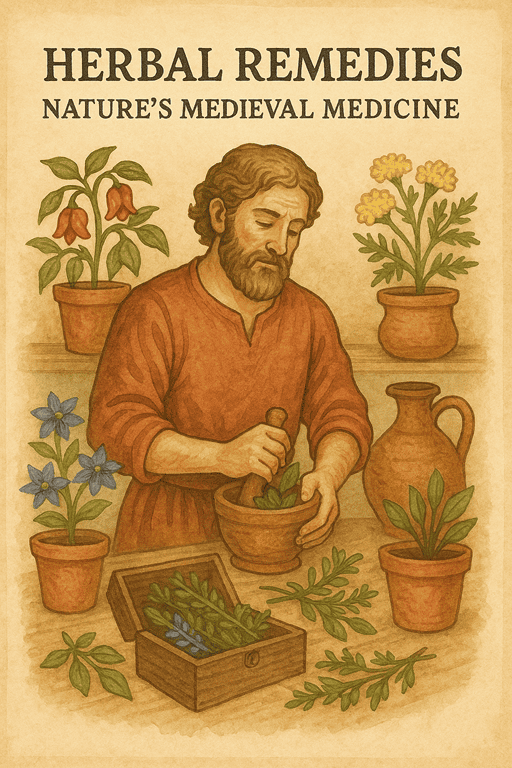
For those who couldn’t afford a physician (which was most people), healing came from nature and tradition. Herbalists and wise women passed down knowledge of plants believed to relieve pain and inflammation. Some commonly used remedies for back and joint pain included:
- Comfrey (also known as “knitbone”) – Used in poultices or ointments to reduce swelling and promote healing of bones and tissues.
- Willow bark – Containing salicin, a natural compound similar to aspirin.
- Nettle – Fresh nettle leaves were sometimes whipped across the skin (a practice known as urtication) to stimulate circulation and distract from deeper pain.
- Lavender and rosemary – Used in salves or infusions for muscle relaxation and anti-inflammatory effects.
- Rue and St. John’s Wort – Believed to relieve nerve pain and sciatica.
These treatments were applied as teas, compresses, poultices, or added to baths. Many herbs were grown in monastic gardens, where monks cultivated them not only for medicinal use, but also for spiritual care.
Healing in Monasteries: Centers of Care and Knowledge
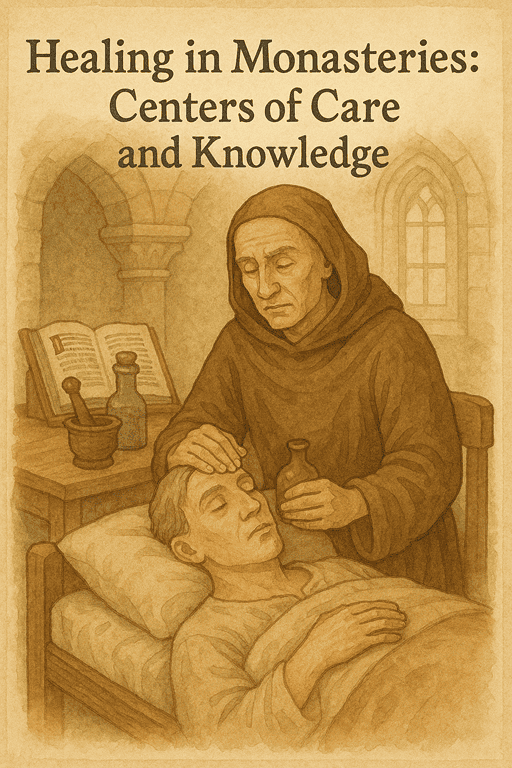
Monasteries were some of the few places in medieval Europe where medical texts were preserved, copied, and studied. Monks and nuns often served as caregivers, operating infirmaries that offered both physical and spiritual healing.
The Rule of St. Benedict, which governed many monastic communities, encouraged care for the sick as a form of service to Christ. Within the monastery:
- Patients were offered rest, warmth, and a quiet environment.
- Monks applied herbal remedies and kept detailed records of treatments.
- Healing was often accompanied by prayer and confession.
The fusion of medicine and religion made monasteries unique centers of healing—especially during a time when professional medical care was limited and inconsistent.
Pain, Penance, and the Soul: Religious Beliefs About Suffering
To the medieval mind, back pain was not just a physical issue—it could be a spiritual one. Many believed that suffering was a test of faith, a punishment for sin, or a divine opportunity for purification.
People might seek relief not only from doctors or herbalists, but also from priests and saints. Common religious practices for healing back pain included:
- Pilgrimages to healing shrines, such as those of St. Thomas Becket in Canterbury or St. Cuthbert in Durham.
- Touching relics, believed to hold healing power.
- Anointing with holy water or oil, often performed by clergy.
- Prayers to specific saints, such as St. Lawrence (patron of the back!) or St. Roch.
Pain could be seen as part of a divine plan, and enduring it with patience was sometimes praised as a virtue. For those without access to medical help, faith offered the only remedy.
Superstition, Magic, and Folk Healing
In rural villages far from monasteries or physicians, people relied on folk remedies passed down through generations—often a blend of pagan practices, local superstition, and Christian belief.
These might include:
- Amulets or charms worn to ward off illness or evil spirits believed to cause pain.
- Astrological readings to determine the best time for treatment.
- Magical incantations or prayers said while applying herbs or salves.
- Use of symbolic plants or stones, such as carrying a “hag stone” to prevent spinal troubles.
While officially frowned upon by the Church, these practices were often tolerated—or quietly adopted—because they filled a practical need where other options didn’t exist.
Final Thoughts: What We Can Learn from Medieval Medicine
Though much of medieval back pain treatment seems outdated or even dangerous by modern standards, the Middle Ages laid the groundwork for the evolution of healthcare in Europe. Monasteries preserved classical knowledge, herbal traditions survived centuries, and the concept of holistic care—addressing body and soul—remains part of many healing practices today.
In some ways, we’re still drawn to elements of medieval healing:
- Herbal teas and natural salves are popular once again.
- Spiritual and emotional wellness are recognized as part of physical health.
- Warm baths, massage, and rest are timeless comforts.
So the next time your back aches, consider this: while you’re reaching for a heat pack or stretching on a yoga mat, someone in the 12th century might have done the same—only with a comfrey poultice and a whispered prayer.