Stable Boys and Grooms in a Medieval Castle: The Unsung Keepers of Medieval Noble Horses

Medieval castles resounded with the clatter of hooves and the neighing of horses, for without them noble life was unimaginable. Horses were not simply animals; they were the engines of war, travel, and prestige. From the lord’s massive war destrier to the lady’s elegant palfrey, horses had to be kept healthy, strong, and well-trained at all times. This responsibility fell to the stable boys and grooms, men and boys of humble rank whose daily work ensured the functioning of a household. Though they rarely appear in chronicles of kings and knights, their efforts underpinned much of castle life.
Cleaning, Feeding, and Exercising Horses
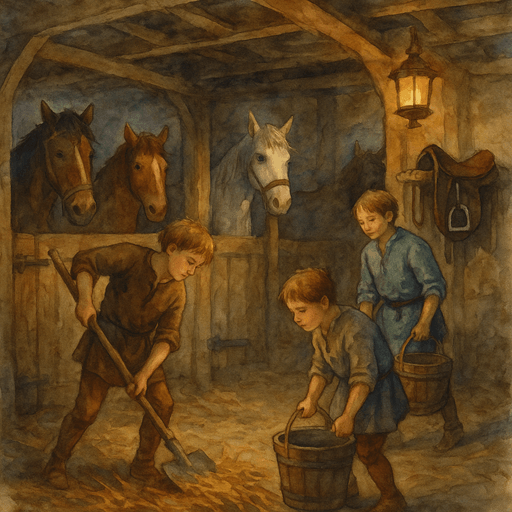
The stable was one of the busiest workplaces in a castle, and its rhythm was unrelenting. From the moment dawn broke, stable boys and grooms rose to begin the dirty and demanding cycle of horse care. For nobles, horses represented immense wealth, and so their upkeep had to be meticulous. A neglected stall, poorly stored feed, or improperly groomed animal could mean illness, weakness, or even the loss of a prized beast. Stable boys were expected to know the animals by sight and temperament, keeping them healthy in every season.
- Cleaning the stalls: Every stall had to be mucked out daily, sometimes multiple times, to prevent disease. Manure and old straw were hauled away, fresh bedding laid, and the air cleared as best as possible in the damp stone structures.
- Feeding routines: Feeding was a precise science. Nobles’ horses were given measured diets of hay, oats, beans, or barley, and food had to be carefully stored in dry lofts to avoid spoilage.
- Water and grooming: Buckets of water were carried in—an exhausting task for boys—and horses were brushed and curried to keep their coats free of sores and parasites.
- Exercising horses: To prevent stiffness or weakness, grooms led horses to pastures or trotted them in courtyards. Some young boys were even entrusted to ride spirited colts bareback, learning horsemanship in the process.
Dangerous Work
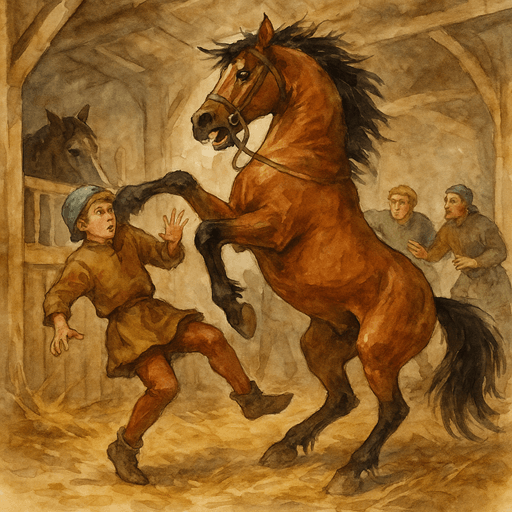
Though they ranked low in the household, stable boys and grooms faced real dangers in their daily lives. Horses, while beautiful and noble, were also large, unpredictable, and sometimes deadly. Working among them required courage, quick reflexes, and endurance. A single mistake could mean severe injury, and accidents were common. On top of this, the physical demands of stable work pushed young boys to their limits, especially during winter months when damp cold and long hours made the work even harsher.
- Temperamental animals: Warhorses were bred for aggression and strength, and handling them could result in trampling, kicks, or bites.
- Physical strain: Heavy saddles, armor, and carts had to be managed daily, while lifting hay bales or buckets of water strained the body. Many boys bore injuries from years of such work.
- Fire hazards: The stable, filled with hay and dry straw, was one of the most dangerous parts of a castle. Grooms often kept night watch to ensure no sparks or lanterns set off catastrophe.
- War duties: When lords rode to war, grooms followed, responsible for feeding and tending the horses in muddy, chaotic camps. Many never returned, dying not in battle but from exhaustion, disease, or accidents.
Horses as Wealth
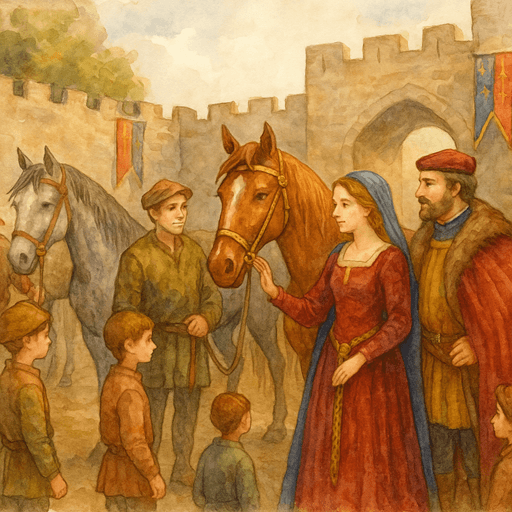
To understand the weight of the grooms’ duties, one must understand what horses symbolized in medieval society. They were far more than beasts of burden: they were signs of power, wealth, and noble prestige. A lord’s stable was like a living treasury, housing animals worth fortunes, each tailored for specific roles in warfare, hunting, or ceremony. The care of these animals was therefore not just a matter of practicality—it was a form of wealth management, and stable boys were its quiet custodians.
- Symbols of prestige: Nobles displayed their finest destriers and palfreys during hunts, processions, and tournaments. Horses were status symbols, as important as castles or jewels.
- Economic value: A well-bred warhorse could cost more than a suit of armor, and their loss could devastate a noble household.
- Daily necessity: Horses powered supply carts, carried messengers, and enabled lords to travel across their estates quickly. Without them, noble households could not function effectively.
Final Thoughts
Stable boys and grooms lived in the shadows of the castle, yet their labor was indispensable. They cleaned stalls before dawn, braved dangerous animals, and watched over horses worth small fortunes. Though their social rank was low, the responsibility on their shoulders was immense, for the health of a lord’s stables could determine his prestige, his wealth, and even his success in battle.
To study their lives is to glimpse the hidden machinery of the medieval world: an army of quiet, unsung workers who made noble splendor possible.