Filming Locations of Pride & Prejudice (2005): A Journey Through Austen’s England
Joe Wright’s Pride & Prejudice (2005) swept audiences into a romantic vision of Jane Austen’s world. Filmed on location across some of England’s most beautiful stately homes, gardens, and countryside, the movie captures not only the story’s timeless romance but also the landscapes and houses that shaped the lives of its characters.
This story has always been close to my heart. I first read Pride and Prejudice back in high school and completely fell in love with it—it has remained one of my favorite books ever since. The 2005 film quickly became another favorite, and recently, when it was re-released in theaters for its 20th anniversary, I went to see it on the big screen again. Sitting there, swept away by the music and scenery, reminded me of why I love it so much—and inspired me to write this post.
📍 Groombridge Place – Longbourn (the Bennet family home)

Longbourn, the warm but slightly chaotic Bennet household, was filmed at Groombridge Place, near Tunbridge Wells, on the Kent–East Sussex border.
- History: The moated brick manor dates from the 1660s and is surrounded by acres of gardens, some designed with the help of the famed horticulturalist John Evelyn. Over time, the gardens gained whimsical features such as the White Rose Garden, the Drunken Garden, and the Knot Garden.
- Film Details: The production was fortunate to use the house just as it had changed ownership—the new owner delayed renovations until filming wrapped. The crew transformed Groombridge into a bustling, shabby-chic Bennet home. They even built a duckboard bridge across the moat, altered windows, and filled the courtyard with geese, chickens, and manure piles to give Longbourn its lively atmosphere.
- Austen’s Comparison: Austen describes Longbourn as “a comfortable house, though not handsome.” Groombridge’s charm and lived-in authenticity capture that perfectly.
📍 Basildon Park – Netherfield Park (Mr. Bingley’s rented estate)
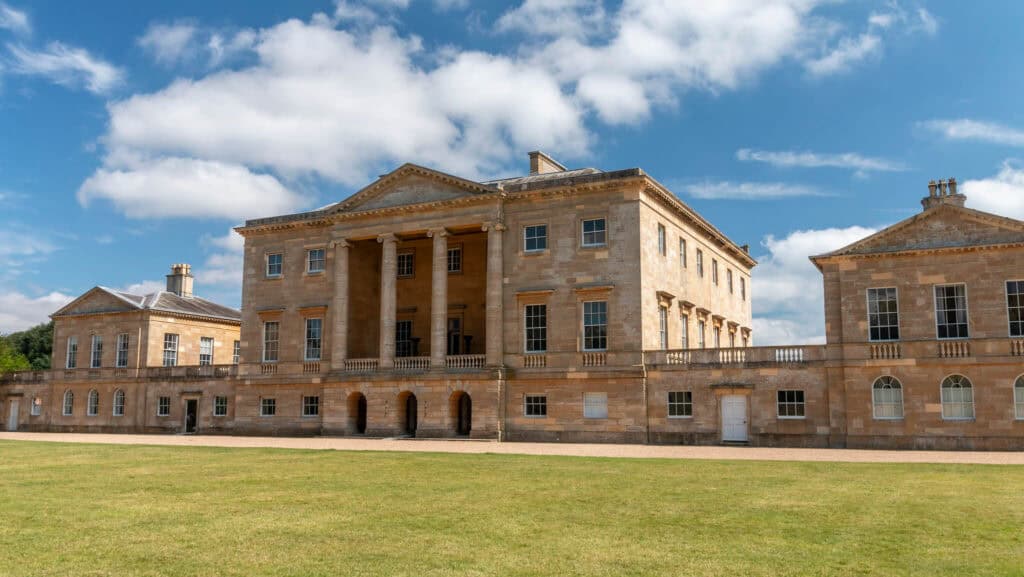
Mr. Bingley’s elegant temporary home, Netherfield, was filmed at Basildon Park, near Reading in Berkshire.
- History: Built between 1776–1783, this Palladian mansion fell into disrepair in the early 20th century but was restored in the 1950s by Lord and Lady Iliffe. It was later gifted to the National Trust.
- Film Details: In the movie, we see Basildon’s west front, the Octagon Drawing Room (with its Italianate ceiling and frieze), and its elegant dining room. The interiors reflect Netherfield’s grandeur without overwhelming charm.
- Austen’s Comparison: Netherfield is “a fine house and a pleasant one,” though temporary—Basildon captures that mix of beauty and impermanence.
📍 Burghley House – Rosings Park (Lady Catherine’s estate)
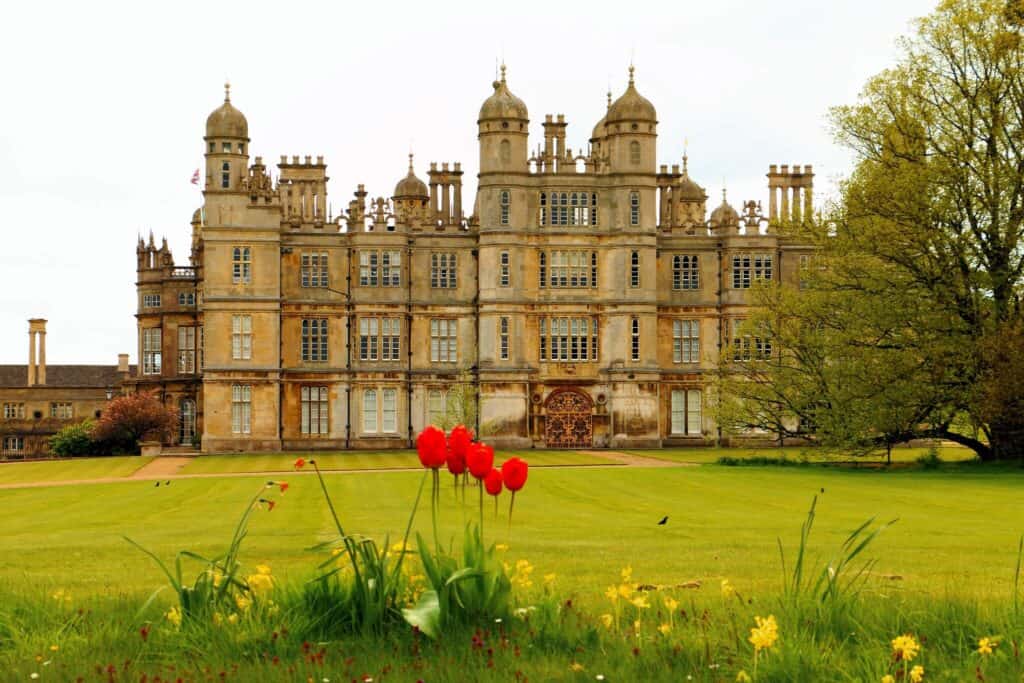
For Lady Catherine de Bourgh’s intimidating estate, the filmmakers chose Burghley House in Lincolnshire.
- History: Built by William Cecil, Lord Burghley (chief advisor to Queen Elizabeth I), in the 16th century, it is one of the largest houses in England. Its interiors are lavishly decorated with murals by the Italian artist Verrio, including the Heaven Room (used in the film as Lady Catherine’s drawing room).
- Film Details: Burghley’s imposing scale and gilded interiors perfectly mirror Lady Catherine’s arrogance. The production even noted that Verrio, who decorated the house, spent much of his time in the local George Hotel in Stamford—where the film’s cast stayed centuries later!
- Austen’s Comparison: Austen describes Rosings as a house where “the windows, the furniture, the number of servants, were all seen to the advantage.” Burghley more than delivers.
📍 Chatsworth House – Pemberley (Mr. Darcy’s estate)
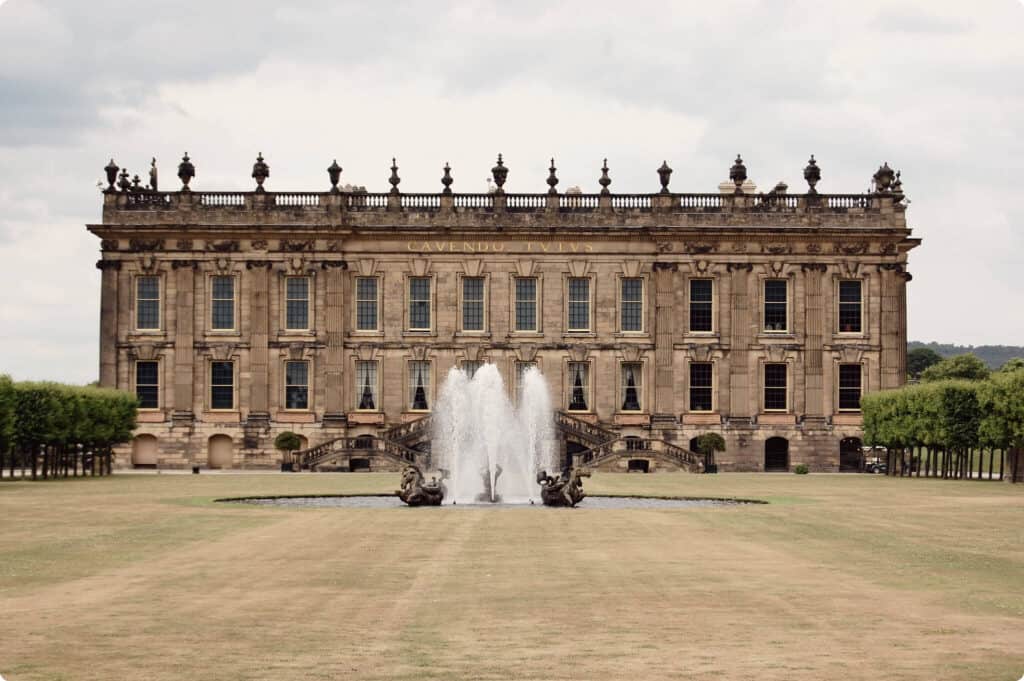
The most iconic location of the film, Chatsworth House in Derbyshire, served as Pemberley, Mr. Darcy’s family home.
- History: The largest private country house in England, Chatsworth has been home to the Dukes of Devonshire since the 16th century. During WWII, it even housed an evacuated girls’ school. Today, it is still lived in by the Duke and Duchess of Devonshire.
- Film Details: In the film, Elizabeth and the Gardiners begin their tour in the grand Painted Hall and wander through the Sculpture Gallery, where Elizabeth sees Darcy’s bust.
- Austen’s Connection: Jane Austen actually mentions Chatsworth in Pride and Prejudice, and many believe she had it in mind when describing Pemberley: “Elizabeth saw, with admiration of his taste, that it was neither gaudy nor uselessly fine.”
📍 Wilton House – Pemberley interiors
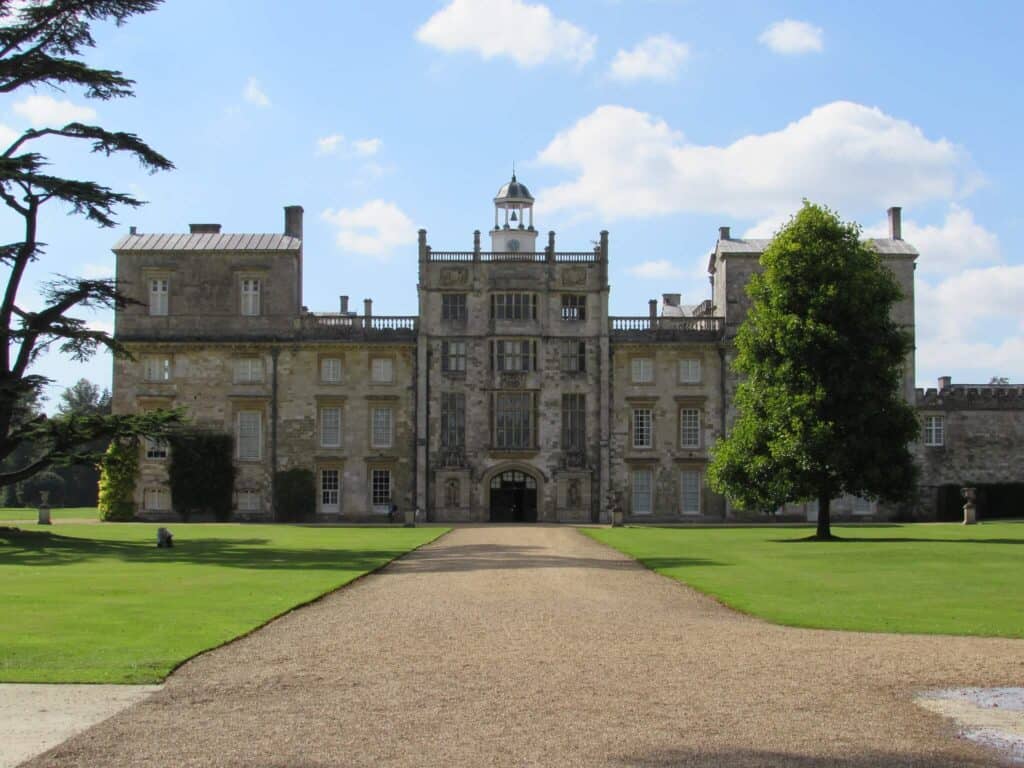
Some interior scenes of Pemberley were filmed at Wilton House, near Salisbury.
- History: Built on monastic land, Wilton has been home to the Earls of Pembroke for centuries. Its Double Cube Room is one of the finest examples of Palladian design in England.
- Film Details: This is where Elizabeth is introduced to Georgiana Darcy. The room’s Van Dyck portraits and soaring proportions add dignity to Darcy’s world.
📍 Haddon Hall – The Lambton Inn
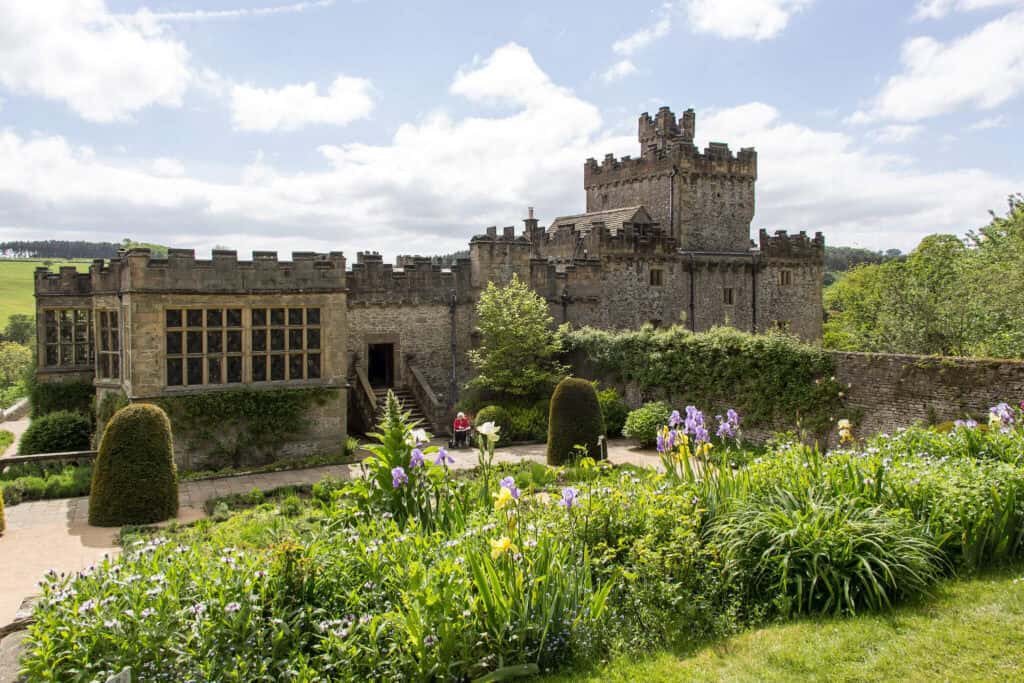
When Elizabeth travels with the Gardiners, they stay at the Lambton Inn, filmed in the medieval Banqueting Hall at Haddon Hall in Derbyshire.
- History: Built in the 14th century, Haddon Hall has belonged to the Manners family for over 400 years. Its atmospheric interiors have appeared in many period dramas, including Elizabeth and Jane Eyre.
- Film Details: Its dark stone hall perfectly conveys the simplicity of an inn.
📍 Stourhead Gardens – The Temple of Apollo (Darcy’s proposal)
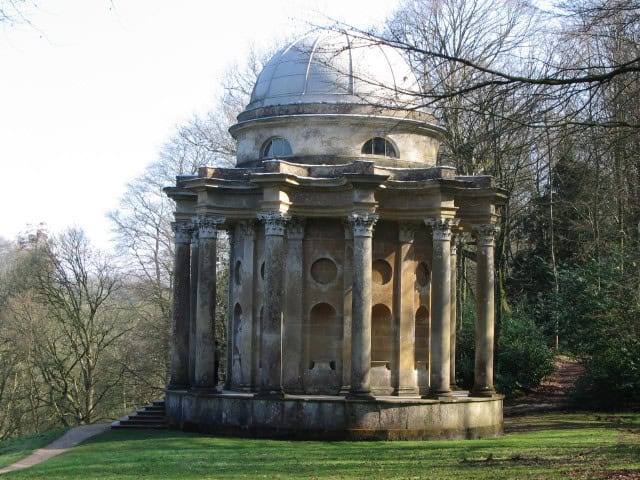
One of the film’s most dramatic moments—Darcy’s first proposal in the rain—was filmed at the Temple of Apollo in Stourhead Gardens, Wiltshire.
- History: Part of an 18th-century landscaped garden, the temple overlooks a sweeping lake and woodlands.
- Film Details: The dramatic neoclassical columns framed the stormy confrontation, making it unforgettable.
📍 Stamford – Meryton
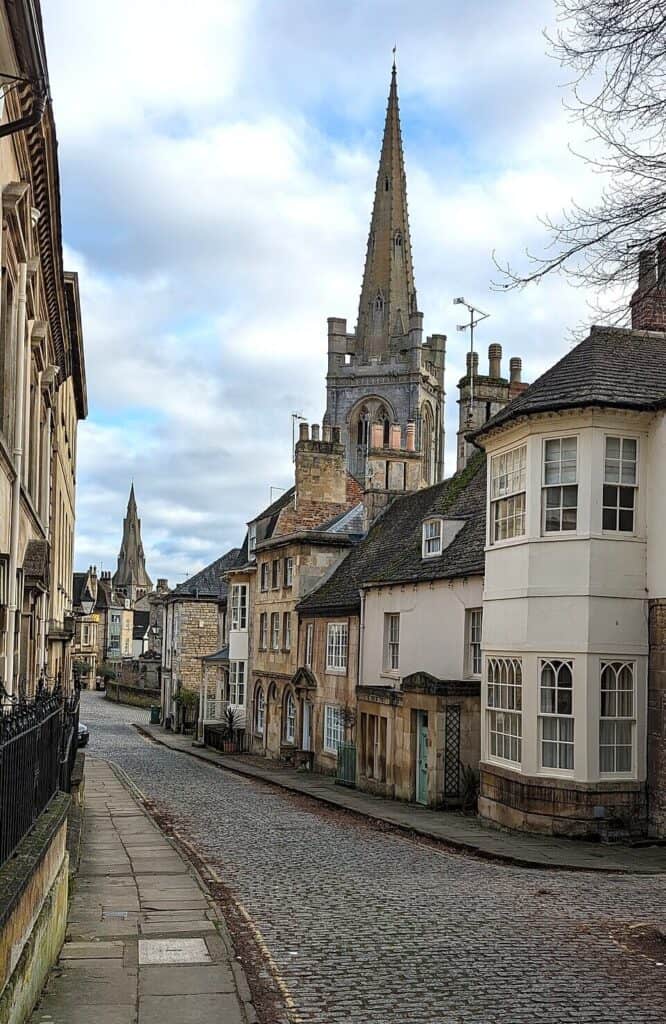
The Bennet sisters’ market town, Meryton, was filmed in Stamford, Lincolnshire.
- History: Stamford is a Georgian stone town with cobbled squares and historic inns.
- Film Details: St. George’s Square was used for the bustling market scenes with red-coated officers and lively gossip.
📍 Boughton House Estate – Hunsford (Mr. Collins’ parsonage)
Mr. Collins’ parsonage, next to Lady Catherine’s Rosings, was filmed at The Alms House on the Boughton Estate in Northamptonshire.
Nearby St. Peter’s Church in Brooke, Rutland, stood in for Hunsford Church, where Mr. Collins preaches.
📍 Peak District – Lizzie’s walks
The wild, windswept cliffs where Elizabeth stands lost in thought were filmed at Stanage Edge, in the Peak District near Hathersage Moor.
This landscape shot—Elizabeth against rolling skies and dramatic hills—became one of the film’s most iconic visuals, symbolizing her independence and inner strength.
Final Thoughts
Each of these locations—grand estates, quaint towns, and rugged landscapes—contributes to the timeless beauty of Pride & Prejudice. They don’t just set the scene; they embody Austen’s themes: the contrast of wealth and modesty, pride and humility, refinement and simplicity.
Best of all, many of these houses and gardens are open to the public, which means that fans can follow in Elizabeth Bennet’s footsteps and experience Austen’s England in real life.
For me, revisiting these filming locations through the movie feels like stepping back into a story I’ve loved since my teenage years. Watching the 2005 film again in theaters after 20 years was a reminder of how deeply these places and characters continue to capture my imagination. Maybe that’s why I had to sit down and put this post together—to celebrate a favorite book, a favorite film, and the real-world places that bring them both to life.