Courtly Love in the Garden: Romance, Secrecy, and Song
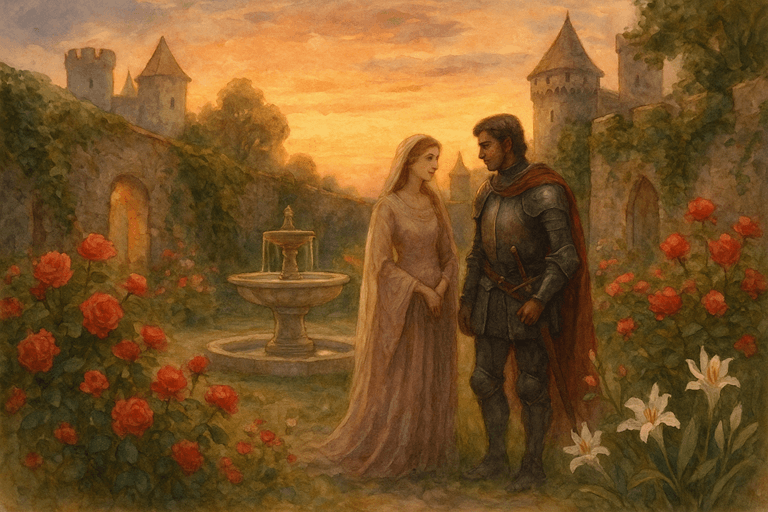
If the hortus conclusus represented paradise and purity, the castle garden was also a stage for one of the most human of dramas: love.
In the Middle Ages, gardens became the symbolic heart of courtly romance—a setting where passion, virtue, and poetry intertwined. Behind stone walls and fragrant bowers, noblemen and ladies exchanged words, glances, and vows that balanced delicately between reverence and desire.
In literature, art, and daily life, gardens were more than decoration; they were mirrors of the human soul. Within them, love could be both forbidden and divine, secret and celebrated, fleeting and eternal.
The Birth of Courtly Love
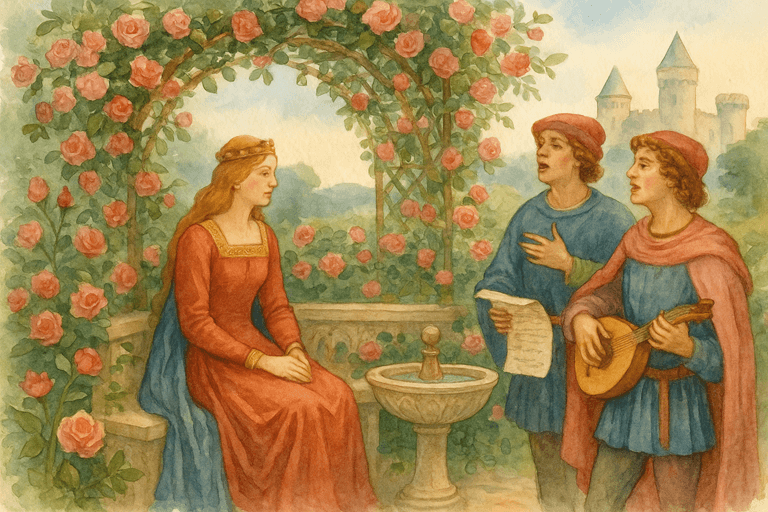
The idea of courtly love, or fin’amor, blossomed in 12th-century southern France, in the courts of Provence and Aquitaine. Here, poets known as troubadours began composing verses that celebrated love not as marriage or duty but as a noble, spiritual pursuit.
In their songs, love was ennobling—it refined the heart, inspired courage, and elevated the soul. The lady was placed on a pedestal, admired with devotion but often unattainable. This ideal spread rapidly across Europe, shaping medieval literature from the Roman de la Rose to Chaucer’s Canterbury Tales and beyond.
And where did such love unfold? In the garden. The garden became the physical embodiment of this emotional and moral ideal—a cultivated space of beauty and order, far from the chaos of the outside world.
The Garden as a Stage for Romance
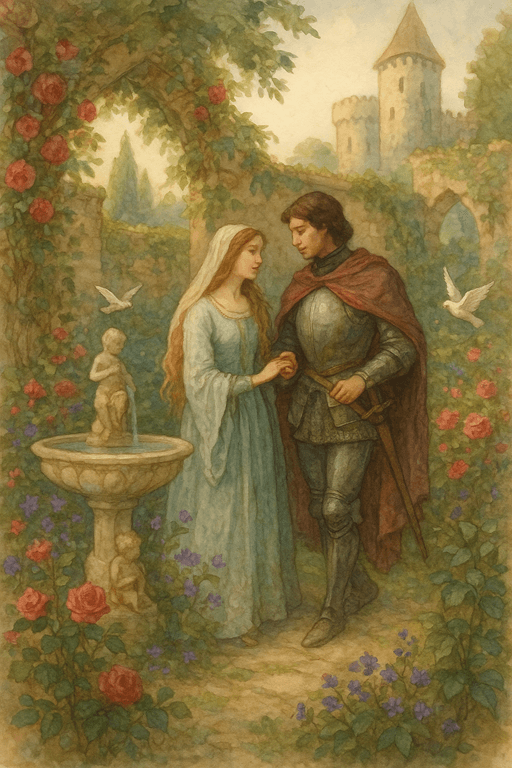
In the medieval imagination, the garden was not merely a place of plants—it was a world of emotion and meaning. Its enclosed walls symbolized secrecy; its flowers represented purity and passion; its pathways became the routes of longing and discovery.
Lovers met in gardens because these spaces offered privacy, yet remained close to the noble world of culture and etiquette. Beneath rose arbors and beside fountains, they spoke in coded language—metaphors of blossoms, birds, and seasons conveying affection that could not be openly declared.
Music and poetry filled these scenes. Minstrels sang ballads under windows, and troubadours performed songs of longing in shaded courtyards. Gardens thus became theaters for both real and literary love, places where beauty and virtue intertwined like ivy and stone.
Symbols of Love and Desire
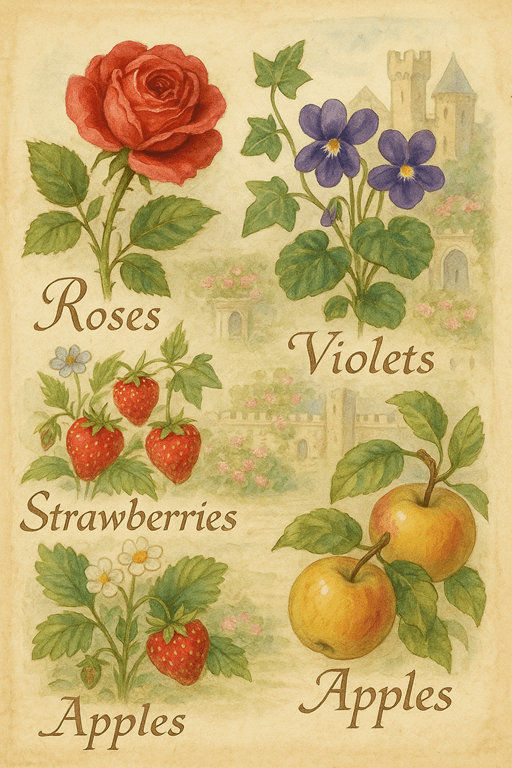
Medieval gardens were filled with plants whose meanings spoke directly to the language of love. Each flower, fruit, and scent carried emotional resonance.
- Roses – The ultimate emblem of love and secrecy. Red roses symbolized passion; white, purity and unfulfilled longing.
- Violets – Humility and faithfulness. Lovers offered them as tokens of devotion.
- Ivy – Fidelity and attachment, clinging steadfastly to its support.
- Strawberries – Sensual sweetness and temptation, often found in allegorical “love gardens.”
- Apples – Desire and the risk of transgression, echoing both Eden and earthly passion.
The interplay of purity and temptation was constant. A garden could be a symbol of Mary’s chastity—or of Eve’s fall. In love poetry, it was both paradise and peril, a place where the heart’s boundaries were tested as surely as the garden’s walls.
Love, Music, and Poetry
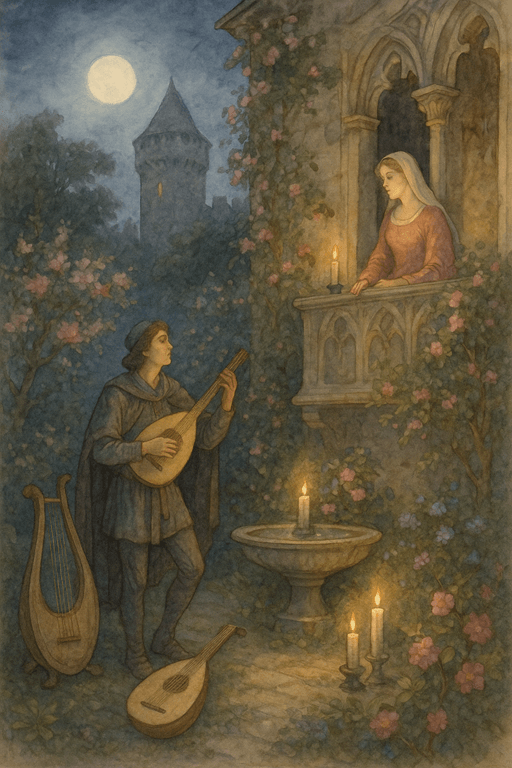
Love was meant to be sung. In the medieval courts, music and verse were inseparable from the idea of romance. Troubadours and trouvères performed songs that celebrated distant, idealized love, often addressing noblewomen of higher rank.
Their lyrics compared the beloved to roses, stars, or fountains. The garden, in turn, became the poetic setting where these symbols lived: a place of birdsong, fragrance, and flowing water—a metaphor for love’s harmony and its inevitable sorrow.
In illuminated manuscripts, we see lovers exchanging rings or notes beneath fruit trees while musicians play the lute or harp nearby. The garden thus reflected both the beauty and the restraint of courtly passion: desire sublimated into art.
Gardens of the Heart: Real and Imagined
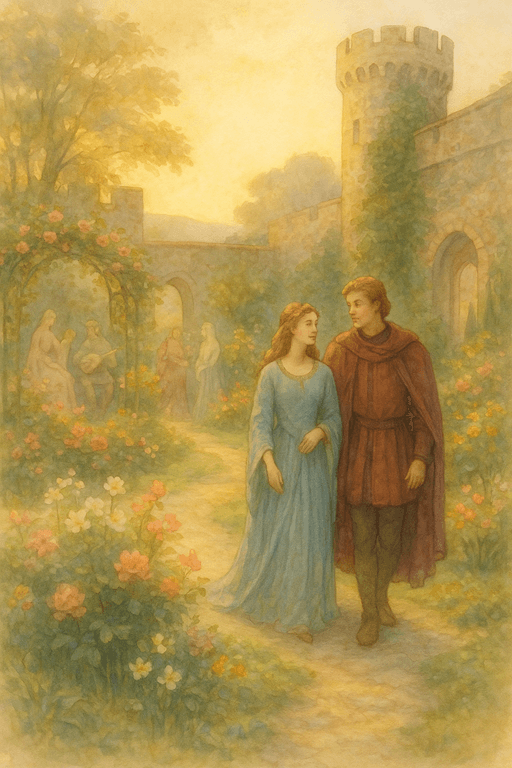
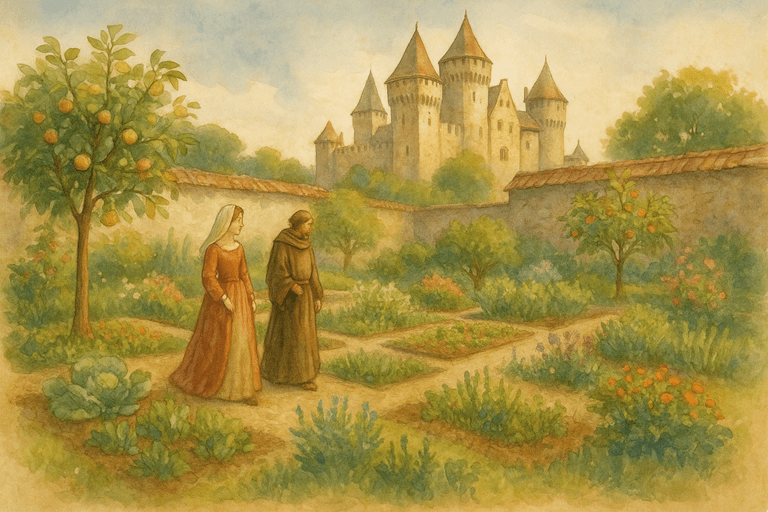
Although much of courtly love was expressed in poetry and allegory, it was not purely fantasy. Gardens around castles and manors often served as private meeting places—safe spaces for conversation, walks, and shared moments beyond the formality of the hall.
Ladies might stroll with their suitors under arched trellises, accompanied by a chaperone but shielded from the public eye. The fragrance of herbs and flowers, the murmur of fountains, and the intimacy of enclosed paths lent an atmosphere of emotional connection and secrecy.
At the same time, writers used the garden as a metaphor for the soul. Just as a gardener must cultivate and prune, so must a lover tend his or her virtues. The flowering of love was the flowering of grace itself—a divine experience mirrored in human feeling.
Morality, Virtue, and Transgression
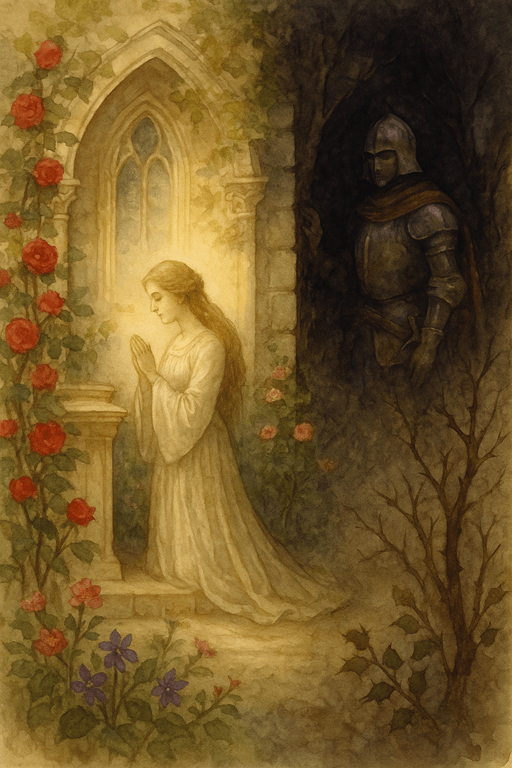
Despite its beauty, the idea of courtly love walked a fine line between virtue and sin. Many of these loves were extramarital, confined to poetry but inspired by real emotions. The garden’s enclosure symbolized this duality: it sheltered love from the world but also confined it within moral tension.
Religious writers warned against the dangers of temptation, yet even they used garden imagery to describe spiritual longing. To medieval thinkers, love—whether human or divine—was transformative. The key was balance: passion guided by honor, desire tempered by virtue.
Thus, in the garden of courtly love, pleasure and purity coexisted. Every flower was both an offering and a test.
Legacy in Art and Imagination
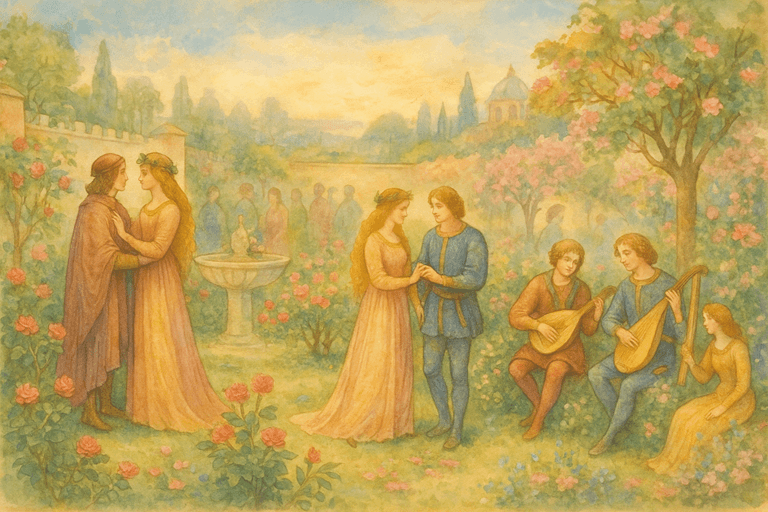
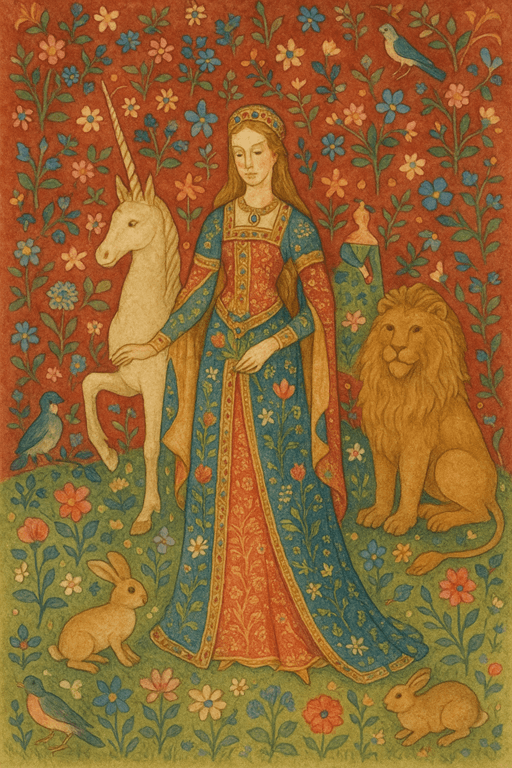
The garden of love continued to bloom long after the Middle Ages. Renaissance painters like Botticelli and the anonymous masters of Flanders reinterpreted the theme in lush detail—groups of lovers in walled gardens, playing music and exchanging glances beneath flowering trees.
In later centuries, the “Garden of Love” became a timeless image of human connection—appearing in poetry, opera, and romantic art. The idea that love belongs to the cultivated, private, and beautiful space persists even today, in the gardens we build and the language we use to describe affection.
Final Thoughts
In the medieval world, the garden was more than a place of plants—it was the landscape of the heart. Between its fragrant paths and shaded bowers unfolded the timeless story of love: pure and dangerous, secret and sacred.
Courtly love transformed the castle garden into a mirror of human longing—a place where beauty, virtue, and desire met beneath the same rose arbor.