Castle Gardens in the Middle Ages: From Herbs to Pleasure Walks
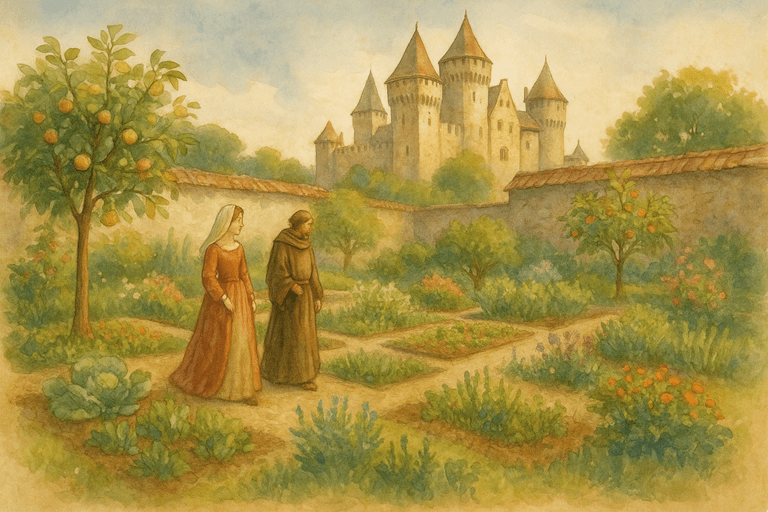
When we think of castles, images of towering keeps, fortified walls, and knights in shining armor immediately spring to mind. But behind the strength of stone and steel, medieval castles were sustained by something far gentler: their gardens. These spaces were not merely decorative; they were vital centers of food production, medicine, symbolism, and leisure.
Castle gardens reveal the dual nature of medieval life: a world of hardship and survival on one hand, and beauty, symbolism, and spiritual reflection on the other. They nourished the body with vegetables and fruits, healed sickness with herbs, provided leisure for nobles, and symbolized paradise itself within fortress walls.
This guide explores the many roles of castle gardens, serving as the foundation for deeper dives into topics like medicinal herbs and courtly love.
The Practical Heart: Herb and Kitchen Gardens
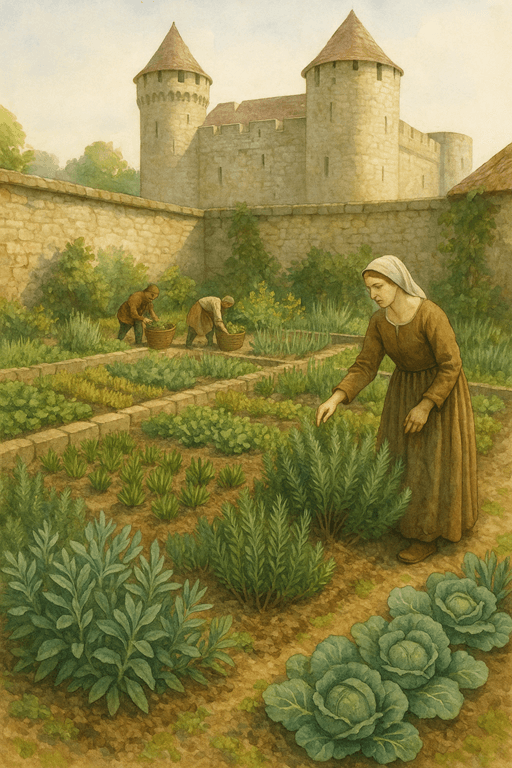
Life inside a medieval castle was sustained by far more than stone walls and strong arms. The real lifeblood came from the herb and kitchen gardens, which supplied essential ingredients for food, medicine, and daily living. In an era before pharmacies, supermarkets, or refrigeration, the castle garden was the household’s safety net against hunger and illness.
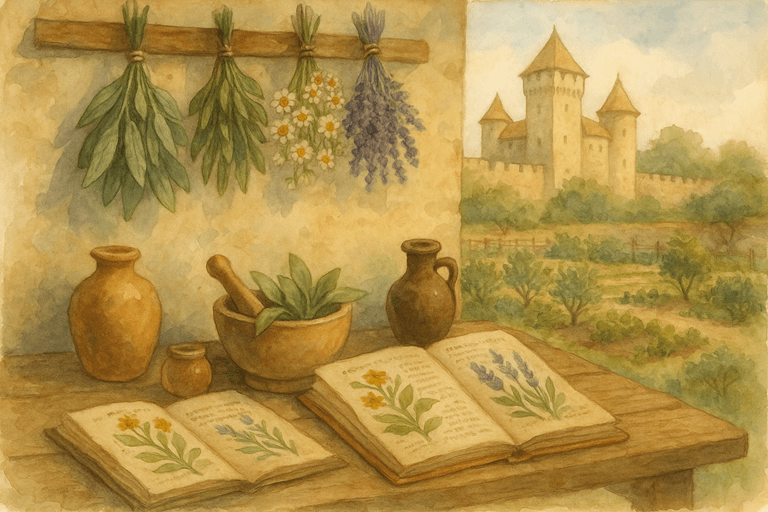
The herbarium or physic garden was often the most important section. Here, neat rows of plants were cultivated under the careful eye of herbalists and kitchen staff. Plants like sage, rosemary, thyme, and mint flavored stews, helped preserve meats, and eased indigestion. Lavender, chamomile, and valerian soothed the nerves or aided sleep, while comfrey and yarrow were used to bind wounds or stop bleeding. A well-tended herb garden could mean the difference between recovery and death in times of sickness.
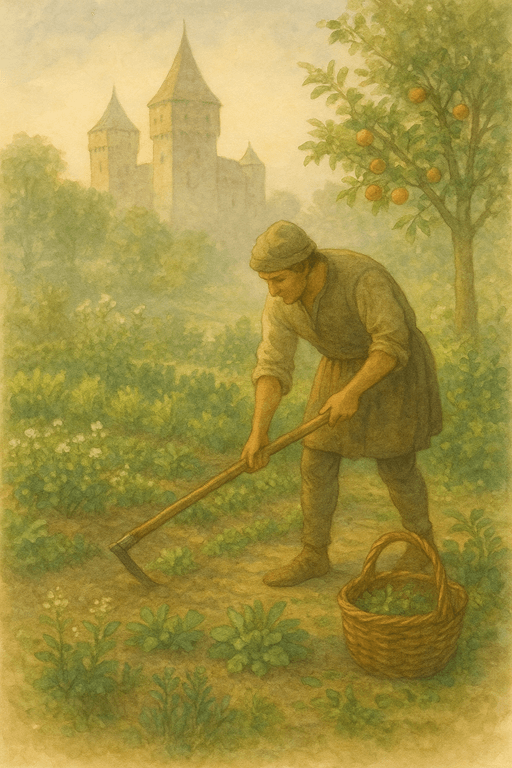
Next to the herbs were the kitchen gardens, where staple vegetables grew. These included cabbages, leeks, onions, beans, and peas—foods that filled the stomach when meat was scarce or reserved for the lord’s table. Even humble turnips and parsnips had their place, boiled into thick pottages that sustained both servants and nobility. Fruit bushes such as gooseberries and currants might line the garden edges, adding sweetness and variety to the diet.
- Herbs for healing: Sage, rosemary, chamomile, comfrey, and yarrow were grown for their medicinal uses. These plants formed the basis of medieval remedies, from teas for digestion to poultices for wounds.
- Herbs for cooking: Thyme, parsley, fennel, and mint added taste to otherwise bland meals.
- Vegetables for sustenance: Cabbage, onions, beans, peas, leeks, and root crops like parsnips or turnips were staples for all classes of society.
These gardens were usually enclosed by low stone walls or wicker fences, protecting them from animals and marking their order against the wilderness beyond. Paths of packed earth or gravel separated the beds, making it easier for gardeners and servants to tend their crops. It was a world of constant care—watering, weeding, and harvesting—without which the castle could not function.
Orchards and Vineyards
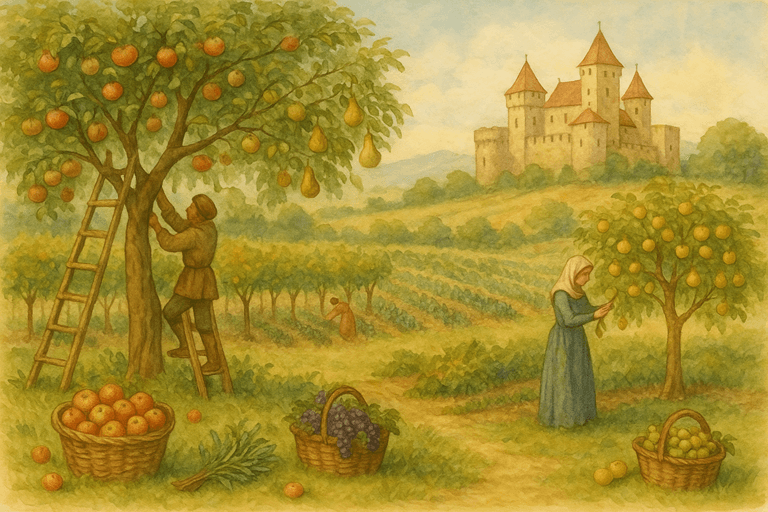
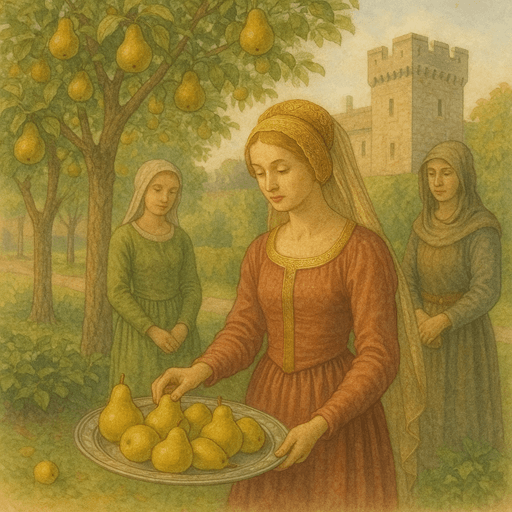
Beyond the everyday kitchen gardens stretched the orchards, where the wealth of the land showed its abundance. Orchards were often planted with apple, pear, plum, and cherry trees, their blossoms brightening the spring and their fruits harvested in the autumn for both fresh consumption and long-term storage. Apples might be pressed into cider, plums dried for winter use, and cherries preserved in honey.
In warmer regions of Europe, castles sometimes managed vineyards, growing grapes for wine production. Wine was not just a noble indulgence—it was used in religious rituals, offered to guests, and served daily at the lord’s table. Even in cooler climates, vines were sometimes grown under careful management, though northern castles relied more heavily on imports. Orchards and vineyards also reflected prestige, for they required land, labor, and expertise to maintain successfully.
Gardens of Symbolism and Status
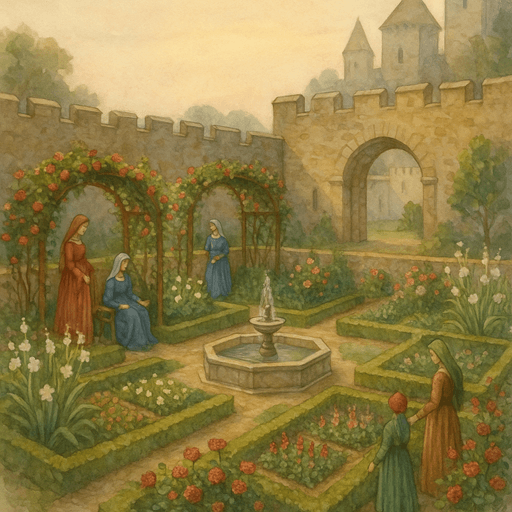
By the High Middle Ages, castles were no longer merely fortresses—they had become vibrant cultural centers. Their courtyards and outer spaces began to reflect this evolution, transforming into refined gardens that embodied both prestige and spirituality.
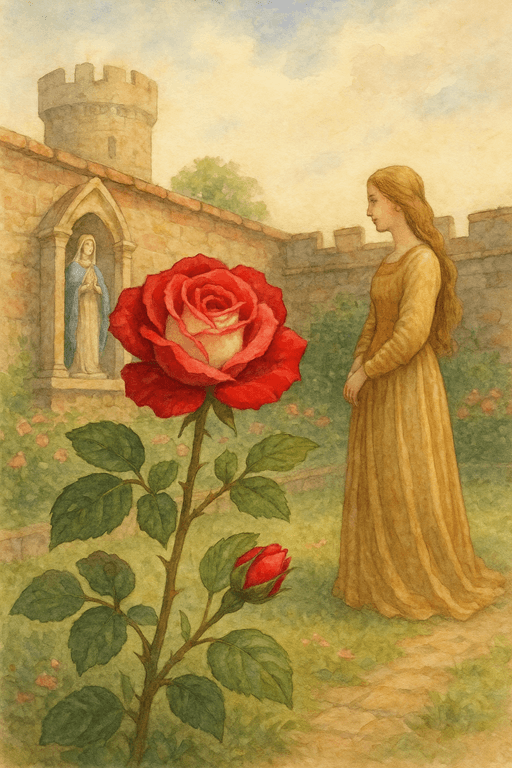
Among the most enchanting of these were the horti conclusi, or “enclosed gardens.” Inspired by monastic cloisters and allegorical traditions, they symbolized paradise on earth and the Virgin Mary herself. These gardens were deliberately walled, separating them from the harsher outside world and creating a secluded haven for reflection, conversation, and romance.
- Design and Layout:
The layouts were geometric, often divided into quadrants by neat paths or water channels. At their heart might lie a fountain or pond—a symbol of purity and renewal. Benches, trellises, and bowers offered shaded retreats where noble families could talk, read poetry, or entertain guests. - Floral Symbolism:
Every plant was chosen with meaning in mind. Roses represented love, lilies symbolized purity, violets stood for humility. These flowers filled the air with fragrance and filled the mind with allegory. - Courtly and Social Settings:
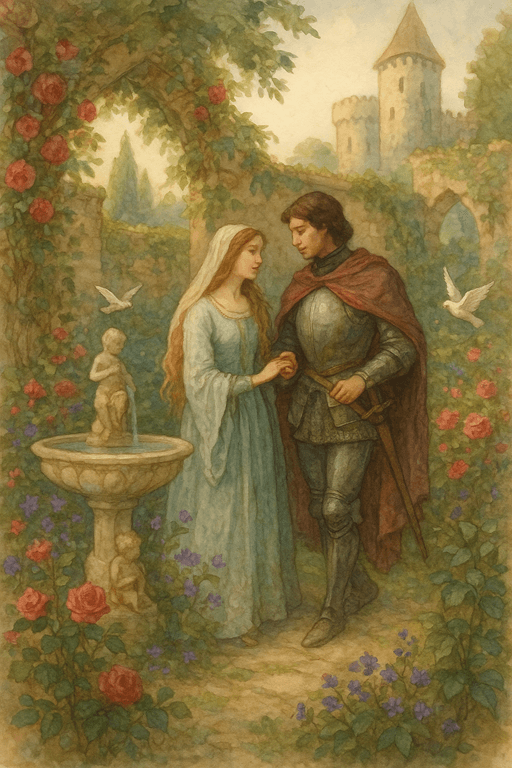
The enclosed garden became a backdrop for courtly life—strolling paths, secret meetings, and exchanges of love. These scenes appear frequently in medieval tapestries and literature, portraying the garden as a stage for both devotion and desire.
Beyond their aesthetic appeal, these gardens carried deep spiritual meaning. In Christian thought, the enclosed garden was an earthly echo of paradise—a place where order, purity, and divine beauty met. To walk within it was to step symbolically into heaven itself.
Thus, the castle garden of the 12th and 13th centuries was much more than a display of wealth. It was a testament to refinement, education, and faith—a living reflection of the noble soul’s pursuit of beauty and harmony.
The Garden as a Social and Leisure Space
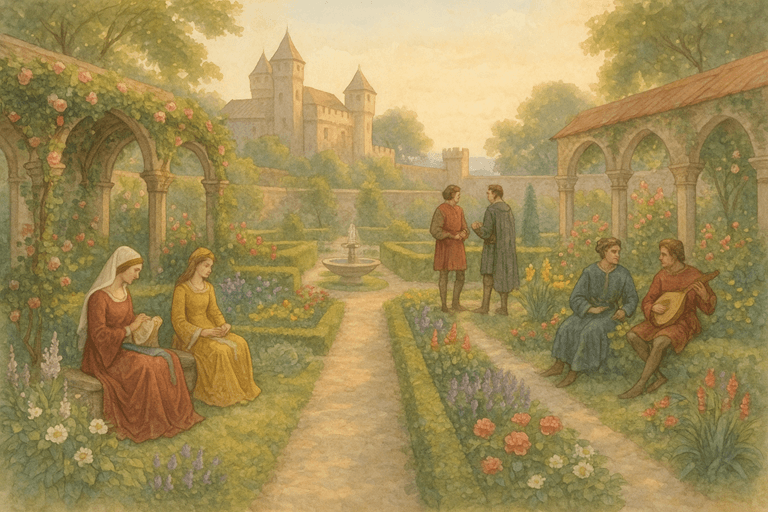
While herbs and vegetables kept the castle running, the pleasure gardens provided something just as essential: a space for leisure, social connection, and culture. Life in a medieval castle could be harsh, ruled by duty, warfare, and constant political maneuvering. The garden offered a gentler world, where lords, ladies, and guests could enjoy the simple pleasure of fresh air, beauty, and companionship.
- Recreation: Nobles might stroll along shaded alleys, converse with visitors, or listen to the music of minstrels. Ladies embroidered under arbors while knights discussed politics or tournaments.
- Festivities: On feast days or during celebrations, musicians, jugglers, or actors might perform in the gardens, turning them into open-air theaters.
- Romantic encounter: Gardens also played a role in romance and courtship. Medieval literature is filled with scenes of lovers meeting secretly among rose bushes or exchanging vows in bowers. The setting of a garden, lush with flowers and birdsong, became a stage for the ideals of courtly love, a central theme of aristocratic culture. For noblewomen, in particular, the garden was one of the few spaces where they could move with relative freedom and privacy within the castle walls.
Finally, these spaces carried an allegorical dimension. To walk in a garden was to walk in an ordered, cultivated reflection of the cosmos itself. Just as the gardener imposed order on nature, so the lord imposed order on his domain. Gardens were thus political, cultural, and spiritual all at once.
Labor Behind the Beauty
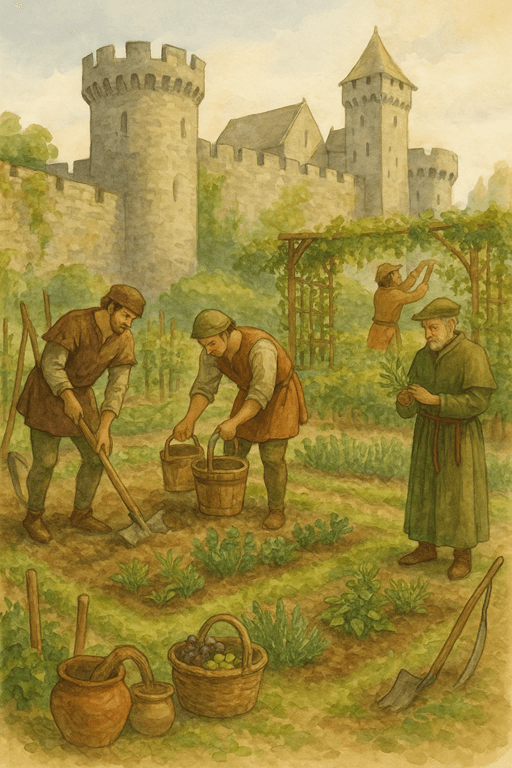
As idyllic as castle gardens might appear in poetry and paintings, they required endless toil. Gardeners, often assisted by peasants or servants, were responsible for planting, pruning, watering, and harvesting. Tools were simple—hoes, scythes, knives—and the work was physically demanding.
Weeds and pests were constant threats, as were harsh winters or summer droughts. Gardeners had to innovate, using ash to fertilize soil or lime to deter insects. Some castles employed specialist gardeners, men who combined practical knowledge with inherited traditions of plant care. Others relied on the broader estate community, who provided seasonal labor during planting and harvest.
- Gardeners’ expertise: Some castles employed trained gardeners who specialized in maintaining orchards, herbs, and ornamental spaces.
- Seasonal work: Planting in spring, harvesting in summer and autumn, and protecting gardens during winter required year-round effort.
- Hidden workforce: Peasants and servants did much of the heavy work—digging, watering, and carrying loads—yet their contributions often went unrecognized.
Behind the noble family’s peaceful walks and perfumed flowers lay a workforce whose contributions were rarely celebrated, yet without them, the gardens would wither.
Surviving Traces Today
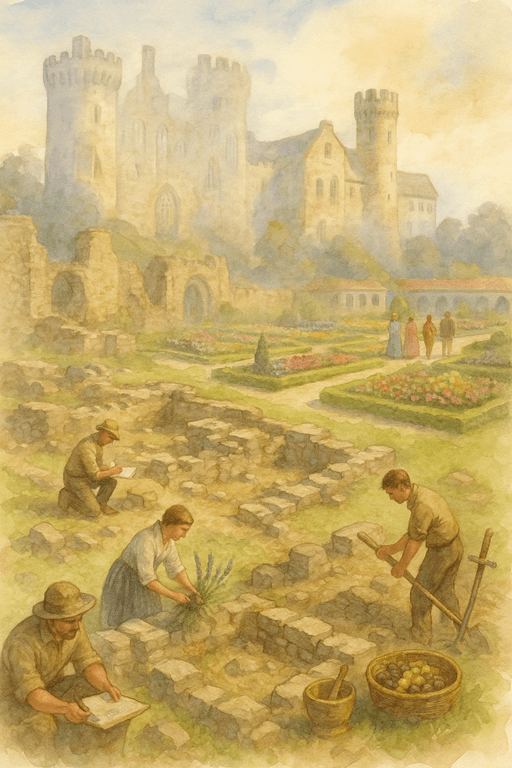
Though few medieval gardens survive in their original form, their memory lingers in both archaeology and reconstructed sites.
- Archaeology reveals outlines of walled gardens, fishponds, and orchard pits.
- Manuscripts and tapestries depict nobles surrounded by flowering trellises, bowers, and fountains.
- Reconstructed gardens at sites such as Alnwick Castle in England or Villandry in France (with its Renaissance redesign but medieval roots) allow modern visitors to experience medieval horticulture firsthand.
From the Middle Ages into the Renaissance, castle gardens evolved into ever grander forms, blending practicality with aesthetic ideals.
Final Thoughts
Castle gardens were worlds within worlds—part kitchen, part pharmacy, part chapel, and part ballroom. They sustained life with herbs and vegetables, reflected wealth and spirituality with flowers and enclosed designs, and offered relief from the rigors of medieval life.
From the herbal remedies that healed sickness to the romantic bowers where courtly love blossomed, castle gardens reveal how medieval people sought to balance survival with beauty, labor with leisure, and earth with heaven.
By exploring both their practical functions and cultural meanings, we uncover not just how castles stood, but how they lived.