The Enclosed Garden (Hortus Conclusus): Paradise Behind Walls
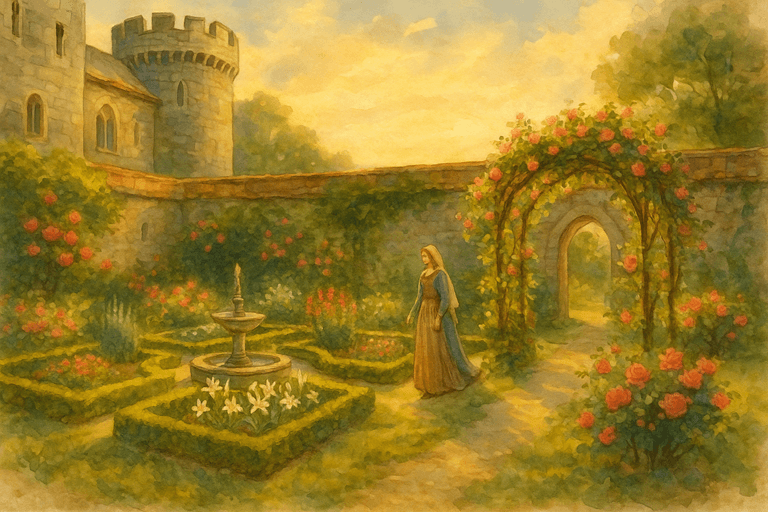
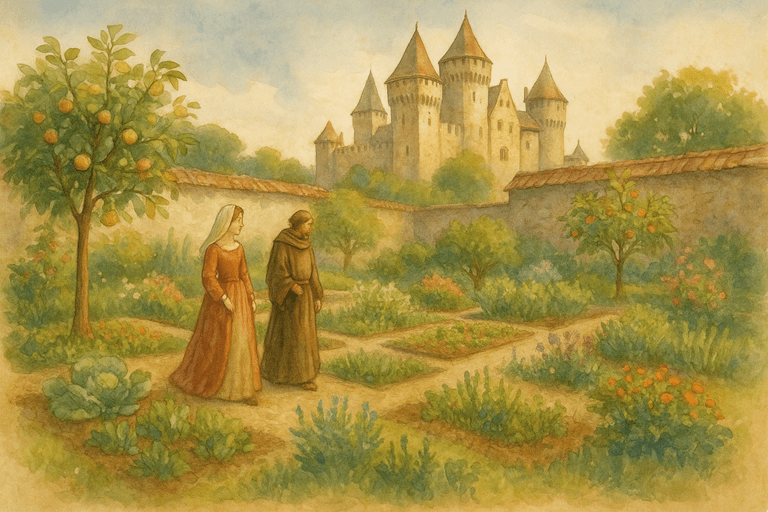
Behind the walls of a medieval castle, there often lay another wall—a smaller one, built not for defense but for contemplation. Within it bloomed the hortus conclusus, the “enclosed garden.” To medieval eyes, this garden was not simply a space of beauty; it was a vision of paradise on earth, a symbol of purity, peace, and divine order.
In contrast to the busy kitchen and physic gardens, the enclosed garden invited stillness. Its geometric beds, fountains, and fragrant flowers reflected both human craftsmanship and heavenly perfection. To walk through it was to step into an allegory—one that blended love, faith, and nature into a single, sacred whole.
Origins and Meaning of the Hortus Conclusus
The term hortus conclusus comes from the Latin phrase meaning “closed garden,” first appearing in the Biblical Song of Songs: “A garden enclosed is my sister, my spouse.” Medieval theologians interpreted this passage as a metaphor for the Virgin Mary—pure, protected, and blooming with virtue.
From this image grew one of the most powerful visual and spiritual motifs of the Middle Ages. The enclosed garden became a place where nature and divinity intertwined: an earthly reflection of Eden and a symbol of humanity’s longing to regain harmony with creation.
By the 12th and 13th centuries, noble and monastic gardens began to adopt this ideal physically. Within castle grounds, an enclosed garden was a sanctuary—walled off from the outer world, filled with order, fragrance, and meaning.
Design and Layout: Geometry of Heaven

The design of an enclosed garden was deliberate and symbolic. Everything had purpose, from the shape of its walls to the flowers chosen within.
Rectangular or square in form, the garden was divided by cross-shaped paths that met at a central point—often a fountain or a small tree—representing the intersection of the material and the divine. The number four symbolized the Gospels, the seasons, or the elements, creating harmony between earthly and heavenly structures.
Raised beds contained orderly rows of flowers and herbs, bordered by boxwood or lavender. Arbors provided shade, while trellises allowed roses and honeysuckle to climb gracefully along the walls. Benches of stone or wood invited quiet reflection.
In smaller castles, a hortus conclusus might be no more than a secluded courtyard with vines and a small water basin; in grander estates, it could form a complex landscape adjoining chapels or women’s quarters. Either way, it offered a retreat for meditation, prayer, and private conversation—a quiet contrast to the noise of daily castle life.
Flowers and Symbolism
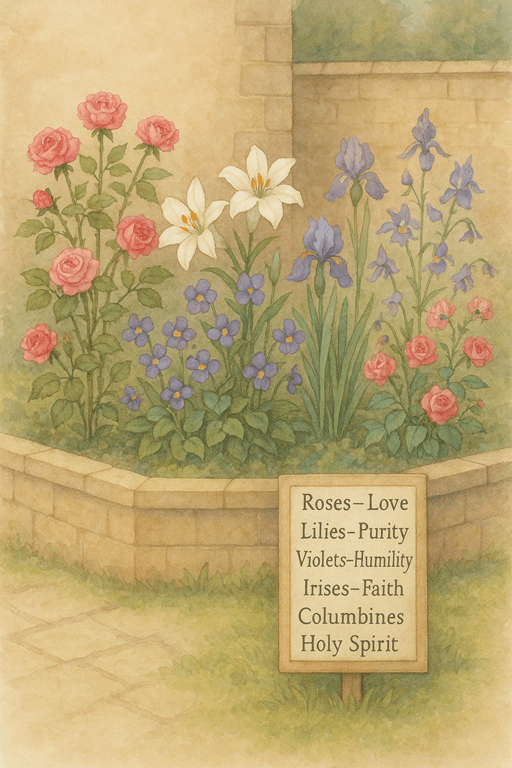
Each plant in the enclosed garden carried meaning. Medieval gardeners and poets read flowers as if they were sacred texts, each petal a moral lesson or theological truth.
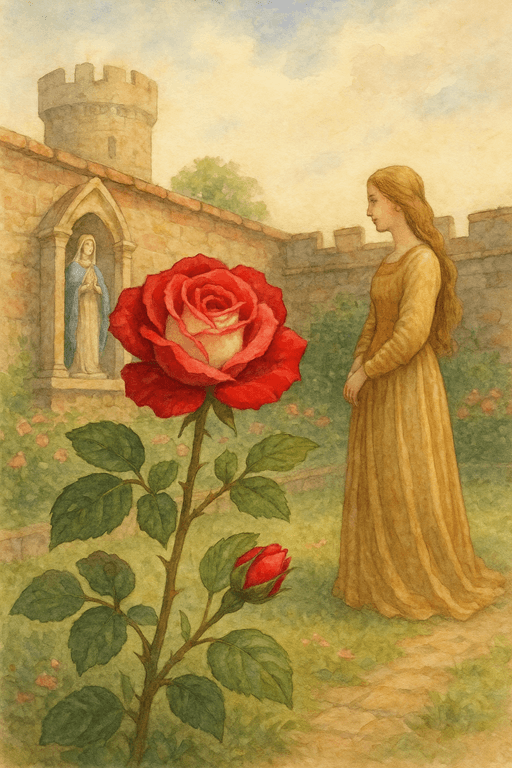
- Rose – Symbol of love and the Virgin Mary, the queen of flowers. Red roses suggested Christ’s passion; white roses, purity.
- Lily – The most sacred flower, representing innocence and divine grace.
- Violet – Humility and modesty.
- Iris – Hope, faith, and the sorrow of the Virgin.
- Columbine – The Holy Spirit, for its dove-shaped blossoms.
- Strawberry – The fruits of virtue, small yet sweet.
Together, these plants turned the garden into a living sermon, teaching faith through form and fragrance.
The Garden in Literature and Art
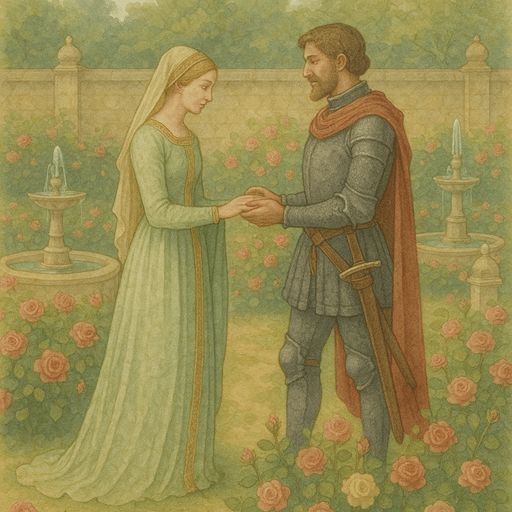
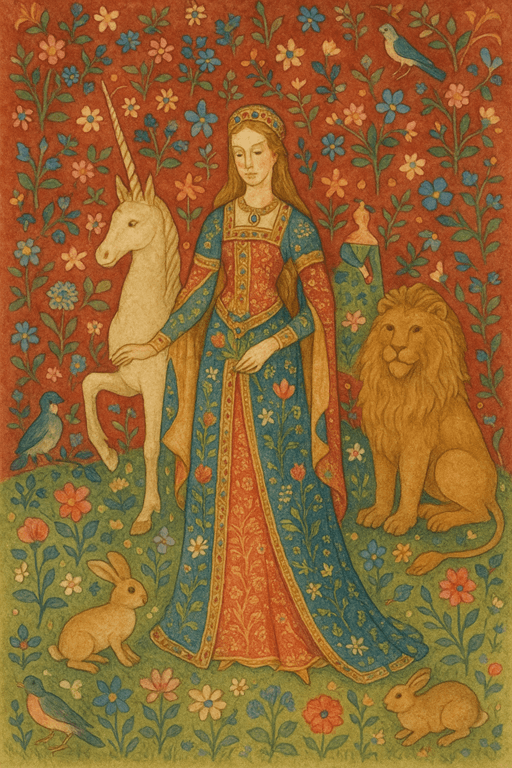
The hortus conclusus became one of the most beloved symbols in medieval literature and art, appearing in manuscripts, tapestries, and devotional paintings.
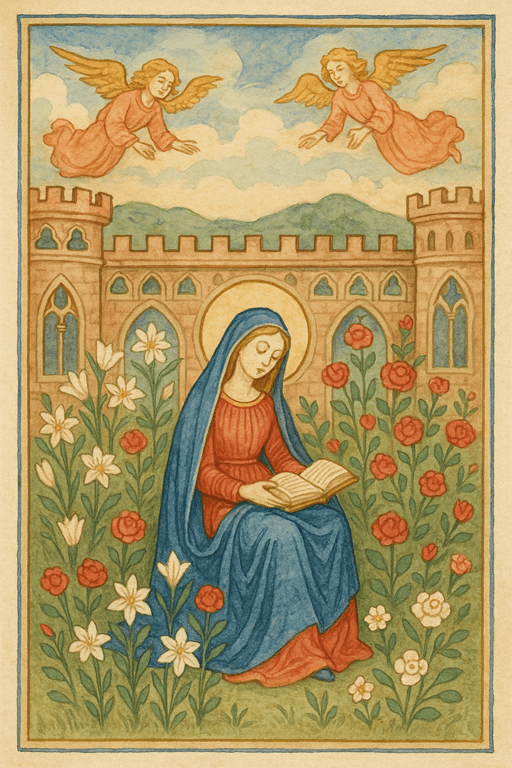
In religious art, the Virgin Mary is often depicted seated in a walled garden, surrounded by lilies and roses, reading or holding the Christ Child. This setting represented her purity and divine motherhood.
In courtly literature, the enclosed garden took on a second, more romantic layer of meaning. It became the backdrop for tales of love, longing, and virtue tested. Poets of the 12th-century courts of Provence and northern France described lovers meeting secretly within flowery walls, where nature mirrored the ideals of chivalry and affection.
Thus, the same garden could represent both sacred chastity and earthly passion—a paradox the medieval mind embraced with ease.
The Spiritual Experience
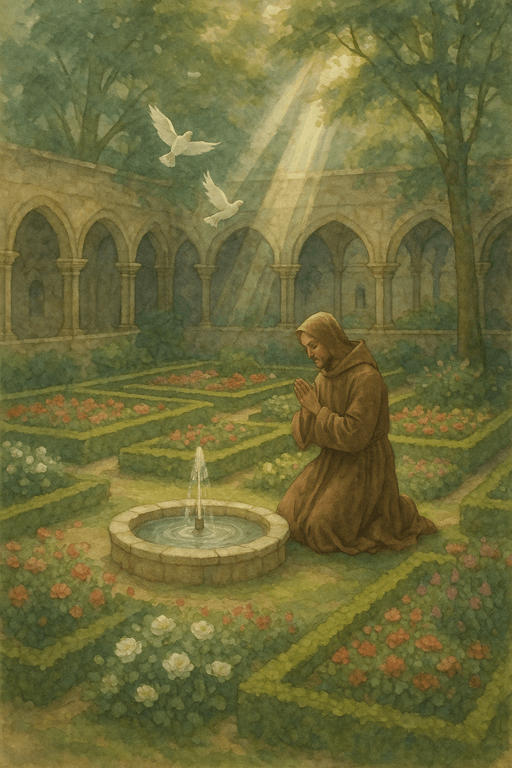
Beyond beauty and symbolism, the enclosed garden served a spiritual purpose. It was a place where one might experience the divine through contemplation of nature’s perfection. The order and geometry of the space reflected a vision of heaven—calm, balanced, untouched by chaos.
Monks and nuns used such gardens for prayer, finding in them a tangible metaphor for the soul enclosed within faith. For nobles and noblewomen, walking through the garden became a ritual of introspection, an act of aligning oneself with divine order.
The gentle sound of a fountain or the scent of lavender could evoke paradise lost and, for a moment, paradise regained.
The Enclosed Garden in Castle Life
Within the castle, the hortus conclusus often served as a private retreat, especially for women. The lady of the castle might read, embroider, or entertain visitors there. The garden also provided a rare environment where noblewomen could enjoy autonomy and privacy, protected from the gaze of the court yet surrounded by beauty and meaning.
For men, the garden could be a place of conversation or quiet diplomacy—a setting for alliances, promises, and sometimes forbidden love. In this way, the enclosed garden mirrored both the spiritual and the human heart: protected yet vulnerable, serene yet alive.
Final Thoughts
The hortus conclusus reminds us that medieval people, even amid warfare and hardship, sought beauty, order, and divine connection. These enclosed gardens embodied paradise regained: perfect, fragrant, eternal.
To enter one was to step outside time itself, into a world where every flower spoke of faith and every wall promised peace.