

Medieval Castle Guards and Watchmen: The Vigilance Behind the Walls
Behind every banquet in the great hall, every procession in the courtyard, and every night of sleep in the lord’s chamber, there stood a quiet but unrelenting force: the guards and watchmen. These men formed the backbone of a castle’s defense, ensuring that walls were secure, gates controlled, and threats spotted before they became disasters.
Their lives were not as glamorous as knights riding into battle or nobles feasting at high tables, but their duties were every bit as vital. Day after day, hour after hour, guards maintained the rhythm of vigilance that kept medieval castles safe.
Daily Duties of Guarding Walls and Gates
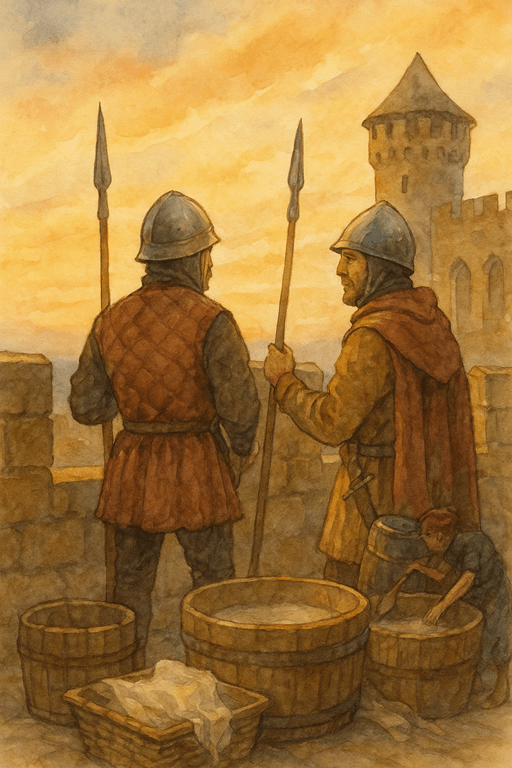
The most important task of any castle guard was to remain watchful. Castles were more than homes—they were military fortresses. Guard duty meant ensuring that the walls were never left unattended, no matter the season or weather.
The day of a castle guard was shaped by routine, but it was far from dull. From dawn until nightfall—and often through the dark hours—the castle walls had to be watched without pause. Guards rotated through shifts to ensure that no corner of the fortress was left unobserved.
At the gates, guards questioned visitors, inspected carts, and monitored the comings and goings of servants, merchants, and travelers. Suspicion was part of the job; even a harmless-looking stranger could be a spy. Their eyes and ears were the first line of defense. On the walls, watchmen scanned the surrounding countryside for signs of smoke, dust, or enemy banners. Inside the castle, some guards patrolled corridors, halls, and the lord’s private quarters, ensuring no threat arose from within.
Discipline was strict: a guard caught sleeping on duty risked severe punishment, for one lapse could open the castle to disaster.
- Gatekeeping: Inspecting carts, questioning travelers, and monitoring goods.
- Wall patrols: Walking the battlements, scanning for riders, smoke, or suspicious activity.
- Night watches: Listening for movement in the dark, guarding against surprise raids.
- Access control: Deciding who could enter the lord’s presence or the castle itself.
Even in peaceful times, vigilance was constant. A single inattentive guard could put the entire household at risk.
Weapons and Equipment

A guard’s strength did not come from vigilance alone—it was reinforced by the tools of his trade. Equipment varied depending on wealth and region, but a few staples defined the look and role of castle guards.
Guards stationed on the walls often carried long spears or pikes, ideal for holding attackers at a distance. Swords and daggers served as sidearms, while crossbows or longbows provided deadly range from the battlements. Shields, though heavy, were vital during open combat.
Their clothing reflected both function and symbolism. A guard might wear a padded gambeson or chainmail shirt, sometimes marked with the colors or emblem of his lord. Helmets ranged from simple iron caps to more elaborate visors. Even boots mattered, for a guard might spend hours pacing across wet stone in freezing winds.
Equipment was not just protection; it was a badge of service, setting guards apart from peasants and laborers.
- Defensive arms: Spears and pikes for holding off attackers scaling walls.
- Ranged weapons: Bows and crossbows to strike enemies at a distance.
- Close combat: Short swords and daggers kept at the side for emergencies.
- Armor and protection: Padded gambesons, helmets, or sometimes chainmail.
- Symbolism: Livery and shields bearing the lord’s colors made them both protectors and visual symbols of authority.
Their gear was both practical and symbolic, marking them as guardians of order.
Pay and Risks
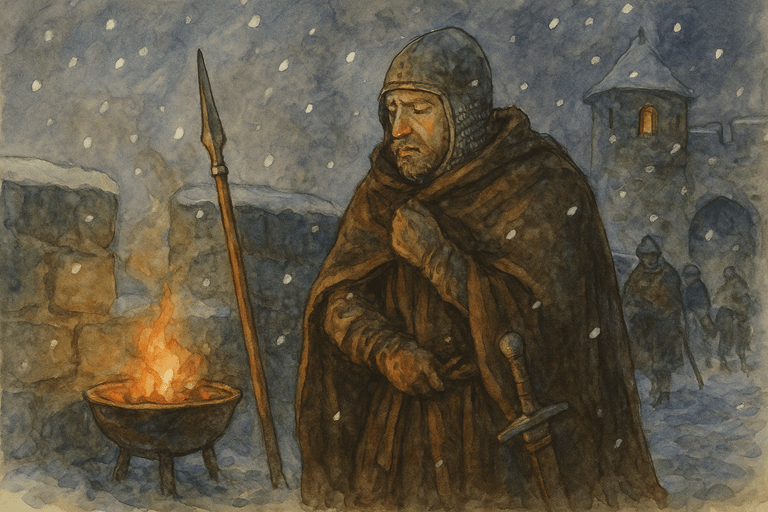
The life of a guard was steady employment compared to the uncertainty of farming, but it came with costs of its own.
Most guards received modest wages, sometimes supplemented with food, ale, and a place to sleep in the garrison barracks. Some lords paid in coin; others in kind, offering land, clothing, or privileges. Guards loyal enough or skilled enough might rise to better posts, such as captain of the guard, which carried greater pay and authority.
But the risks were ever-present. Guards faced not only battle but also the hazards of long exposure to weather. Standing watch in the bitter cold, rain, or blistering sun wore down even the hardiest men. In times of war, guards were the first to face enemy arrows, stones, or boiling oil. Even in peace, quarrels in the gatehouse or confrontations with unruly visitors could turn violent.
Guard duty was a life of sacrifice: essential, dangerous, and rarely celebrated.
- Wages: Guards earned modest pay, sometimes supplemented with food, drink, or clothing. High-ranking men-at-arms received better wages, but most scraped by.
- Rewards: Some received leftovers from noble feasts, occasional gifts, or opportunities for advancement.
- Risks: Exposure to harsh weather, injuries from falls or weapons, and being first to face enemy attack.
- Respect: Though not celebrated like knights, dependable guards were quietly respected within the household.
Life as a guard was both an opportunity and a burden—security in employment but constant strain on the body.
Alarms and Sieges
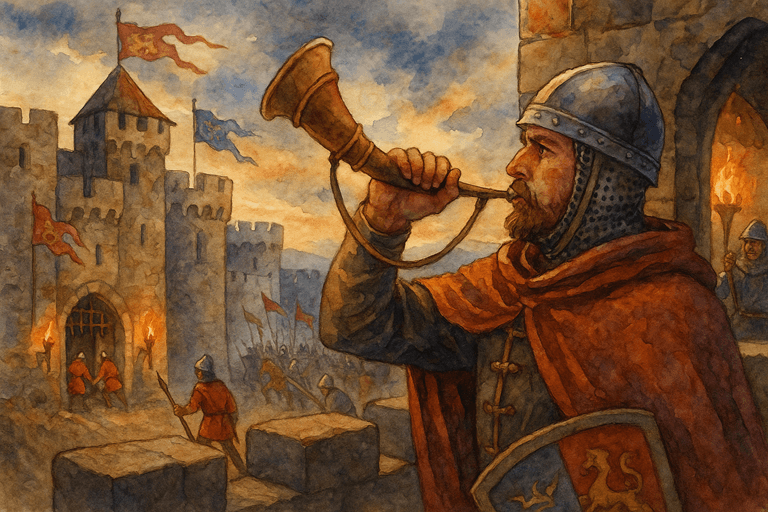
When danger came, guards were the first to act. The raising of the alarm was one of their most critical responsibilities.
If enemies approached, horns, bells, or drums signaled the alert. Guards on the walls shouted down to the courtyard, summoning men-at-arms, closing gates, and preparing defenses. In moments, the castle transformed from quiet stronghold to war-ready fortress. A single cry of warning could save hundreds of lives.
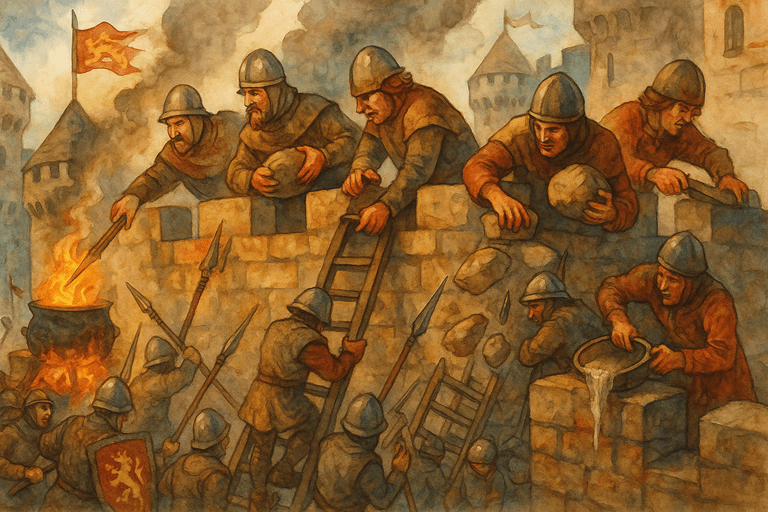
During sieges, the guard’s role grew even more demanding. They had to endure days or weeks of bombardment, fire, and hunger, all while maintaining morale. Guards fired arrows and hurled stones from the battlements, poured boiling water or oil onto attackers, and defended breaches when walls were damaged. Even in exhaustion, they could not waver—because if the guards fell, the castle itself fell with them.
- Alarms: Horns, bells, or shouted warnings roused soldiers and closed gates.
- Response: Villagers rushed inside, soldiers armed themselves, and servants secured supplies.
- During sieges: Guards endured arrows, stones, fire, and hunger as they fought from walls.
- Defensive tasks: Pouring boiling liquids, dropping stones, or repelling ladders.
In war, their role was grueling but decisive—the difference between survival and destruction.
Final Thoughts
The guards and watchmen of medieval castles were not celebrated in poetry, but without them, fortresses would not have stood for long. They formed the heartbeat of defense, keeping gates secure, walls watched, and alarms raised. Their daily hardships, weapons, and unwavering discipline ensured the safety of everyone within, from the lord at the high table to the scullion scrubbing pots in the kitchen.
Every noble’s comfort rested on their shoulders. Without guards at the gates and watchmen on the walls, castles would have been little more than cold stone shells. With them, they became strongholds of power, safety, and endurance.ittle more than cold stone shells. With them, they became strongholds of power, safety, and endurance.


